
Before Memmo my notes were scattered across PDFs. Now a workspace pulls everything into one place — I see exactly what's still left to study.
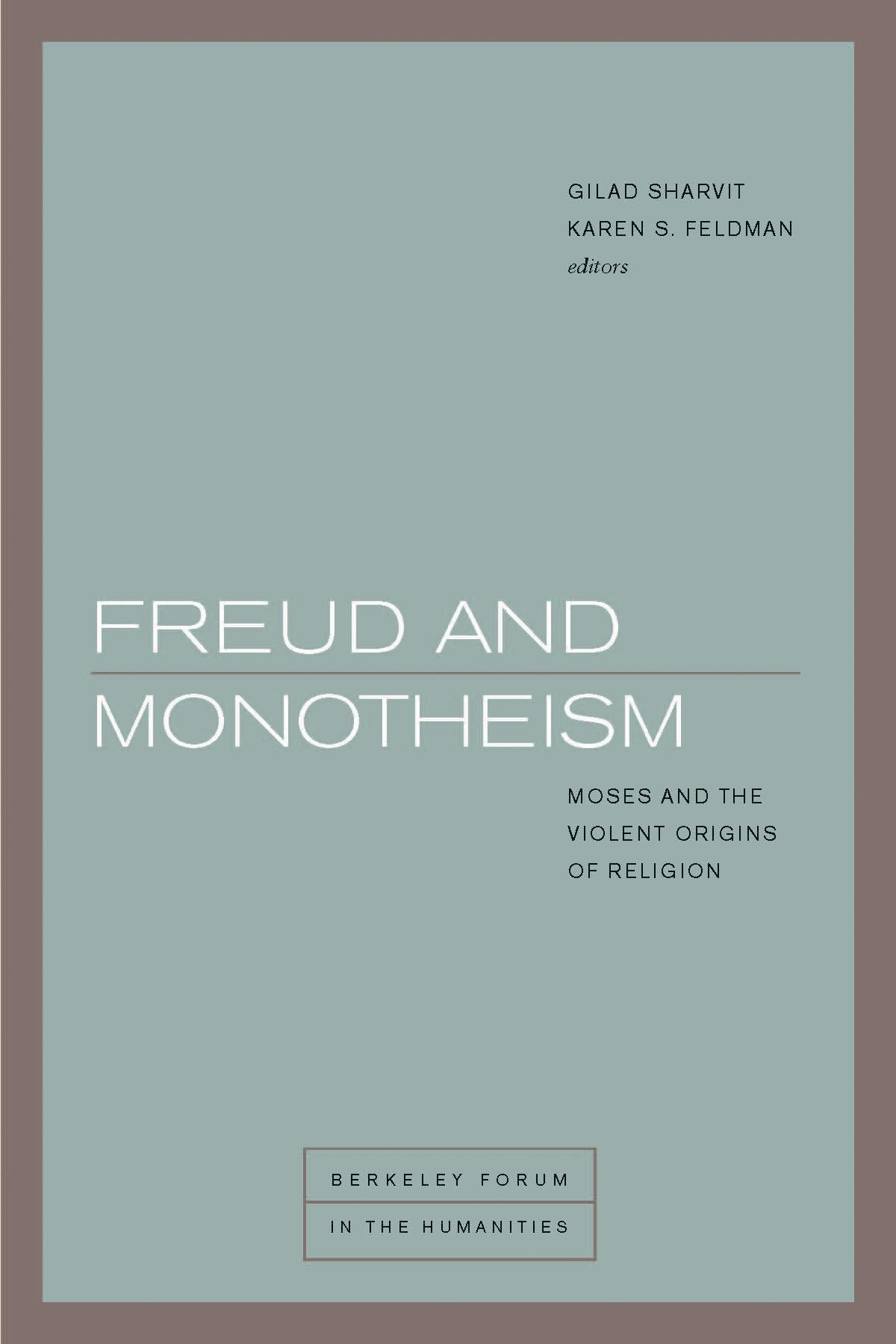
Over the last few decades, vibrant debates regarding post-secularism have found inspiration and provocation in the works of Sigmund Freud. A new interest in the interconnection of psychoanalysis, religion and political theory has emerged, allowing Freud’s illuminating examination of the religious and mystical practices in “Obsessive Neurosis and Religious Practices,” and the exegesis of the origins of ethics in religion in Totem and Taboo, to gain currency in recent debates on modernity. In that context, the pivotal role of Freud’s masterpiece, Moses and Monotheism, is widely recognized.
Freud and Monotheism brings together fundamental new contributions to discourses on Freud and Moses, as well as new research at the intersections of theology, political theory, and history in Freud’s psychoanalytic work. Highlighting the broad impact of Moses and Monotheism across the humanities, the contributors hail from such diverse disciplines as philosophy, comparative literature, cultural studies, German studies, Jewish studies and psychoanalysis.
Jan Assmann and Richard Bernstein, whose books pioneered the earlier debate that initiated the Freud and Moses discourse, seize the opportunity to revisit and revise their groundbreaking work. Gabriele Schwab, Gilad Sharvit, Karen Feldman, and Yael Segalovitz engage with the idiosyncratic, eccentric and fertile nature of the book as a Spӓtstil, and explore radical interpretations of Freud’s literary practice, theory of religion and therapeutic practice. Ronald Hendel offers an alternative history for the Mosaic discourse within the biblical text, Catherine Malabou reconnects Freud’s theory of psychic phylogenesis in Moses and Monotheism to new findings in modern biology and Willi Goetschel relocates Freud in the tradition of works on history that begins with Heine, while Joel Whitebook offers important criticisms of Freud’s main argument about the advance in intellectuality that Freud attributes to Judaism.
Before Memmo my notes were scattered across PDFs. Now a workspace pulls everything into one place — I see exactly what's still left to study.
Memmo's summaries are gold before exams. I don't have to re-read 800 pages two weeks before — just the important parts.
The AI chat has saved me the night before an exam more than once. I just keep asking until I get it — no waiting on a study group to reply.
The quizzes hit exactly what I need to know. Memmo tracks what I get stuck on — so I only practice what's worth it.
Flashcards with spaced repetition are magic. Memmo knows when I'm about to forget something and brings it back.
The AI podcasts are my favorite. I listen on my way to school and get a recap without sitting at a computer.

Handbok i kvalitativa metoder
281 kr

Hållbar utveckling: en introduktion för ingenjörer och andra problemlösare
334 kr

Brymans Samhällsvetenskapliga metoder
390 kr

Projektledning
491 kr

Den orättvisa hälsan: om socioekonomiska skillnader i hälsa och livslängd
326 kr

Vetenskapsteori för nybörjare
196 kr

Organizational Leadership
429 kr

På väg mot läraryrket
172 kr

Det sociala livet i skolan: Socialpsykologiska perspektiv
253 kr

Betygsättningens didaktik
151 kr

Personality
402 kr

Studying Leadership
404 kr

Managing Innovation
477 kr

Introduktion till samhällsvetenskaplig metod
347 kr

The Psychology of Sex and Gender
698 kr

Evidens och kunskap för socialt arbete
207 kr

Introduction to Leadership
605 kr