
Before Memmo my notes were scattered across PDFs. Now a workspace pulls everything into one place — I see exactly what's still left to study.
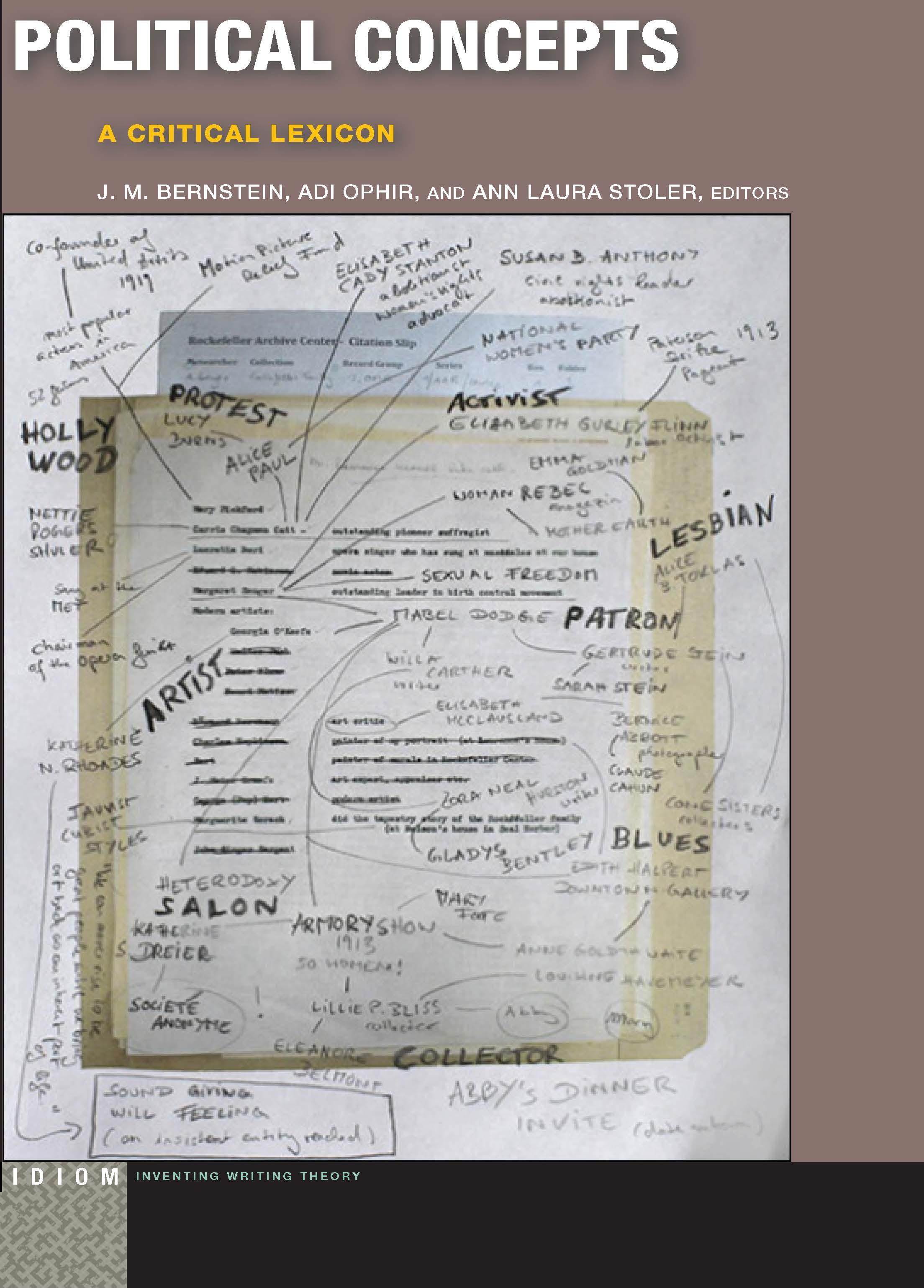
Deciding what is and what is not political is a fraught, perhaps intractably opaque matter. Just who decides the question; on what grounds; to what ends—these seem like properly political questions themselves. Deciding what is political and what is not can serve to contain and restrain struggles, make existing power relations at once self-evident and opaque, and blur the possibility of reimagining them differently. Political Concepts seeks to revive our common political vocabulary—both everyday and academic—and to do so critically. Its entries take the form of essays in which each contributor presents her or his own original reflection on a concept posed in the traditional Socratic question format “What is X?” and asks what sort of work a rethinking of that concept can do for us now.
The explicitness of a radical questioning of this kind gives authors both the freedom and the authority to engage, intervene in, critique, and transform the conceptual terrain they have inherited. Each entry, either implicitly or explicitly, attempts to re-open the question “What is political thinking?” Each is an effort to reinvent political writing. In this setting the political as such may be understood as a property, a field of interest, a dimension of human existence, a set of practices, or a kind of event. Political Concepts does not stand upon a decided concept of the political but returns in practice and in concern to the question “What is the political?” by submitting the question to a field of plural contention.
The concepts collected in Political Concepts are “Arche” (Stathis Gourgouris), “Blood” (Gil Anidjar), “Colony” (Ann Laura Stoler), “Concept” (Adi Ophir), “Constituent Power” (Andreas Kalyvas), “Development” (Gayatri Spivak), “Exploitation” (Étienne Balibar), “Federation” (Jean Cohen), “Identity” (Akeel Bilgrami), “Rule of Law” (J. M. Bernstein), “Sexual Difference” (Joan Copjec), and “Translation” (Jacques Lezra)
Before Memmo my notes were scattered across PDFs. Now a workspace pulls everything into one place — I see exactly what's still left to study.
Memmo's summaries are gold before exams. I don't have to re-read 800 pages two weeks before — just the important parts.
The AI chat has saved me the night before an exam more than once. I just keep asking until I get it — no waiting on a study group to reply.
The quizzes hit exactly what I need to know. Memmo tracks what I get stuck on — so I only practice what's worth it.
Flashcards with spaced repetition are magic. Memmo knows when I'm about to forget something and brings it back.
The AI podcasts are my favorite. I listen on my way to school and get a recap without sitting at a computer.

Handbok i kvalitativa metoder
281 kr

Hållbar utveckling: en introduktion för ingenjörer och andra problemlösare
334 kr

Brymans Samhällsvetenskapliga metoder
390 kr

Projektledning
491 kr

Den orättvisa hälsan: om socioekonomiska skillnader i hälsa och livslängd
326 kr

Organizational Leadership
429 kr

Vetenskapsteori för nybörjare
196 kr

På väg mot läraryrket
172 kr

Det sociala livet i skolan: Socialpsykologiska perspektiv
253 kr

Betygsättningens didaktik
151 kr

Personality
402 kr

Studying Leadership
404 kr

Managing Innovation
477 kr

Introduktion till samhällsvetenskaplig metod
347 kr

The Psychology of Sex and Gender
698 kr

Evidens och kunskap för socialt arbete
207 kr

Introduction to Leadership
605 kr