
Before Memmo my notes were scattered across PDFs. Now a workspace pulls everything into one place — I see exactly what's still left to study.
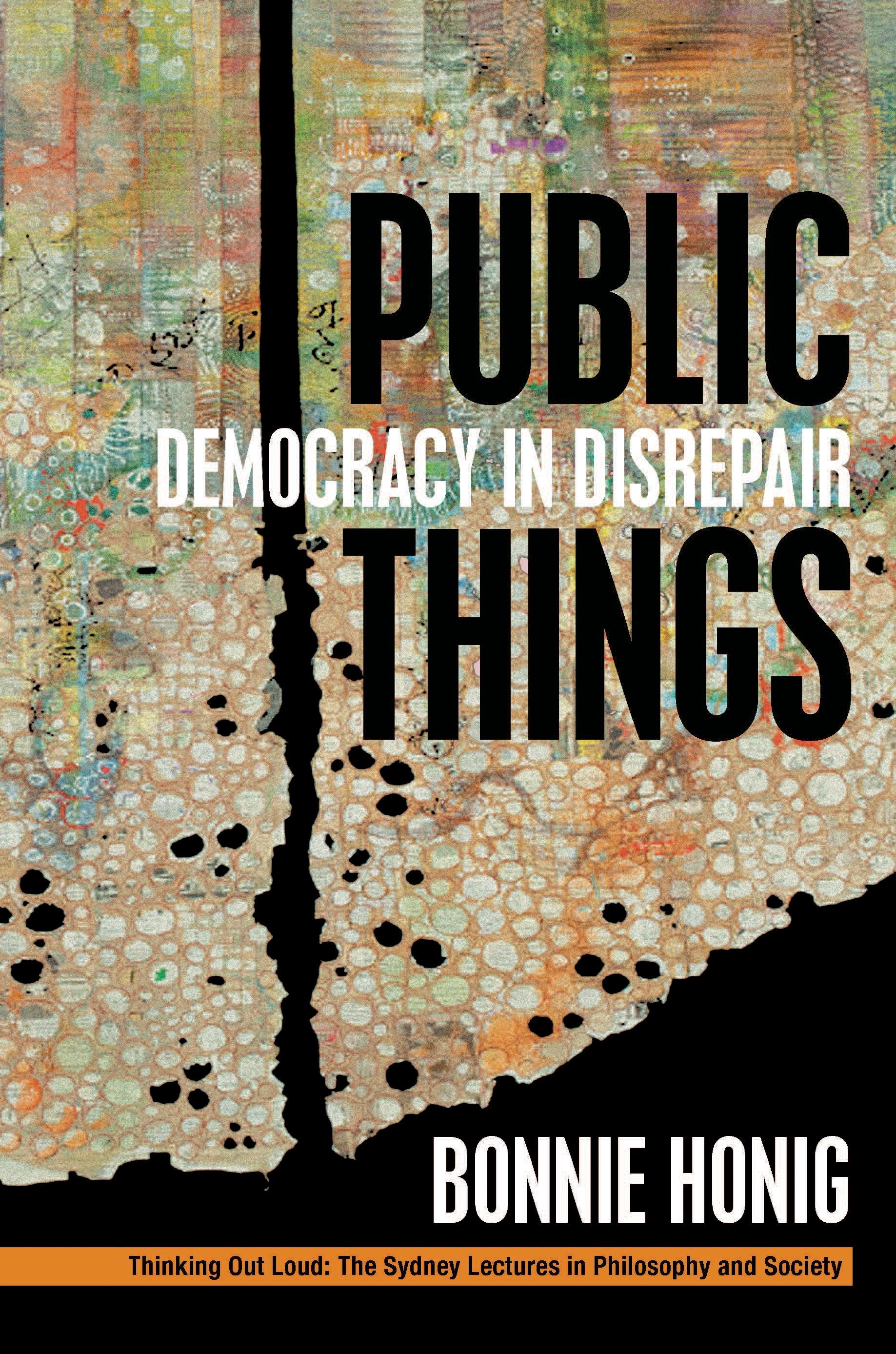
In the contemporary world of neoliberalism, efficiency is treated as the vehicle of political and economic health. State bureaucracy, but not corporate bureaucracy, is seen as inefficient, and privatization is seen as a magic cure for social ills. In Public Things: Democracy in Disrepair, Bonnie Honig asks whether democracy is possible in the absence of public services, spaces, and utilities. In other words, if neoliberalism leaves to democracy merely electoral majoritarianism and procedures of deliberation while divesting democratic states of their ownership of public things, what will the impact be?
Following Tocqueville, who extolled the virtues of “pursuing in common the objects of common desires,” Honig focuses not on the demos but on the objects of democratic life. Democracy, as she points out, postulates public things—infrastructure, monuments, libraries—that citizens use, care for, repair, and are gathered up by. To be “gathered up” refers to the work of D. W. Winnicott, the object relations psychoanalyst who popularized the idea of “transitional objects”—the toys, teddy bears, or favorite blankets by way of which infants come to understand themselves as unified selves with an inside and an outside in relation to others. The wager of Public Things is that the work transitional objects do for infants is analogously performed for democratic citizens by public things, which press us into object relations with others and with ourselves.
Public Things attends also to the historically racial character of public things: public lands taken from indigenous peoples, access to public goods restricted to white majorities. Drawing on Hannah Arendt, who saw how things fabricated by humans lend stability to the human world, Honig shows how Arendt and Winnicott—both theorists of livenesss—underline the material and psychological conditions necessary for object permanence and the reparative work needed for a more egalitarian democracy.
Before Memmo my notes were scattered across PDFs. Now a workspace pulls everything into one place — I see exactly what's still left to study.
Memmo's summaries are gold before exams. I don't have to re-read 800 pages two weeks before — just the important parts.
The AI chat has saved me the night before an exam more than once. I just keep asking until I get it — no waiting on a study group to reply.
The quizzes hit exactly what I need to know. Memmo tracks what I get stuck on — so I only practice what's worth it.
Flashcards with spaced repetition are magic. Memmo knows when I'm about to forget something and brings it back.
The AI podcasts are my favorite. I listen on my way to school and get a recap without sitting at a computer.

Handbok i kvalitativa metoder
281 kr

Hållbar utveckling: en introduktion för ingenjörer och andra problemlösare
334 kr

Brymans Samhällsvetenskapliga metoder
390 kr

Projektledning
491 kr

Den orättvisa hälsan: om socioekonomiska skillnader i hälsa och livslängd
326 kr

Vetenskapsteori för nybörjare
196 kr

Organizational Leadership
429 kr

På väg mot läraryrket
172 kr

Det sociala livet i skolan: Socialpsykologiska perspektiv
253 kr

Betygsättningens didaktik
151 kr

Personality
402 kr

Studying Leadership
404 kr

Managing Innovation
477 kr

Introduktion till samhällsvetenskaplig metod
347 kr

The Psychology of Sex and Gender
698 kr

Evidens och kunskap för socialt arbete
207 kr

Introduction to Leadership
605 kr