
Before Memmo my notes were scattered across PDFs. Now a workspace pulls everything into one place — I see exactly what's still left to study.
Historically speaking, theology can be said to operate “materiaphobically.” Protestant Christianity in particular has bestowed upon theology a privilege of the soul over the body and belief over practice, in line with the distinction between a disembodied God and the inanimate world “He” created. Like all other human, social, and natural sciences, religious studies imported these theological dualisms into a purportedly secular modernity, mapping them furthermore onto the distinction between a rational, “enlightened” Europe on the one hand and a variously emotional, “primitive,” and “animist” non-Europe on the other.
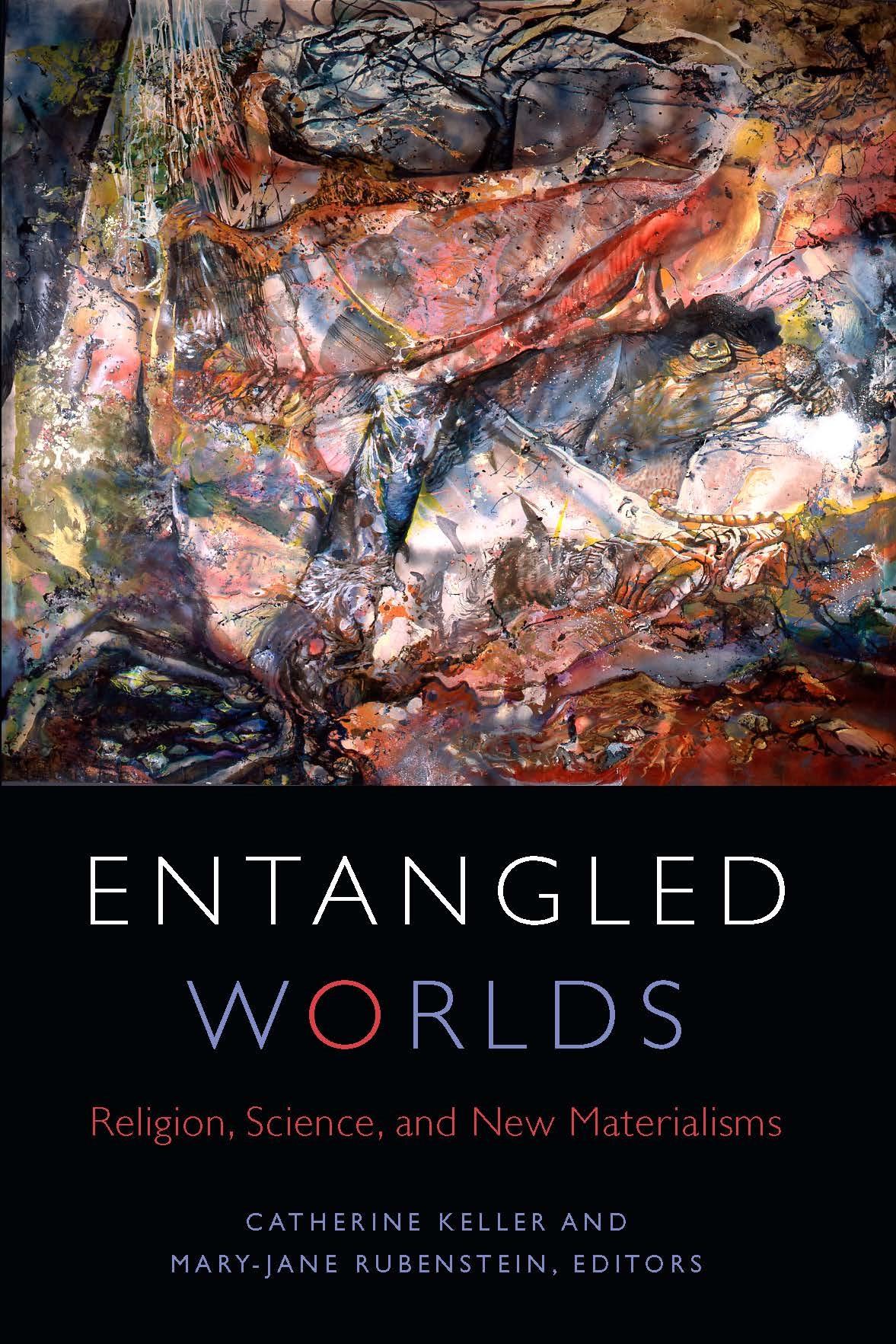
The “new materialisms” currently coursing through cultural, feminist, political, and queer theories seek to displace human privilege by attending to the agency of matter itself. Far from being passive or inert, they show us that matter acts, creates, destroys, and transforms—and, as such, is more of a process than a thing. Entangled Worlds examines the intersections of religion and new and old materialisms. Calling upon an interdisciplinary throng of scholars in science studies, religious studies, and theology, it assembles a multiplicity of experimental perspectives on materiality: What is matter, how does it materialize, and what sorts of worlds are enacted in its varied entanglements with divinity?
While both theology and religious studies have over the past few decades come to prioritize the material contexts and bodily ecologies of more-than-human life, Entangled Worlds sets forth the first multivocal conversation between religious studies, theology, and the body of “the new materialism.” Here disciplines and traditions touch, transgress, and contaminate one another across their several carefully specified contexts. And in the responsiveness of this mutual touching of science, religion, philosophy, and theology, the growing complexity of our entanglements takes on a consistent ethical texture of urgency.
Before Memmo my notes were scattered across PDFs. Now a workspace pulls everything into one place — I see exactly what's still left to study.
Memmo's summaries are gold before exams. I don't have to re-read 800 pages two weeks before — just the important parts.
The AI chat has saved me the night before an exam more than once. I just keep asking until I get it — no waiting on a study group to reply.
The quizzes hit exactly what I need to know. Memmo tracks what I get stuck on — so I only practice what's worth it.
Flashcards with spaced repetition are magic. Memmo knows when I'm about to forget something and brings it back.
The AI podcasts are my favorite. I listen on my way to school and get a recap without sitting at a computer.

Handbok i kvalitativa metoder
281 kr

Hållbar utveckling: en introduktion för ingenjörer och andra problemlösare
334 kr

Brymans Samhällsvetenskapliga metoder
390 kr

Projektledning
491 kr

Den orättvisa hälsan: om socioekonomiska skillnader i hälsa och livslängd
326 kr

Organizational Leadership
429 kr

Vetenskapsteori för nybörjare
196 kr

På väg mot läraryrket
172 kr

Det sociala livet i skolan: Socialpsykologiska perspektiv
253 kr

Betygsättningens didaktik
151 kr

Personality
402 kr

Studying Leadership
404 kr

Managing Innovation
477 kr

Introduktion till samhällsvetenskaplig metod
347 kr

The Psychology of Sex and Gender
698 kr

Evidens och kunskap för socialt arbete
207 kr

Introduction to Leadership
605 kr