
Before Memmo my notes were scattered across PDFs. Now a workspace pulls everything into one place — I see exactly what's still left to study.
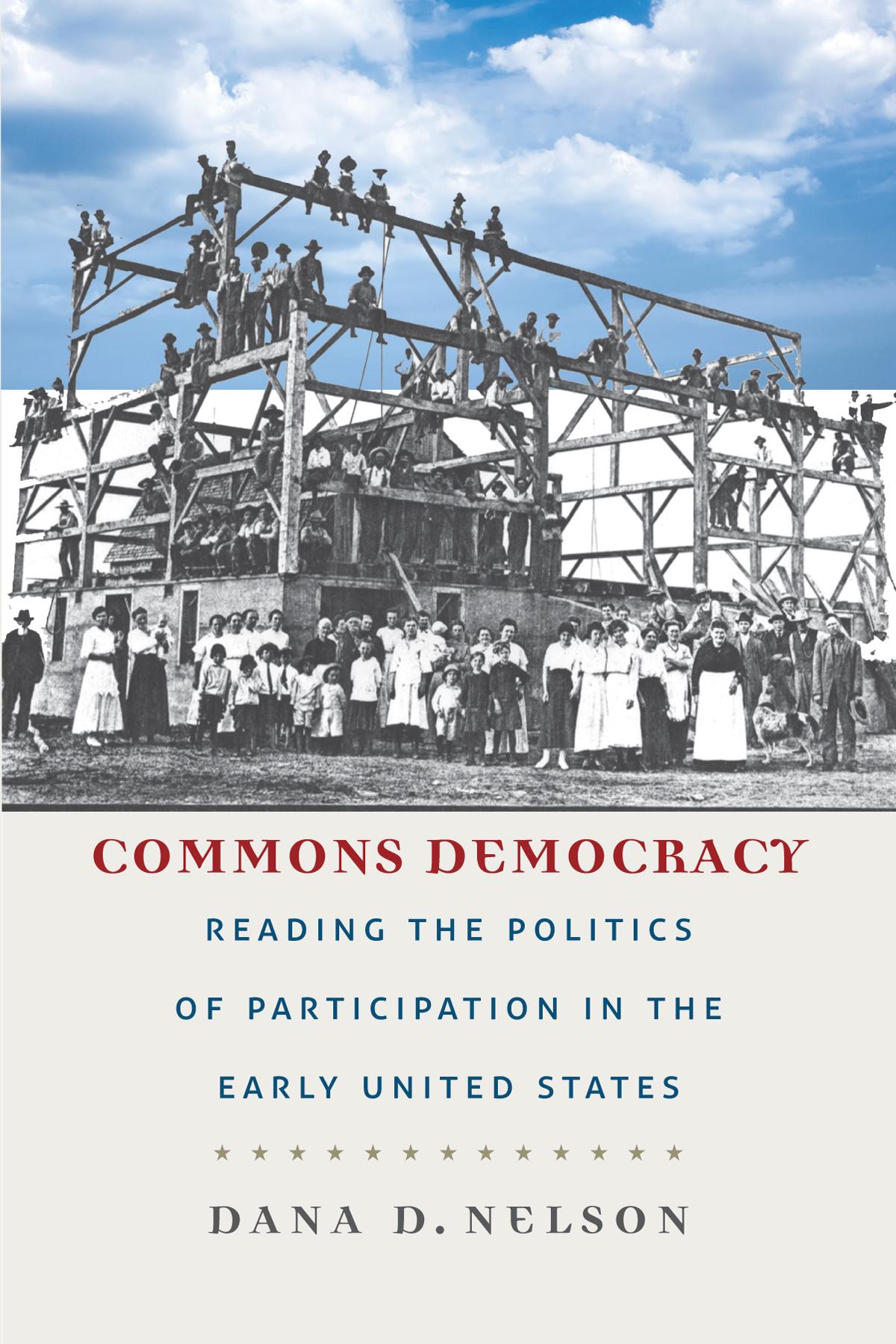
Commons Democracy highlights a poorly understood dimension of democracy in the early United States. It tells a story that, like the familiar one, begins in the Revolutionary era. But instead of the tale of the Founders’ high-minded ideals and their careful crafting of the safe framework for democracy—a representative republican government—Commons Democracy examines the power of the democratic spirit, the ideals and practices of everyday people in the early nation. As Dana D. Nelson reveals in this illuminating work, the sensibility of participatory democratic activity fueled the involvement of ordinary folk in resistance, revolution, state constitution-making, and early national civic dissent. The rich variety of commoning customs and practices in the late colonies offered non-elite actors a tangible and durable relationship to democratic power, one significantly different from the representative democracy that would be institutionalized by the Framers in 1787. This democracy understood political power and liberties as communal, not individual.
Ordinary folk practiced a democracy that was robustly participatory and insistently local. To help tell this story, Nelson turns to early American authors—Hugh Henry Brackenridge, James Fenimore Cooper, Robert Montgomery Bird, and Caroline Kirkland—who were engaged with conflicts that emerged from competing ideals of democracy in the early republic, such as the Whiskey Rebellion and the Anti-Rent War as well as the enclosure of the legal commons, anxieties about popular suffrage, and practices of frontier equalitarianism. While Commons Democracy is about the capture of “democracy” for the official purposes of state consolidation and expansion, it is also a story about the ongoing (if occluded) vitality of commons democracy, of its power as part of our shared democratic history and its usefulness in the contemporary toolkit of citizenship.
Before Memmo my notes were scattered across PDFs. Now a workspace pulls everything into one place — I see exactly what's still left to study.
Memmo's summaries are gold before exams. I don't have to re-read 800 pages two weeks before — just the important parts.
The AI chat has saved me the night before an exam more than once. I just keep asking until I get it — no waiting on a study group to reply.
The quizzes hit exactly what I need to know. Memmo tracks what I get stuck on — so I only practice what's worth it.
Flashcards with spaced repetition are magic. Memmo knows when I'm about to forget something and brings it back.
The AI podcasts are my favorite. I listen on my way to school and get a recap without sitting at a computer.

Handbok i kvalitativa metoder
281 kr

Hållbar utveckling: en introduktion för ingenjörer och andra problemlösare
334 kr

Brymans Samhällsvetenskapliga metoder
390 kr

Projektledning
491 kr

Den orättvisa hälsan: om socioekonomiska skillnader i hälsa och livslängd
326 kr

Organizational Leadership
429 kr

Vetenskapsteori för nybörjare
196 kr

På väg mot läraryrket
172 kr

Det sociala livet i skolan: Socialpsykologiska perspektiv
253 kr

Betygsättningens didaktik
151 kr

Personality
402 kr

Studying Leadership
404 kr

Managing Innovation
477 kr

Introduktion till samhällsvetenskaplig metod
347 kr

The Psychology of Sex and Gender
698 kr

Evidens och kunskap för socialt arbete
207 kr

Introduction to Leadership
605 kr