
Before Memmo my notes were scattered across PDFs. Now a workspace pulls everything into one place — I see exactly what's still left to study.
From prehistoric stone tools, to machines, to computers, things have traveled a long road along with human beings. Changing with the times, places, and methods of their production, emerging from diverse histories, and enveloped in multiple layers of meaning, things embody ideas, emotions, and symbols of which we are often unaware.
The meaning of “thing” is richer than that of “object,” which is something that is manipulated with indifference or according to impersonal technical procedures.
Things also differ from merchandise, objects that can be sold or exchanged or seen as status symbols. Things, in the philosophical sense, are nodes of relationships with the life of others, chains of continuity among generations, bridges that connect individual and collective histories, junctions between human civilizations and nature.
Things incite us to listen to reality, to make them part of ourselves, giving fresh life to an otherwise suffocating interiority. Things also reveal the hidden aspect of a “subject” in its most secret and least explored side. Things are the repositories of ideas, emotions, and symbols whose meaning we often do not understand.
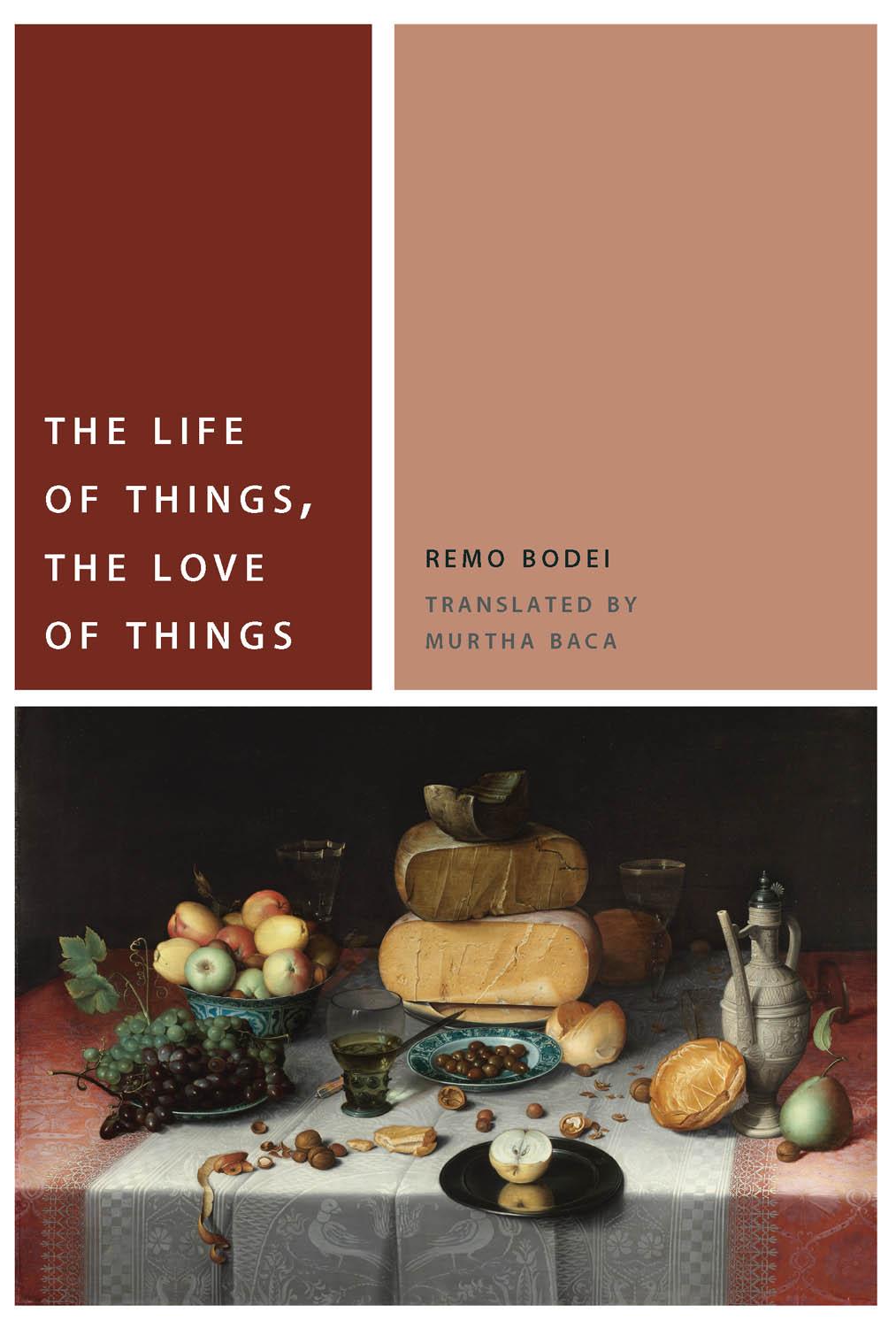
In an unexpected but coherent journey that includes the visions of classic philosophers from Aristotle to Husserl and from Hegel to Heidegger, along with the analysis of works of art, Bodei addresses issues such as fetishism, the memory of things, the emergence of department stores, consumerism, nostalgia for the past, the self-portraits of Rembrandt and Dutch still-lifes of the seventeenth century. The more we are able to recover objects in their wealth of meanings and integrate them into our mental and emotional horizons, he argues, the broader and deeper our world becomes.
Before Memmo my notes were scattered across PDFs. Now a workspace pulls everything into one place — I see exactly what's still left to study.
Memmo's summaries are gold before exams. I don't have to re-read 800 pages two weeks before — just the important parts.
The AI chat has saved me the night before an exam more than once. I just keep asking until I get it — no waiting on a study group to reply.
The quizzes hit exactly what I need to know. Memmo tracks what I get stuck on — so I only practice what's worth it.
Flashcards with spaced repetition are magic. Memmo knows when I'm about to forget something and brings it back.
The AI podcasts are my favorite. I listen on my way to school and get a recap without sitting at a computer.

Handbok i kvalitativa metoder
281 kr

Hållbar utveckling: en introduktion för ingenjörer och andra problemlösare
334 kr

Brymans Samhällsvetenskapliga metoder
390 kr

Projektledning
491 kr

Den orättvisa hälsan: om socioekonomiska skillnader i hälsa och livslängd
326 kr

Vetenskapsteori för nybörjare
196 kr

Organizational Leadership
429 kr

På väg mot läraryrket
172 kr

Det sociala livet i skolan: Socialpsykologiska perspektiv
253 kr

Betygsättningens didaktik
151 kr

Personality
402 kr

Studying Leadership
404 kr

Managing Innovation
477 kr

Introduktion till samhällsvetenskaplig metod
347 kr

The Psychology of Sex and Gender
698 kr

Evidens och kunskap för socialt arbete
207 kr

Introduction to Leadership
605 kr