
Before Memmo my notes were scattered across PDFs. Now a workspace pulls everything into one place — I see exactly what's still left to study.
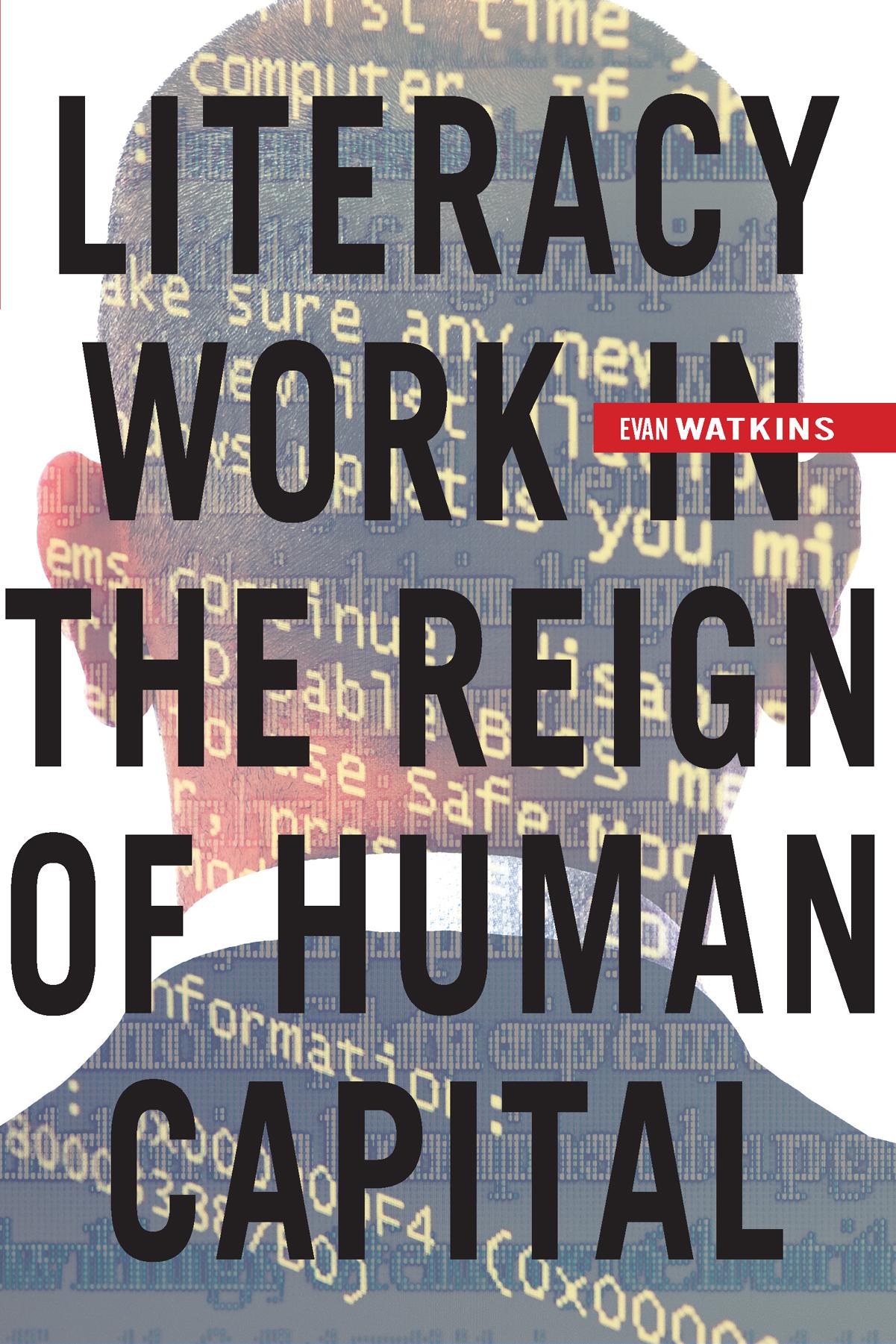
In recent years, a number of books in the field of literacy research have addressed the experiences of literacy users or the multiple processes of learning literacy skills in a rapidly changing technological environment. In contrast to these studies, this book addresses the subjects of literacy. In other words, it is about how literacy workers are subjected to the relations between new forms of labor and the concept of human capital as a dominant economic structure in the United States. It is about how literacies become forms of value producing labor in everyday life both within and beyond the workplace itself.
As Evan Watkins shows, apprehending the meaning of literacy work requires an understanding of how literacies have changed in relation to not only technology but also to labor, capital, and economics. The emergence of new literacies has produced considerable debate over basic definitions as well as the complexities of gain and loss. At the same time, the visibility of these debates between advocates of old versus new literacies has obscured the development of more fundamental changes. Most significantly, Watkins argues, it is no longer possible to represent human capital solely as the kind of long-term resource that Gary Becker and other neoclassical economists have defined. Like corporate inventory and business management practices, human capital—labor—now also appears in a “just-in-time” form, as if a power of action on the occasion rather than a capital asset in reserve.
Just-in-time human capital valorizes the expansion of choice, but it depends absolutely on the invisible literacy work consigned to the peripheries of concentrated human capital. In an economy wherein peoples’ attention begins to eclipse information as a primary commodity, a small number of choices appear with an immensely magnified intensity while most others disappear entirely. As Literacy Work in the Reign of Human Capital deftly illustrates, the concentration of human labor in the digital age reinforces and extends a class division of winners on the inside of technological innovation and losers everywhere else.
Before Memmo my notes were scattered across PDFs. Now a workspace pulls everything into one place — I see exactly what's still left to study.
Memmo's summaries are gold before exams. I don't have to re-read 800 pages two weeks before — just the important parts.
The AI chat has saved me the night before an exam more than once. I just keep asking until I get it — no waiting on a study group to reply.
The quizzes hit exactly what I need to know. Memmo tracks what I get stuck on — so I only practice what's worth it.
Flashcards with spaced repetition are magic. Memmo knows when I'm about to forget something and brings it back.
The AI podcasts are my favorite. I listen on my way to school and get a recap without sitting at a computer.

Handbok i kvalitativa metoder
281 kr

Hållbar utveckling: en introduktion för ingenjörer och andra problemlösare
334 kr

Brymans Samhällsvetenskapliga metoder
390 kr

Projektledning
491 kr

Den orättvisa hälsan: om socioekonomiska skillnader i hälsa och livslängd
326 kr

Vetenskapsteori för nybörjare
196 kr

Organizational Leadership
429 kr

På väg mot läraryrket
172 kr

Det sociala livet i skolan: Socialpsykologiska perspektiv
253 kr

Betygsättningens didaktik
151 kr

Personality
402 kr

Studying Leadership
404 kr

Managing Innovation
477 kr

Introduktion till samhällsvetenskaplig metod
347 kr

The Psychology of Sex and Gender
698 kr

Evidens och kunskap för socialt arbete
207 kr

Introduction to Leadership
605 kr