
Before Memmo my notes were scattered across PDFs. Now a workspace pulls everything into one place — I see exactly what's still left to study.
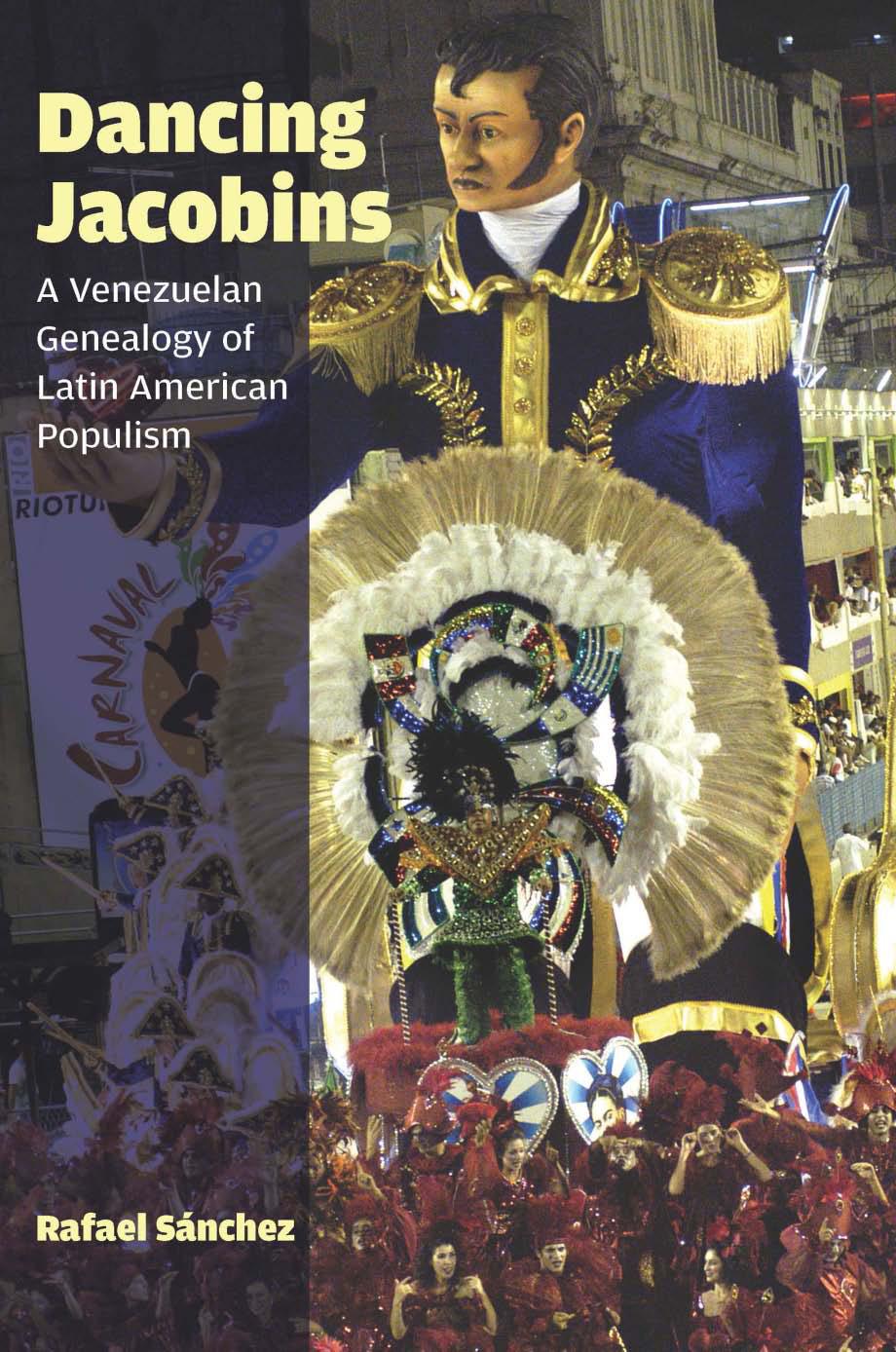
Since independence from Spain, a trope has remained pervasive in Latin America’s republican imaginary: that of an endless antagonism pitting civilization against barbarism as irreconcilable poles within which a nation’s life unfolds. This book apprehends that trope not just as the phantasmatic projection of postcolonial elites fearful of the popular sectors but also as a symptom of a stubborn historical predicament: the cyclical insistence with which the subaltern populations menacingly return to the nation’s public spaces in the form of crowds.
Focused on Venezuela but relevant to the rest of Latin America, and drawing on a rich theoretical literature including authors like Derrida, Foucault, Lacoue-Labarthe, Nancy, Lyotard, Laclau, Taussig, and others, Dancing Jacobins is a genealogical investigation of the intrinsically populist “monumental governmentality” that in response to this predicament began to take shape in that nation at the time of independence. Informed by a Bolivarian political theology, the nation’s representatives, or “dancing Jacobins,” recursively draw on the repertoire of busts, portraits, and equestrian statues of national heroes scattered across Venezuela in a montage of monuments and dancing—or universal and particular. They monumentalize themselves on the stage of the polity as a ponderously statuesque yet occasionally riotous reflection of the nation’s general will.
To this day, the nervous oscillation between crowds and peoplehood intrinsic to this form of government has inflected the republic’s institutions and constructs, from the sovereign “people” to the nation’s heroic imaginary, its constitutional texts, representative figures, parliamentary structures, and, not least, its army. Through this movement of collection and dispersion, these institutions are at all times haunted and imbued from within by the crowds they otherwise set out to mold, enframe, and address.
Before Memmo my notes were scattered across PDFs. Now a workspace pulls everything into one place — I see exactly what's still left to study.
Memmo's summaries are gold before exams. I don't have to re-read 800 pages two weeks before — just the important parts.
The AI chat has saved me the night before an exam more than once. I just keep asking until I get it — no waiting on a study group to reply.
The quizzes hit exactly what I need to know. Memmo tracks what I get stuck on — so I only practice what's worth it.
Flashcards with spaced repetition are magic. Memmo knows when I'm about to forget something and brings it back.
The AI podcasts are my favorite. I listen on my way to school and get a recap without sitting at a computer.

Handbok i kvalitativa metoder
281 kr

Hållbar utveckling: en introduktion för ingenjörer och andra problemlösare
334 kr

Brymans Samhällsvetenskapliga metoder
390 kr

Projektledning
491 kr

Den orättvisa hälsan: om socioekonomiska skillnader i hälsa och livslängd
326 kr

Organizational Leadership
429 kr

Vetenskapsteori för nybörjare
196 kr

På väg mot läraryrket
172 kr

Det sociala livet i skolan: Socialpsykologiska perspektiv
253 kr

Betygsättningens didaktik
151 kr

Personality
402 kr

Studying Leadership
404 kr

Managing Innovation
477 kr

Introduktion till samhällsvetenskaplig metod
347 kr

The Psychology of Sex and Gender
698 kr

Evidens och kunskap för socialt arbete
207 kr

Introduction to Leadership
605 kr