
Before Memmo my notes were scattered across PDFs. Now a workspace pulls everything into one place — I see exactly what's still left to study.
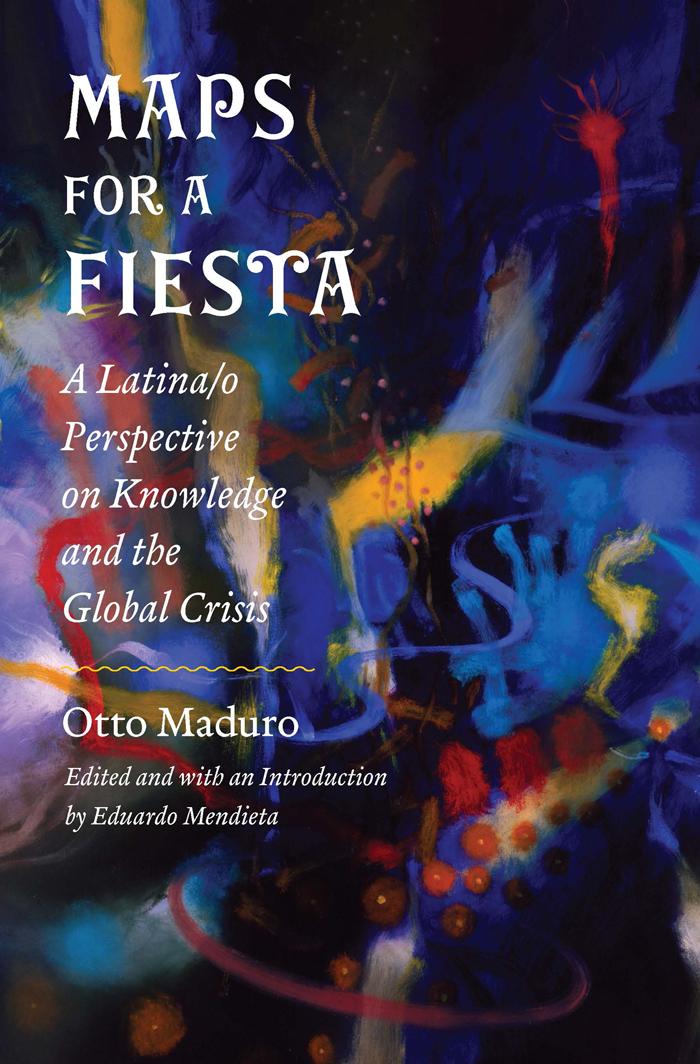
What can theology offer in the context of neoliberalism, globalization, growing inequality, and an ever more ecologically precarious planet that disproportionately affects the poor? This book, by one of the country’s best-known Latino theologians, explores possibilities for liberation from the forces that would impose certain forms of knowledge on our social world to manipulate our experience of identity, power, and justice.
Beautifully written in a refreshingly direct and accessible prose, Maduro’s book is nevertheless built upon subtly articulated critiques and insights. But to write a conventional academic tractatus would have run counter to Maduro’s project, which is built on his argument that ignorance is masked in the language of expertise, while true knowledge is dismissed because it is sometimes articulated in pedestrian language by those who produce it through the praxis of solidarity and struggle for social justice.
With a generosity and receptivity to his readers reminiscent of letters between old friends, and with the pointed but questioning wisdom of a teller of parables, Maduro has woven together a twenty-first-century reply to Marx’s “Theses on Feuerbach.” Neither conventional monograph nor memoir, neither a theological nor a political tract, but with elements of all of these, Maps for a Fiesta arrives as Maduro’s philosophical and theological testament—one that celebrates the knowledge-work and justice-making of the poor.
What Maduro offers here is a profound meditation on the relationship between knowledge and justice that could be read as a manifesto against the putatively unknowable world that capitalist chaos has made, in favor of a world that is known by the measure of its collective justice. His fiesta grants us the joy that nourishes us in our struggles, just as knowledge gives us the tools to build a more just society. What Maduro offers is nothing less than an epistemology of liberation.
Before Memmo my notes were scattered across PDFs. Now a workspace pulls everything into one place — I see exactly what's still left to study.
Memmo's summaries are gold before exams. I don't have to re-read 800 pages two weeks before — just the important parts.
The AI chat has saved me the night before an exam more than once. I just keep asking until I get it — no waiting on a study group to reply.
The quizzes hit exactly what I need to know. Memmo tracks what I get stuck on — so I only practice what's worth it.
Flashcards with spaced repetition are magic. Memmo knows when I'm about to forget something and brings it back.
The AI podcasts are my favorite. I listen on my way to school and get a recap without sitting at a computer.

Handbok i kvalitativa metoder
281 kr

Hållbar utveckling: en introduktion för ingenjörer och andra problemlösare
334 kr

Brymans Samhällsvetenskapliga metoder
390 kr

Projektledning
491 kr

Den orättvisa hälsan: om socioekonomiska skillnader i hälsa och livslängd
326 kr

Organizational Leadership
429 kr

Vetenskapsteori för nybörjare
196 kr

På väg mot läraryrket
172 kr

Det sociala livet i skolan: Socialpsykologiska perspektiv
253 kr

Betygsättningens didaktik
151 kr

Personality
402 kr

Studying Leadership
404 kr

Managing Innovation
477 kr

Introduktion till samhällsvetenskaplig metod
347 kr

The Psychology of Sex and Gender
698 kr

Evidens och kunskap för socialt arbete
207 kr

Introduction to Leadership
605 kr