
Before Memmo my notes were scattered across PDFs. Now a workspace pulls everything into one place — I see exactly what's still left to study.
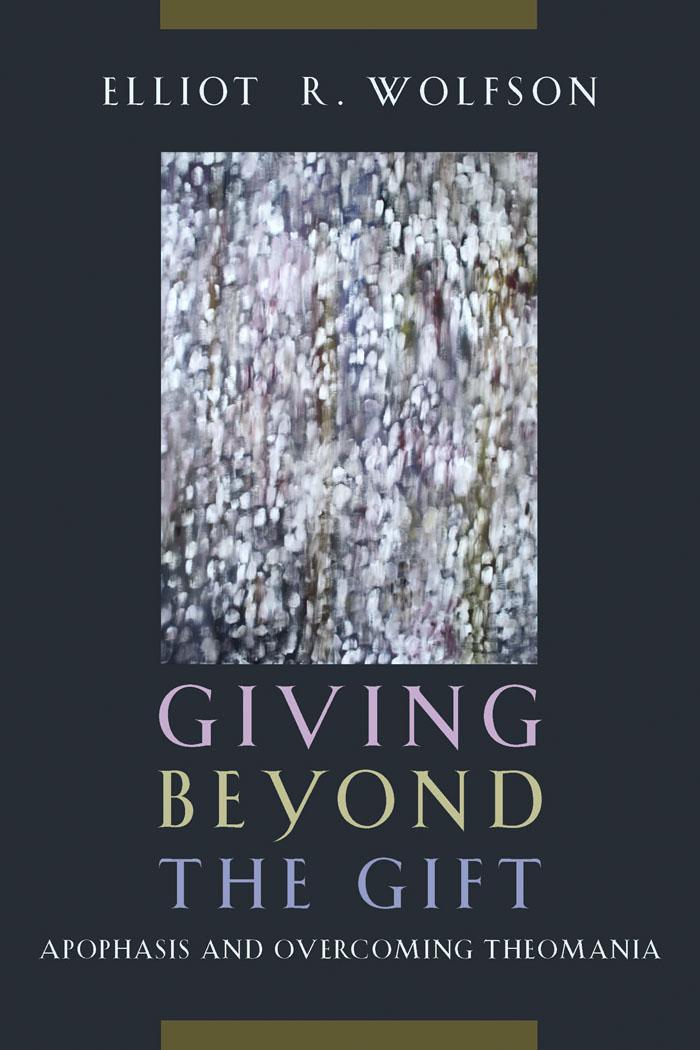
This book explores the co-dependency of monotheism and idolatry by examining the thought of several prominent twentieth-century Jewish philosophers—Cohen, Buber, Rosenzweig, and Levinas. While all of these thinkers were keenly aware of the pitfalls of scriptural theism, to differing degrees they each succumbed to the temptation to personify transcendence, even as they tried either to circumvent or to restrain it by apophatically purging kataphatic descriptions of the deity. Derrida and Wyschogrod, by contrast, carried the project of denegation one step further, embarking on a path that culminated in the aporetic suspension of belief and the consequent removal of all images from God, a move that seriously compromises the viability of devotional piety.
The inquiry into apophasis, transcendence, and immanence in these Jewish thinkers is symptomatic of a larger question. Recent attempts to harness the apophatic tradition to construct a viable postmodern negative theology, a religion without religion, are not radical enough. Not only are these philosophies of transcendence guilty of a turn to theology that defies the phenomenological presupposition of an immanent phenomenality, but they fall short on their own terms, inasmuch as they persist in employing metaphorical language that personalizes transcendence and thereby runs the risk of undermining the irreducible alterity and invisibility attributed to the transcendent other.
The logic of apophasis, if permitted to run its course fully, would exceed the need to posit some form of transcendence that is not ultimately a facet of immanence. Apophatic theologies, accordingly, must be supplanted by a more far-reaching apophasis that surpasses the theolatrous impulse lying coiled at the crux of theism, an apophasis of apophasis, based on accepting an absolute nothingness—to be distinguished from the nothingness of an absolute—that does not signify the unknowable One but rather the manifold that is the pleromatic abyss at being’s core. Hence, the much-celebrated metaphor of the gift must give way to the more neutral and less theologically charged notion of an unconditional givenness in which the distinction between giver and given collapses. To think givenness in its most elemental, phenomenological sense is to allow the apparent to appear as given without presuming a causal agency that would turn that given into a gift.
Before Memmo my notes were scattered across PDFs. Now a workspace pulls everything into one place — I see exactly what's still left to study.
Memmo's summaries are gold before exams. I don't have to re-read 800 pages two weeks before — just the important parts.
The AI chat has saved me the night before an exam more than once. I just keep asking until I get it — no waiting on a study group to reply.
The quizzes hit exactly what I need to know. Memmo tracks what I get stuck on — so I only practice what's worth it.
Flashcards with spaced repetition are magic. Memmo knows when I'm about to forget something and brings it back.
The AI podcasts are my favorite. I listen on my way to school and get a recap without sitting at a computer.

Handbok i kvalitativa metoder
281 kr

Hållbar utveckling: en introduktion för ingenjörer och andra problemlösare
334 kr

Brymans Samhällsvetenskapliga metoder
390 kr

Projektledning
491 kr

Den orättvisa hälsan: om socioekonomiska skillnader i hälsa och livslängd
326 kr

Organizational Leadership
429 kr

Vetenskapsteori för nybörjare
196 kr

På väg mot läraryrket
172 kr

Det sociala livet i skolan: Socialpsykologiska perspektiv
253 kr

Betygsättningens didaktik
151 kr

Personality
402 kr

Studying Leadership
404 kr

Managing Innovation
477 kr

Introduktion till samhällsvetenskaplig metod
347 kr

The Psychology of Sex and Gender
698 kr

Evidens och kunskap för socialt arbete
207 kr

Introduction to Leadership
605 kr