
Before Memmo my notes were scattered across PDFs. Now a workspace pulls everything into one place — I see exactly what's still left to study.
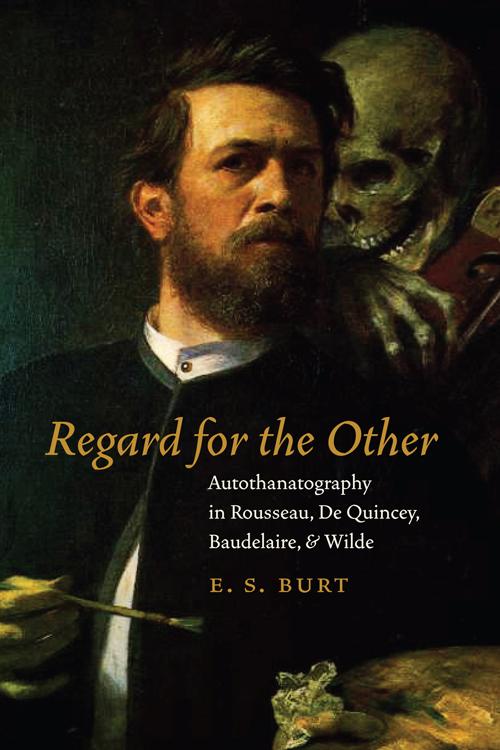
Although much has been written on autobiography, the same cannot be said of autothanatography, the writing of one's death. This study starts from the deconstructive premise that autobiography is aporetic, not or not only a matter of a subject strategizing with language to produce an exemplary identity but a matter also of its responding to an exorbitant call to write its death. The I-dominated representations of particular others and of the privileged other to whom a work is addressed, must therefore be set against an alterity plaguing the I from within or shadowing it from without. This alterity makes itself known in writing as the potential of the text to carry messages that remain secret to the confessing subject.
Anticipation of the potential for the confessional text to say what Augustine calls "the secret I do not know," the secret of death, engages the autothanatographical subject in a dynamic, inventive, and open-ended process of identification. The subject presented in these texts is not one that has already evolved an interior life that it seeks to reveal to others, but one that speaks to us as still in process. Through its exorbitant response, it gives intimations of an interiority and an ethical existence to come.
Baudelaire emerges as a central figure for this understanding of autobiography as autothanatography through his critique of the narcissism of a certain Rousseau, his translation of De Quincey's confessions, with their vertiginously ungrounded subject-in-construction, his artistic practice of self-conscious, thorough-going doubleness, and his service to Wilde as model for an aporetic secrecy.
The author discusses the interruption of narrative that must be central to the writing of one's death and addresses the I's dealings with the aporias of such structuring principles as secrecy, Levinasian hospitality, or interiorization as translation. The book makes a strong intervention in the debate over one of the most-read genres of our time.
Before Memmo my notes were scattered across PDFs. Now a workspace pulls everything into one place — I see exactly what's still left to study.
Memmo's summaries are gold before exams. I don't have to re-read 800 pages two weeks before — just the important parts.
The AI chat has saved me the night before an exam more than once. I just keep asking until I get it — no waiting on a study group to reply.
The quizzes hit exactly what I need to know. Memmo tracks what I get stuck on — so I only practice what's worth it.
Flashcards with spaced repetition are magic. Memmo knows when I'm about to forget something and brings it back.
The AI podcasts are my favorite. I listen on my way to school and get a recap without sitting at a computer.

Handbok i kvalitativa metoder
281 kr

Hållbar utveckling: en introduktion för ingenjörer och andra problemlösare
334 kr

Brymans Samhällsvetenskapliga metoder
390 kr

Projektledning
491 kr

Den orättvisa hälsan: om socioekonomiska skillnader i hälsa och livslängd
326 kr

Vetenskapsteori för nybörjare
196 kr

Organizational Leadership
429 kr

På väg mot läraryrket
172 kr

Det sociala livet i skolan: Socialpsykologiska perspektiv
253 kr

Betygsättningens didaktik
151 kr

Personality
402 kr

Studying Leadership
404 kr

Managing Innovation
477 kr

Introduktion till samhällsvetenskaplig metod
347 kr

The Psychology of Sex and Gender
698 kr

Evidens och kunskap för socialt arbete
207 kr

Introduction to Leadership
605 kr