
Before Memmo my notes were scattered across PDFs. Now a workspace pulls everything into one place — I see exactly what's still left to study.
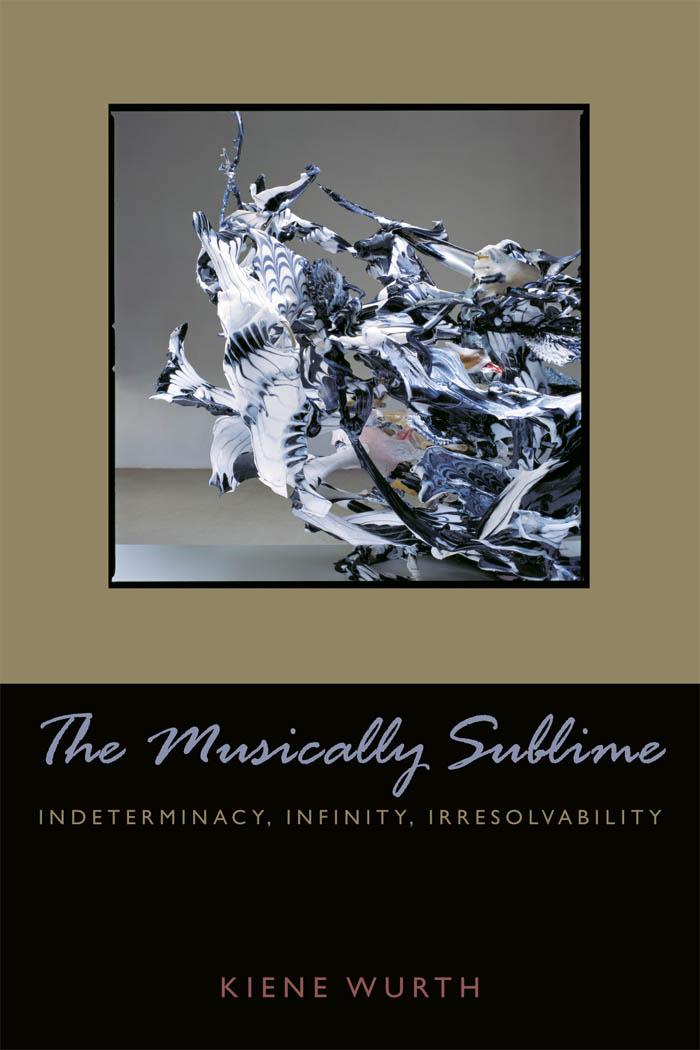
Musically Sublime rewrites musically the history and philosophy of the sublime. Music enables us to reconsider the traditional course of sublime feeling on a track from pain to pleasure. Resisting the notion that there is a single format for sublime feeling, Wurth shows how, from the mid eighteenth century onward, sublime feeling is, instead, constantly rearticulated in a complex interaction with musicality.
Wurth takes as her point of departure Immanuel Kant's Critique of Judgment and Jean-François Lyotard's aesthetic writings of the 1980s and 1990s. Kant framed the sublime narratively as an epic of self-transcendence. By contrast, Lyotard sought to substitute open immanence for Kantian transcendence, yet he failed to deconstruct the Kantian epic. The book performs this deconstruction by juxtaposing eighteenth- and nineteenth-century conceptions of the infinite, Sehnsucht, the divided self, and unconscious drives with contemporary readings of instrumental music.
Critically assessing Edmund Burke, James Usher, E.T.A. Hoffmann, Novalis, Friedrich Hölderlin, Arthur Schopenhauer, Richard Wagner, and Friedrich Nietzsche, this book re-presents the sublime as a feeling that defers resolution and hangs suspended between pain and pleasure. Musically Sublime rewrites the mathematical sublime as différance, while it redresses the dynamical sublime as trauma: unending, undetermined, unresolved.
Whereas most musicological studies in this area have focused on traces of the Kantian sublime in Handel, Haydn, and Beethoven, this book calls on the nineteenth-century theorist Arthur Seidl to analyze the sublime of, rather than in, music. It does so by invoking Seidl's concept of formwidrigkeit ("form-contrariness") in juxtaposition with Romantic piano music, (post)modernist musical minimalisms, and Lyotard's postmodern sublime. It presents a sublime of matter, rather than form-performative rather than representational. In doing so, Musically Sublime shows that the binary distinction Lyotard posits between the postmodern and romantic sublime is finally untenable.
Before Memmo my notes were scattered across PDFs. Now a workspace pulls everything into one place — I see exactly what's still left to study.
Memmo's summaries are gold before exams. I don't have to re-read 800 pages two weeks before — just the important parts.
The AI chat has saved me the night before an exam more than once. I just keep asking until I get it — no waiting on a study group to reply.
The quizzes hit exactly what I need to know. Memmo tracks what I get stuck on — so I only practice what's worth it.
Flashcards with spaced repetition are magic. Memmo knows when I'm about to forget something and brings it back.
The AI podcasts are my favorite. I listen on my way to school and get a recap without sitting at a computer.

Handbok i kvalitativa metoder
281 kr

Hållbar utveckling: en introduktion för ingenjörer och andra problemlösare
334 kr

Brymans Samhällsvetenskapliga metoder
390 kr

Projektledning
491 kr

Den orättvisa hälsan: om socioekonomiska skillnader i hälsa och livslängd
326 kr

Organizational Leadership
429 kr

Vetenskapsteori för nybörjare
196 kr

På väg mot läraryrket
172 kr

Det sociala livet i skolan: Socialpsykologiska perspektiv
253 kr

Betygsättningens didaktik
151 kr

Personality
402 kr

Studying Leadership
404 kr

Managing Innovation
477 kr

Introduktion till samhällsvetenskaplig metod
347 kr

The Psychology of Sex and Gender
698 kr

Evidens och kunskap för socialt arbete
207 kr

Introduction to Leadership
605 kr