
Before Memmo my notes were scattered across PDFs. Now a workspace pulls everything into one place — I see exactly what's still left to study.
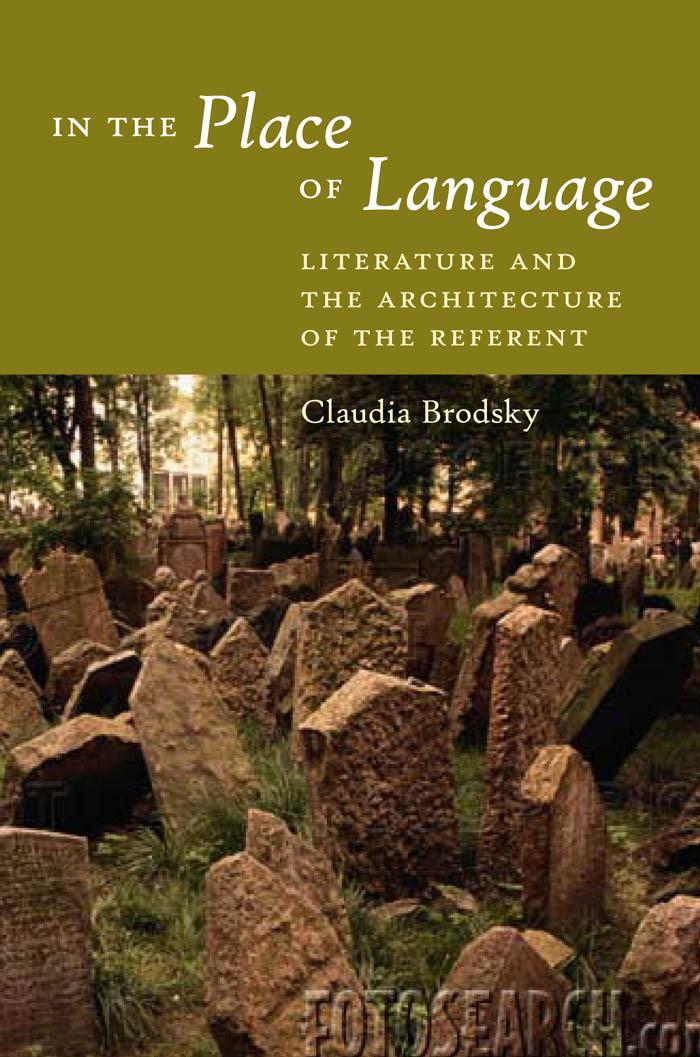
The "place" in the title of Claudia Brodsky's remarkable new book is the intersection of language with building, the marking, for future reference, of material constructions in the world. The "referent" Brodsky describes is not something first found in nature and then named but a thing whose own origin joins language with materiality, a thing marked as it is made to begin with. In the Place of Language: Literature and the Architecture of the Referent develops a theory of the "referent" that is thus also a theory of the possibility of historical knowledge, one that undermines the conventional opposition of language to the real by theories of nominalism and materialism alike, no less than it confronts the mystical conflation of language with matter, whether under the aegis of the infinite reproducibility of the image or the identification of language with "Being."
Challenging these equally naive views of language - as essentially immaterial or the only essential matter - Brodsky investigates the interaction of language with the material that literature represents. For literature, Brodsky argues, seeks no refuge from its own inherently iterable, discursive medium in dreams of a technologically-induced freedom from history or an ontological history of language-being. Instead it tells the complex story of historical referents constructed and forgotten, things built into the earth upon which history "takes place" and of which, in the course of history, all visible trace is temporarily effaced. Literature represents the making of history, the building and burial of the referent, the present world of its oblivion and the future of its unearthing, and it can do this because, unlike the historical referent, it literally takes no place, is not tied to any building or performance in space.
For the same reason literature can reveal the historical nature of the making of meaning, demonstrating that the shaping and experience of the real, the marking of matter that constitutes historical referents, also defers knowledge of the real to a later date. Through close readings of central texts by Goethe, Plato, Kant, Heidegger, and Benjamin, redefined by the interrelationship of building and language they represent, In the Place of Language analyzes what remains of actions that attempt to take the place of language: the enduring, if intermittently obscured bases, of theoretical reflection itself.
Before Memmo my notes were scattered across PDFs. Now a workspace pulls everything into one place — I see exactly what's still left to study.
Memmo's summaries are gold before exams. I don't have to re-read 800 pages two weeks before — just the important parts.
The AI chat has saved me the night before an exam more than once. I just keep asking until I get it — no waiting on a study group to reply.
The quizzes hit exactly what I need to know. Memmo tracks what I get stuck on — so I only practice what's worth it.
Flashcards with spaced repetition are magic. Memmo knows when I'm about to forget something and brings it back.
The AI podcasts are my favorite. I listen on my way to school and get a recap without sitting at a computer.

Handbok i kvalitativa metoder
281 kr

Hållbar utveckling: en introduktion för ingenjörer och andra problemlösare
334 kr

Brymans Samhällsvetenskapliga metoder
390 kr

Projektledning
491 kr

Den orättvisa hälsan: om socioekonomiska skillnader i hälsa och livslängd
326 kr

Vetenskapsteori för nybörjare
196 kr

Organizational Leadership
429 kr

På väg mot läraryrket
172 kr

Det sociala livet i skolan: Socialpsykologiska perspektiv
253 kr

Betygsättningens didaktik
151 kr

Personality
402 kr

Studying Leadership
404 kr

Managing Innovation
477 kr

Introduktion till samhällsvetenskaplig metod
347 kr

The Psychology of Sex and Gender
698 kr

Evidens och kunskap för socialt arbete
207 kr

Introduction to Leadership
605 kr