
Before Memmo my notes were scattered across PDFs. Now a workspace pulls everything into one place — I see exactly what's still left to study.
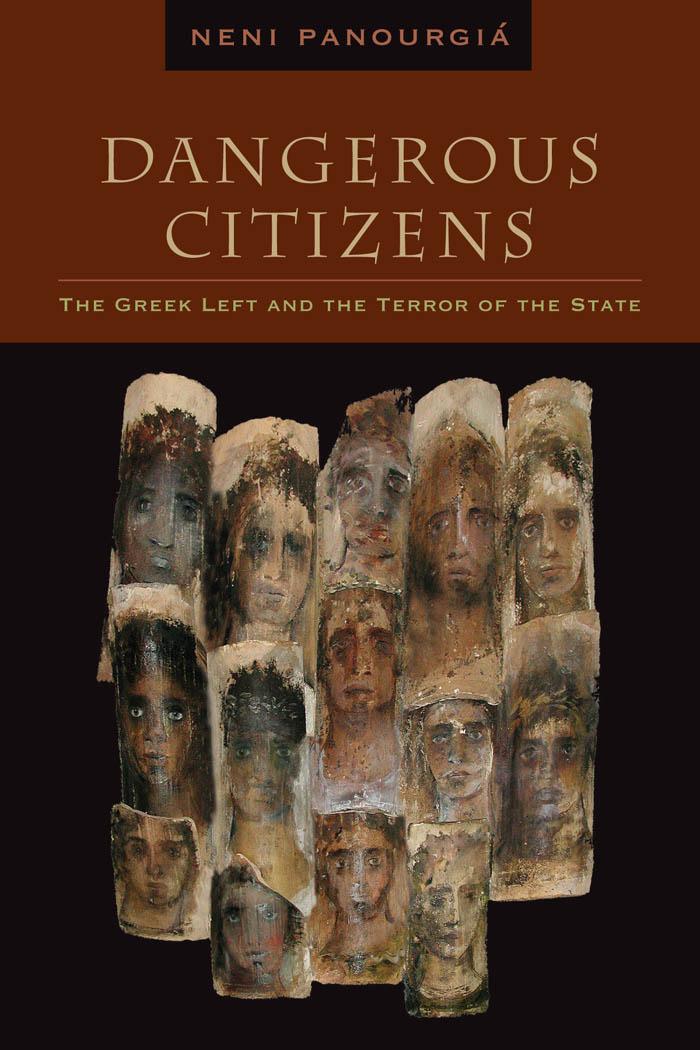
This book simultaneously tells a story—or rather, stories—and a history. The stories are those of Greek Leftists as paradigmatic figures of abjection, given that between 1929 and 1974 tens of thousands of Greek dissidents were detained and tortured in prisons, places of exile, and concentration camps. They were sometimes held for decades, in subhuman conditions of toil and deprivation.
The history is that of how the Greek Left was constituted by the Greek state as a zone of danger. Legislation put in place in the early twentieth century postulated this zone. Once the zone was created, there was always the possibility—which came to be a horrific reality after the Greek Civil War of 1946 to 1949—that the state would populate it with its own citizens. Indeed, the Greek state started to do so in 1929, by identifying ever-increasing numbers of citizens as “Leftists” and persecuting them with means extending from indefinite detention to execution.
In a striking departure from conventional treatments, Neni Panourgiá places the Civil War in a larger historical context, within ruptures that have marked Greek society for centuries. She begins the story in 1929, when the Greek state set up numerous exile camps on isolated islands in the Greek archipelago. The legal justification for these camps drew upon laws reaching back to 1871—originally directed at controlling “brigands”—that allowed the death penalty for those accused and the banishment of their family members and anyone helping to conceal them. She ends with the 2004 trial of the Revolutionary Organization 17 November.
Drawing on years of fieldwork, Panourgiá uses ethnographic interviews, archival material, unpublished personal narratives, and memoirs of political prisoners and dissidents to piece together the various microhistories of a generation, stories that reveal how the modern Greek citizen was created as a fraught political subject.
Her book does more than give voice to feelings and experiences suppressed for decades. It establishes a history for the notion of indefinite detention that appeared as a legal innovation with the Bush administration. Part of its roots, Panourgiá shows, lie in the laboratory that Greece provided for neo-colonialism after the Truman Doctrine and under the Marshall Plan.
Before Memmo my notes were scattered across PDFs. Now a workspace pulls everything into one place — I see exactly what's still left to study.
Memmo's summaries are gold before exams. I don't have to re-read 800 pages two weeks before — just the important parts.
The AI chat has saved me the night before an exam more than once. I just keep asking until I get it — no waiting on a study group to reply.
The quizzes hit exactly what I need to know. Memmo tracks what I get stuck on — so I only practice what's worth it.
Flashcards with spaced repetition are magic. Memmo knows when I'm about to forget something and brings it back.
The AI podcasts are my favorite. I listen on my way to school and get a recap without sitting at a computer.

Handbok i kvalitativa metoder
281 kr

Hållbar utveckling: en introduktion för ingenjörer och andra problemlösare
334 kr

Brymans Samhällsvetenskapliga metoder
390 kr

Projektledning
491 kr

Den orättvisa hälsan: om socioekonomiska skillnader i hälsa och livslängd
326 kr

Organizational Leadership
429 kr

Vetenskapsteori för nybörjare
196 kr

På väg mot läraryrket
172 kr

Det sociala livet i skolan: Socialpsykologiska perspektiv
253 kr

Betygsättningens didaktik
151 kr

Personality
402 kr

Studying Leadership
404 kr

Managing Innovation
477 kr

Introduktion till samhällsvetenskaplig metod
347 kr

The Psychology of Sex and Gender
698 kr

Evidens och kunskap för socialt arbete
207 kr

Introduction to Leadership
605 kr