
Before Memmo my notes were scattered across PDFs. Now a workspace pulls everything into one place — I see exactly what's still left to study.
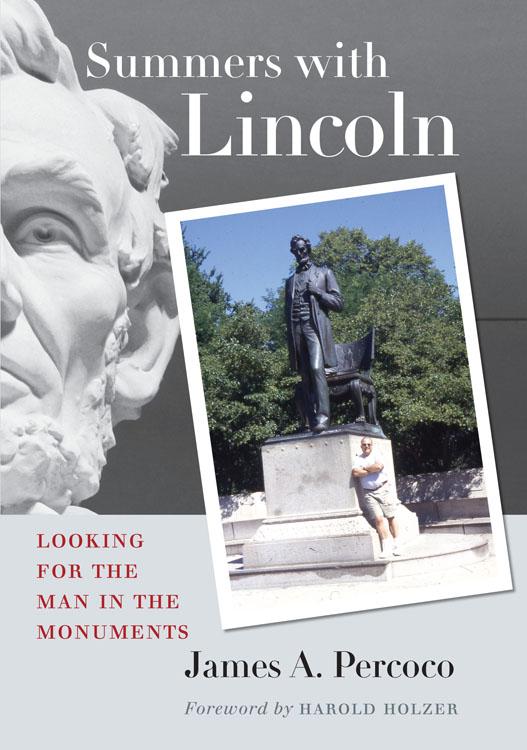
Across the country, in the middle of busy city squares and hidden on quiet streets, there are nearly 200 statues erected in memory of Abraham Lincoln. No other American has ever been so widely commemorated.
A few years ago, anticipating the bicentennial of Lincoln’s birth in 2009, Jim Percoco, a history teacher with a passion for both Lincoln and public sculpture, set off to see what he might learn about some of these monuments—what they meant when they were unveiled, and what they mean to us today. The result is this captivating book, a fascinating chronicle of four summers on the road looking for Lincoln stories in statues of marble and bronze.
Of all the monuments, Percoco selects seven emblematic ones. He begins and ends the journey in Washington, starting with Thomas Ball’s Emancipation Group, erected east of the Capitol in 1876 with private funds from African Americans, and dedicated by Frederick Douglass. Here, Percoco and his multi-ethnic band of teenage historians explore the impact of this Freedman’s Monument showing Lincoln and a kneeling freed bondsperson. What does the statute say about race and freedom to today’s Americans? What did Ball—and his sponsors—want it to say? From Augustus Saint-Gaudens’s majestic Standing Lincoln of 1887 in Chicago, which helped move our image of Lincoln from great emancipator to that of statesman to Paul Manship’s 1932 Lincoln the Hoosier Youth, in Fort Wayne, Indiana, which glows with an art deco sleekness, Percoco mines a wealth of Lincoln legacies—and our reactions to them expressed across generations. Here are controversial gems like Barnard’s 1917 tribute in Cincinnati and Borglum’s Seated Lincoln, struggling with the pain of leadership, beckoning visitors to sit next to him on his metal bench in Newark, New Jersey.
At each stop, Percoco chronicles the history of each monument, spotlighting its artistic, social, political, and cultural origins. His descriptions of works so often seen as clichés tease fresh meaning from mute stone and cold metal—raising provocative questions not just about who Lincoln might have been, but also about what we’ve wanted him to be in the monuments we’ve built.
Before Memmo my notes were scattered across PDFs. Now a workspace pulls everything into one place — I see exactly what's still left to study.
Memmo's summaries are gold before exams. I don't have to re-read 800 pages two weeks before — just the important parts.
The AI chat has saved me the night before an exam more than once. I just keep asking until I get it — no waiting on a study group to reply.
The quizzes hit exactly what I need to know. Memmo tracks what I get stuck on — so I only practice what's worth it.
Flashcards with spaced repetition are magic. Memmo knows when I'm about to forget something and brings it back.
The AI podcasts are my favorite. I listen on my way to school and get a recap without sitting at a computer.

Handbok i kvalitativa metoder
281 kr

Hållbar utveckling: en introduktion för ingenjörer och andra problemlösare
334 kr

Brymans Samhällsvetenskapliga metoder
390 kr

Projektledning
491 kr

Den orättvisa hälsan: om socioekonomiska skillnader i hälsa och livslängd
326 kr

Vetenskapsteori för nybörjare
196 kr

Organizational Leadership
429 kr

På väg mot läraryrket
172 kr

Det sociala livet i skolan: Socialpsykologiska perspektiv
253 kr

Betygsättningens didaktik
151 kr

Personality
402 kr

Studying Leadership
404 kr

Managing Innovation
477 kr

Introduktion till samhällsvetenskaplig metod
347 kr

The Psychology of Sex and Gender
698 kr

Evidens och kunskap för socialt arbete
207 kr

Introduction to Leadership
605 kr