
Before Memmo my notes were scattered across PDFs. Now a workspace pulls everything into one place — I see exactly what's still left to study.
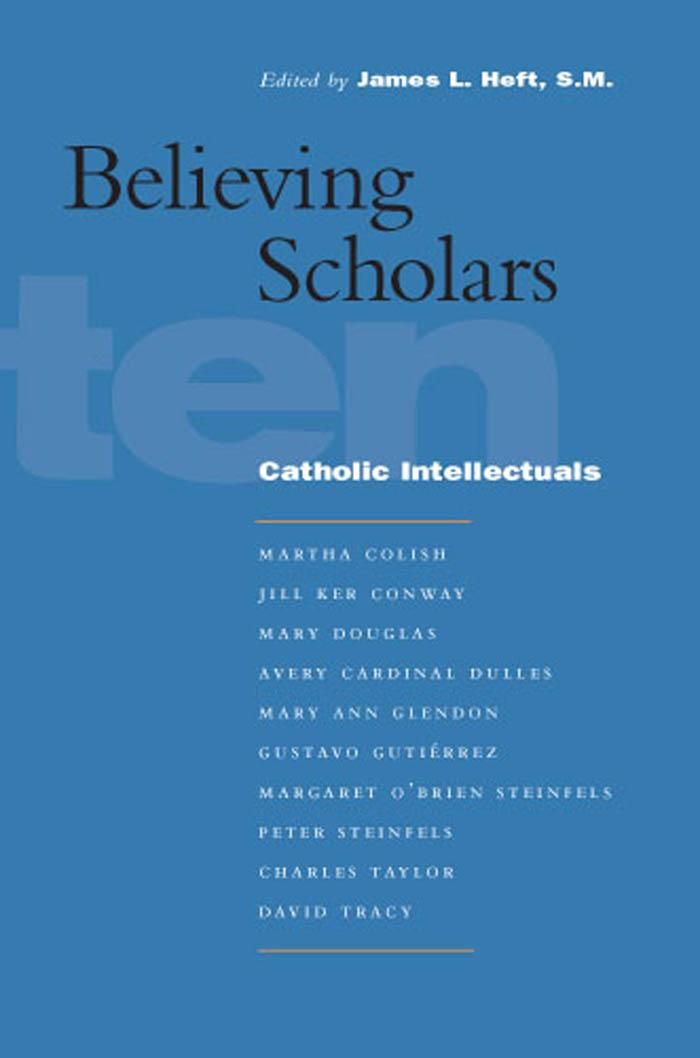
How do Catholic intellectuals draw on faith in their work? And how does their work as scholars influence their lives as people of faith?
For more than a generation, the University of Dayton has invited a prominent Catholic intellectual to present the annual Marianist Award Lecture on the general theme of the encounter of faith and profession. Over the years, the lectures have become central to the Catholic conversation about church, culture, and society.
In this book, ten leading figures explore the connections in their own lives between the private realms of faith and their public calling as teachers, scholars, and intellectuals.
This last decade of Marianist Lectures brings together theologians and philosophers, historians, anthropologists, academic scholars, and lay intellectuals and critics.
Here are Avery Cardinal Dulles, S.J., on the tensions between faith and theology in his career; Jill Ker Conway on the spiritual dimensions of memory and personal narrative; Mary Ann Glendon on the roots of human rights in Catholic social teaching; Mary Douglas on the fruitful dialogue between religion and anthropology in her own life; Peter Steinfels on what it really means to be a “liberal Catholic”; and Margaret O’Brien Steinfels on the complicated history of women in today’s church. From Charles Taylor and David Tracy on the fractured relationship between Catholicism and modernity to Gustavo Gutiérrez on the enduring call of the poor and Marcia Colish on the historic links between the church and intellectual freedom, these essays track a decade of provocative, illuminating, and essential thought.
James L. Heft, S.M., is President and Founding Director of the Institute for Advanced Catholic Studies and University Professor of Faith and Culture and Chancellor, University of Dayton. He has edited Beyond Violence: Religious Sources for Social Transformation in Judaism, Christianity, and Islam (Fordham).
Before Memmo my notes were scattered across PDFs. Now a workspace pulls everything into one place — I see exactly what's still left to study.
Memmo's summaries are gold before exams. I don't have to re-read 800 pages two weeks before — just the important parts.
The AI chat has saved me the night before an exam more than once. I just keep asking until I get it — no waiting on a study group to reply.
The quizzes hit exactly what I need to know. Memmo tracks what I get stuck on — so I only practice what's worth it.
Flashcards with spaced repetition are magic. Memmo knows when I'm about to forget something and brings it back.
The AI podcasts are my favorite. I listen on my way to school and get a recap without sitting at a computer.

Handbok i kvalitativa metoder
281 kr

Hållbar utveckling: en introduktion för ingenjörer och andra problemlösare
334 kr

Brymans Samhällsvetenskapliga metoder
390 kr

Projektledning
491 kr

Den orättvisa hälsan: om socioekonomiska skillnader i hälsa och livslängd
326 kr

Vetenskapsteori för nybörjare
196 kr

Organizational Leadership
429 kr

På väg mot läraryrket
172 kr

Det sociala livet i skolan: Socialpsykologiska perspektiv
253 kr

Betygsättningens didaktik
151 kr

Personality
402 kr

Studying Leadership
404 kr

Managing Innovation
477 kr

Introduktion till samhällsvetenskaplig metod
347 kr

The Psychology of Sex and Gender
698 kr

Evidens och kunskap för socialt arbete
207 kr

Introduction to Leadership
605 kr