
Before Memmo my notes were scattered across PDFs. Now a workspace pulls everything into one place — I see exactly what's still left to study.
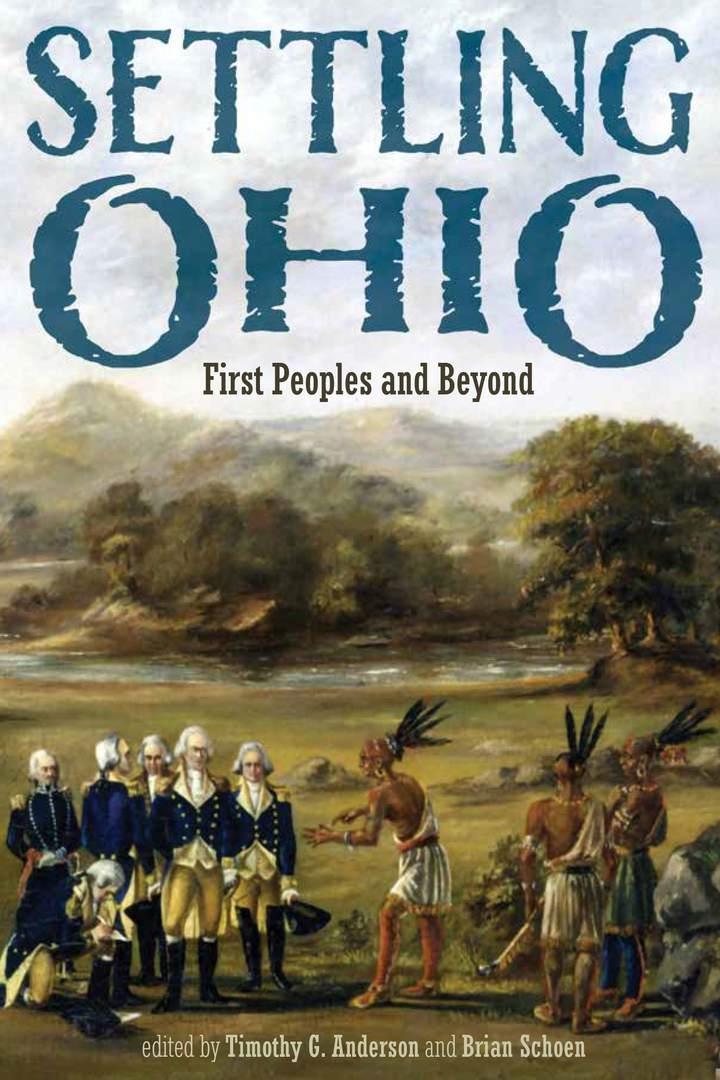
Scholars working in archaeology, education, history, geography, and politics tell a nuanced story about the people and dynamics that reshaped this region and determined who would control it.
The Ohio Valley possesses some of the most resource-rich terrain in the world. Its settlement by humans was thus consequential not only for shaping the geographic and cultural landscape of the region but also for forming the United States and the future of world history.
Settling Ohio begins with an overview of the first people who inhabited the region, who built civilizations that moved massive amounts of earth and left an archaeological record that drew the interest of subsequent settlers and continues to intrigue scholars. It highlights how, in the eighteenth century, Native Americans who migrated from the East and North interacted with Europeans to develop impressive trading networks and how they navigated complicated wars and sought to preserve national identities in the face of violent attempts to remove them from their lands.
The book situates the traditional story of Ohio settlement, including the Northwest Ordinance, the dealings of the Ohio Company of Associates, and early road building, into a far richer story of contested spaces, competing visions of nationhood, and complicated relations with Indian peoples. By so doing, the contributors provide valuable new insights into how chaotic and contingent early national politics and frontier development truly were. Chapters highlighting the role of apple-growing culture, education, African American settlers, and the diverse migration flows into Ohio from the East and Europe further demonstrate the complex multiethnic composition of Ohio’s early settlements and the tensions that resulted.
A final theme of this volume is the desirability of working to recover the often-forgotten history of non-White peoples displaced by the processes of settler colonialism that has been, until recently, undervalued in the scholarship.
Before Memmo my notes were scattered across PDFs. Now a workspace pulls everything into one place — I see exactly what's still left to study.
Memmo's summaries are gold before exams. I don't have to re-read 800 pages two weeks before — just the important parts.
The AI chat has saved me the night before an exam more than once. I just keep asking until I get it — no waiting on a study group to reply.
The quizzes hit exactly what I need to know. Memmo tracks what I get stuck on — so I only practice what's worth it.
Flashcards with spaced repetition are magic. Memmo knows when I'm about to forget something and brings it back.
The AI podcasts are my favorite. I listen on my way to school and get a recap without sitting at a computer.

Handbok i kvalitativa metoder
281 kr

Hållbar utveckling: en introduktion för ingenjörer och andra problemlösare
334 kr

Brymans Samhällsvetenskapliga metoder
390 kr

Projektledning
491 kr

Den orättvisa hälsan: om socioekonomiska skillnader i hälsa och livslängd
326 kr

Organizational Leadership
429 kr

Vetenskapsteori för nybörjare
196 kr

På väg mot läraryrket
172 kr

Det sociala livet i skolan: Socialpsykologiska perspektiv
253 kr

Betygsättningens didaktik
151 kr

Personality
402 kr

Studying Leadership
404 kr

Managing Innovation
477 kr

Introduktion till samhällsvetenskaplig metod
347 kr

The Psychology of Sex and Gender
698 kr

Evidens och kunskap för socialt arbete
207 kr

Introduction to Leadership
605 kr