
Before Memmo my notes were scattered across PDFs. Now a workspace pulls everything into one place — I see exactly what's still left to study.
The history of US imperialism remains incomplete without this consideration of long-overlooked nineteenth-century American commercial and whaling ventures in the Indian Ocean.
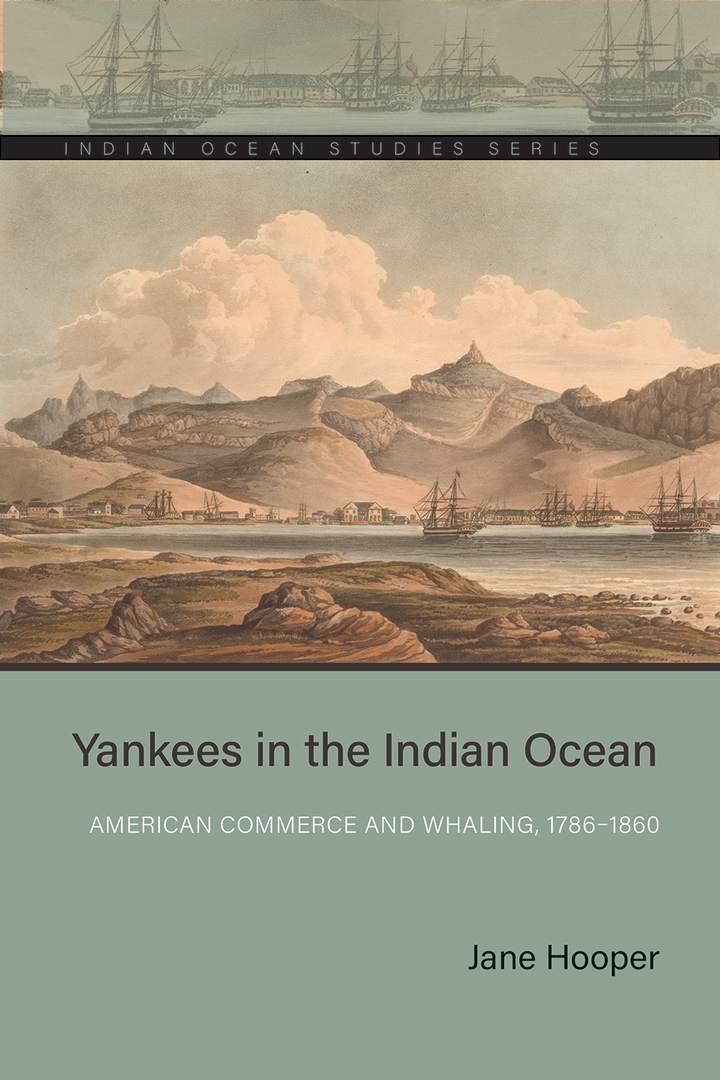
Yankees in the Indian Ocean shows how nineteenth-century American merchant and whaler activity in the Indian Ocean shaped the imperial future of the United States, influenced the region’s commerce, encouraged illegal slaving, and contributed to environmental degradation. For a brief time, Americans outnumbered other Western visitors to Mauritius, Madagascar, Zanzibar, and the East African littoral. In a relentless search for commodities and provisions, American whaleships landed at islands throughout the ocean and stripped them of resources. Yet Americans failed to develop a permanent foothold in the region and operated instead from a position of weakness relative to other major colonizing powers, thus discouraging the development of American imperial holdings there.
The history of American concerns in the Indian Ocean world remains largely unwritten. Scholars who focus on the region have mostly ignored American involvement, despite arguments for the ocean’s importance in powering global connections during the late eighteenth and early nineteenth centuries. Historians of the United States likewise have failed to examine the western Indian Ocean because of a preoccupation with US interests in Asia and the Pacific. Failing to understand the scale of American trade in the Indian Ocean has led to a fixation on European commercial strength to the exclusion of other maritime networks. Instead, this book reveals how the people of Madagascar and East Africa helped the United States briefly dominate commerce and whaling.
This book investigates how and why Americans were drawn to the western Indian Ocean years before the United States established a formal overseas empire in the late nineteenth century. Ship logs, sailor journals, and travel narratives reveal how American men transformed foreign land- and seascapes into knowable spaces that confirmed American conceptions of people and natural resources; these sources also provide insight into the complex social and ecological worlds of the Indian Ocean during this critical time.
Before Memmo my notes were scattered across PDFs. Now a workspace pulls everything into one place — I see exactly what's still left to study.
Memmo's summaries are gold before exams. I don't have to re-read 800 pages two weeks before — just the important parts.
The AI chat has saved me the night before an exam more than once. I just keep asking until I get it — no waiting on a study group to reply.
The quizzes hit exactly what I need to know. Memmo tracks what I get stuck on — so I only practice what's worth it.
Flashcards with spaced repetition are magic. Memmo knows when I'm about to forget something and brings it back.
The AI podcasts are my favorite. I listen on my way to school and get a recap without sitting at a computer.

Handbok i kvalitativa metoder
281 kr

Hållbar utveckling: en introduktion för ingenjörer och andra problemlösare
334 kr

Brymans Samhällsvetenskapliga metoder
390 kr

Projektledning
491 kr

Den orättvisa hälsan: om socioekonomiska skillnader i hälsa och livslängd
326 kr

Organizational Leadership
429 kr

Vetenskapsteori för nybörjare
196 kr

På väg mot läraryrket
172 kr

Det sociala livet i skolan: Socialpsykologiska perspektiv
253 kr

Betygsättningens didaktik
151 kr

Personality
402 kr

Studying Leadership
404 kr

Managing Innovation
477 kr

Introduktion till samhällsvetenskaplig metod
347 kr

The Psychology of Sex and Gender
698 kr

Evidens och kunskap för socialt arbete
207 kr

Introduction to Leadership
605 kr