
Before Memmo my notes were scattered across PDFs. Now a workspace pulls everything into one place — I see exactly what's still left to study.
The key to mitigating the environmental crisis isn’t just based on science; it depends upon a profound philosophical revision of how we think about and behave in relation to the world.
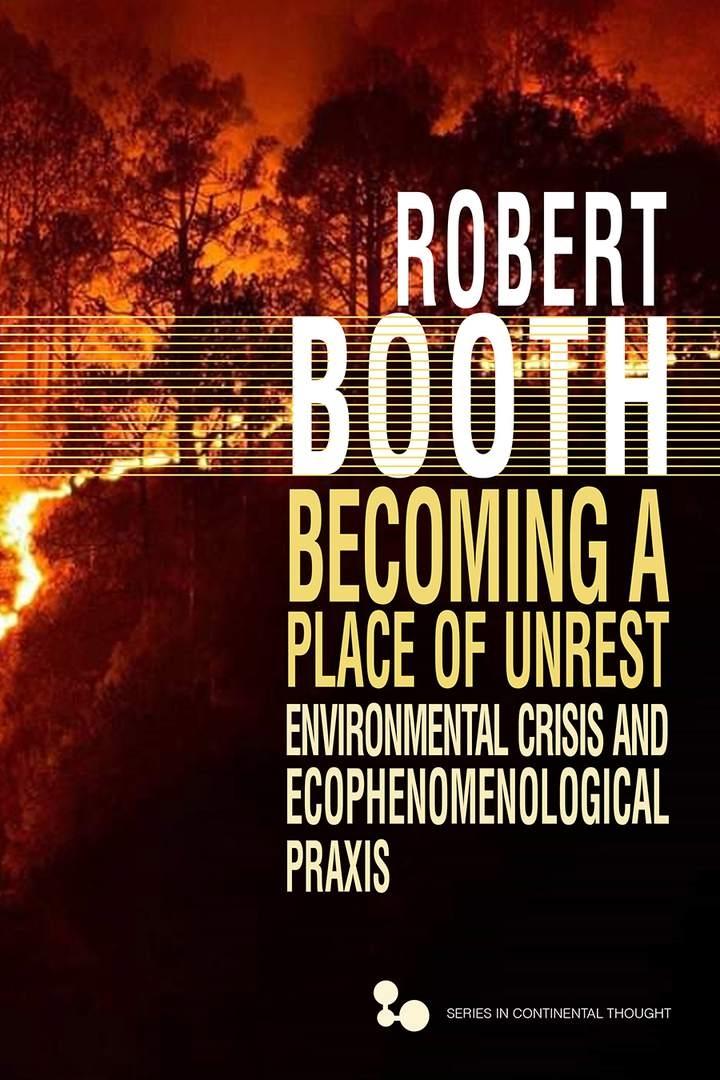
Our ongoing failure to interrupt the environmental crisis in a meaningful way stems, in part, from how we perceive the environment—what Robert Booth calls the "more-than-human world.” Anthropocentric presumptions of this world, inherited from natural science, have led us to better scientific knowledge about environmental problems and more science-based—yet inadequate—practical “solutions.” That’s not enough, Booth argues. Rather, he asserts that we must critically and self-reflexively revise how we perceive and consider ourselves within the more-than-human world as a matter of praxis in order to arrest our destructive impact on it.
Across six chapters, Booth brings ecophenomenology—environmentally focused phenomenology—into productive dialogue with a rich array of other philosophical approaches, such as ecofeminism, new materialism, speculative realism, and object-oriented ontology. The book thus outlines and justifies why and how a specifically ecophenomenological praxis may lead to the disruption of the environmental crisis at its root.
Booth’s observations and arguments make the leap from theory to practice insofar as they may influence how we fundamentally grasp the environmental crisis and what promising avenues of practical activism might look like. In Booth’s view, this is not about achieving a global scientific consensus regarding the material causes of the environmental crisis or the responsible use of “natural resources.” Instead, Booth calls for us to habitually resist our impetus to uncritically reduce more-than-human entities to “natural resources” in the first place.
As Booth recognizes, Becoming a Place of Unrest cannot and does not tell us how we should act. Instead, it outlines and provides the basic means by which to instill positive and responsible conceptual and behavioral relationships with the rest of the world. Based on this, there is hope that we may begin to develop more concrete, actionable policies that bring about profound and lasting change.
Before Memmo my notes were scattered across PDFs. Now a workspace pulls everything into one place — I see exactly what's still left to study.
Memmo's summaries are gold before exams. I don't have to re-read 800 pages two weeks before — just the important parts.
The AI chat has saved me the night before an exam more than once. I just keep asking until I get it — no waiting on a study group to reply.
The quizzes hit exactly what I need to know. Memmo tracks what I get stuck on — so I only practice what's worth it.
Flashcards with spaced repetition are magic. Memmo knows when I'm about to forget something and brings it back.
The AI podcasts are my favorite. I listen on my way to school and get a recap without sitting at a computer.

Handbok i kvalitativa metoder
281 kr

Hållbar utveckling: en introduktion för ingenjörer och andra problemlösare
334 kr

Brymans Samhällsvetenskapliga metoder
390 kr

Projektledning
491 kr

Den orättvisa hälsan: om socioekonomiska skillnader i hälsa och livslängd
326 kr

Vetenskapsteori för nybörjare
196 kr

Organizational Leadership
429 kr

På väg mot läraryrket
172 kr

Det sociala livet i skolan: Socialpsykologiska perspektiv
253 kr

Betygsättningens didaktik
151 kr

Personality
402 kr

Studying Leadership
404 kr

Managing Innovation
477 kr

Introduktion till samhällsvetenskaplig metod
347 kr

The Psychology of Sex and Gender
698 kr

Evidens och kunskap för socialt arbete
207 kr

Introduction to Leadership
605 kr