
Before Memmo my notes were scattered across PDFs. Now a workspace pulls everything into one place — I see exactly what's still left to study.
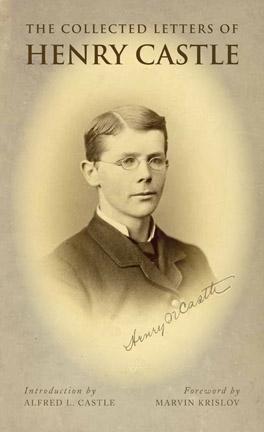
George Herbert Mead, one of America’s most important and influential philosophers, a founder of pragmatism, social psychology, and symbolic interactionism, was also a keen observer of American culture and early modernism. In the period from the 1870s to 1895, Henry Northrup Castle maintained a correspondence with family members and with Mead—his best friend at Oberlin College and brother-in-law—that reveals many of the intellectual, economic, and cultural forces that shaped American thought in that complex era. Close friends of John Dewey, Jane Addams, and other leading Chicago Progressives, the author of these often intimate letters comments frankly on pivotal events affecting higher education, developments at Oberlin College, Hawaii (where the Castles lived), progressivism, and the general angst that many young intellectuals were experiencing in early modern America.
The letters, drawn from the Mead-Castle collection at the University of Chicago, were collected and edited by Mead after the tragic death of Henry Castle in a shipping accident in the North Sea. Working with his wife Helen Castle (one of Henry’s sisters), he privately published fifty copies of the letters to record an important relationship and as an intellectual history of two progressive thinkers at the end of the nineteenth century. American historians, such as Robert Crunden and Gary Cook, have noted the importance of the letters to historians of the late nineteenth century.
The letters are made available here using the basic Mead text of 1902. Additional insights into the connection between Mead, John Dewey, Henry and Harriet Castle, and Hawaii’s progressive kindergarten system are provided by the foundation’s executive director Alfred L. Castle. Marvin Krislov, president of Oberlin College, has added additional comments on the importance of the letters to understanding the intellectual relationship that flourished at Oberlin College.
Published with the support of the Samuel N. and Mary Castle Foundation.
Before Memmo my notes were scattered across PDFs. Now a workspace pulls everything into one place — I see exactly what's still left to study.
Memmo's summaries are gold before exams. I don't have to re-read 800 pages two weeks before — just the important parts.
The AI chat has saved me the night before an exam more than once. I just keep asking until I get it — no waiting on a study group to reply.
The quizzes hit exactly what I need to know. Memmo tracks what I get stuck on — so I only practice what's worth it.
Flashcards with spaced repetition are magic. Memmo knows when I'm about to forget something and brings it back.
The AI podcasts are my favorite. I listen on my way to school and get a recap without sitting at a computer.

Handbok i kvalitativa metoder
281 kr

Hållbar utveckling: en introduktion för ingenjörer och andra problemlösare
334 kr

Brymans Samhällsvetenskapliga metoder
390 kr

Projektledning
491 kr

Den orättvisa hälsan: om socioekonomiska skillnader i hälsa och livslängd
326 kr

Vetenskapsteori för nybörjare
196 kr

Organizational Leadership
429 kr

På väg mot läraryrket
172 kr

Det sociala livet i skolan: Socialpsykologiska perspektiv
253 kr

Betygsättningens didaktik
151 kr

Personality
402 kr

Studying Leadership
404 kr

Managing Innovation
477 kr

Introduktion till samhällsvetenskaplig metod
347 kr

The Psychology of Sex and Gender
698 kr

Evidens och kunskap för socialt arbete
207 kr

Introduction to Leadership
605 kr