
Before Memmo my notes were scattered across PDFs. Now a workspace pulls everything into one place — I see exactly what's still left to study.
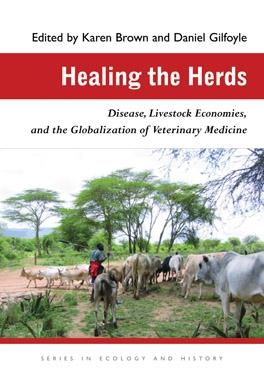
During the early 1990s, the ability of dangerous diseases to pass between animals and humans was brought once more to the public consciousness. These concerns continue to raise questions about how livestock diseases have been managed over time and in different social, economic, and political circumstances. Healing the Herds: Disease, Livestock Economies, and the Globalization of Veterinary Medicine brings together case studies from the Americas, western Europe, and the European and Japanese colonies to illustrate how the rapid growth of the international trade in animals through the nineteenth century engendered the spread of infectious diseases, sometimes with devastating consequences for indigenous pastoral societies. At different times and across much of the globe, livestock epidemics have challenged social order and provoked state interventions, often opposed by farmers and herders. The intensification of agriculture has transformed environments, with consequences for animal and human health.
But the last two centuries have also witnessed major changes in the way societies have conceptualized diseases and sought to control them. From the late nineteenth century, advances in veterinary technologies afforded veterinary scientists a new professional status and allowed them to wield greater political influence. While older methods have remained important to strategies of control and prevention, as demonstrated during the outbreak of foot-and-mouth disease in Britain in 2001, the rise of germ theories and the discovery of vaccines against some infections made it possible to move beyond the blunt tools of animal culls and restrictive quarantines of the past. Healing the Herds: Disease, Livestock Economies, and the Globalization of Veterinary Medicine offers a new and exciting comparative approach to the complex interrelationships of microbes, markets, and medicine in the global economy.
Before Memmo my notes were scattered across PDFs. Now a workspace pulls everything into one place — I see exactly what's still left to study.
Memmo's summaries are gold before exams. I don't have to re-read 800 pages two weeks before — just the important parts.
The AI chat has saved me the night before an exam more than once. I just keep asking until I get it — no waiting on a study group to reply.
The quizzes hit exactly what I need to know. Memmo tracks what I get stuck on — so I only practice what's worth it.
Flashcards with spaced repetition are magic. Memmo knows when I'm about to forget something and brings it back.
The AI podcasts are my favorite. I listen on my way to school and get a recap without sitting at a computer.

Handbok i kvalitativa metoder
281 kr

Hållbar utveckling: en introduktion för ingenjörer och andra problemlösare
334 kr

Brymans Samhällsvetenskapliga metoder
390 kr

Projektledning
491 kr

Den orättvisa hälsan: om socioekonomiska skillnader i hälsa och livslängd
326 kr

Organizational Leadership
429 kr

Vetenskapsteori för nybörjare
196 kr

På väg mot läraryrket
172 kr

Det sociala livet i skolan: Socialpsykologiska perspektiv
253 kr

Betygsättningens didaktik
151 kr

Personality
402 kr

Studying Leadership
404 kr

Managing Innovation
477 kr

Introduktion till samhällsvetenskaplig metod
347 kr

The Psychology of Sex and Gender
698 kr

Evidens och kunskap för socialt arbete
207 kr

Introduction to Leadership
605 kr