
Before Memmo my notes were scattered across PDFs. Now a workspace pulls everything into one place — I see exactly what's still left to study.
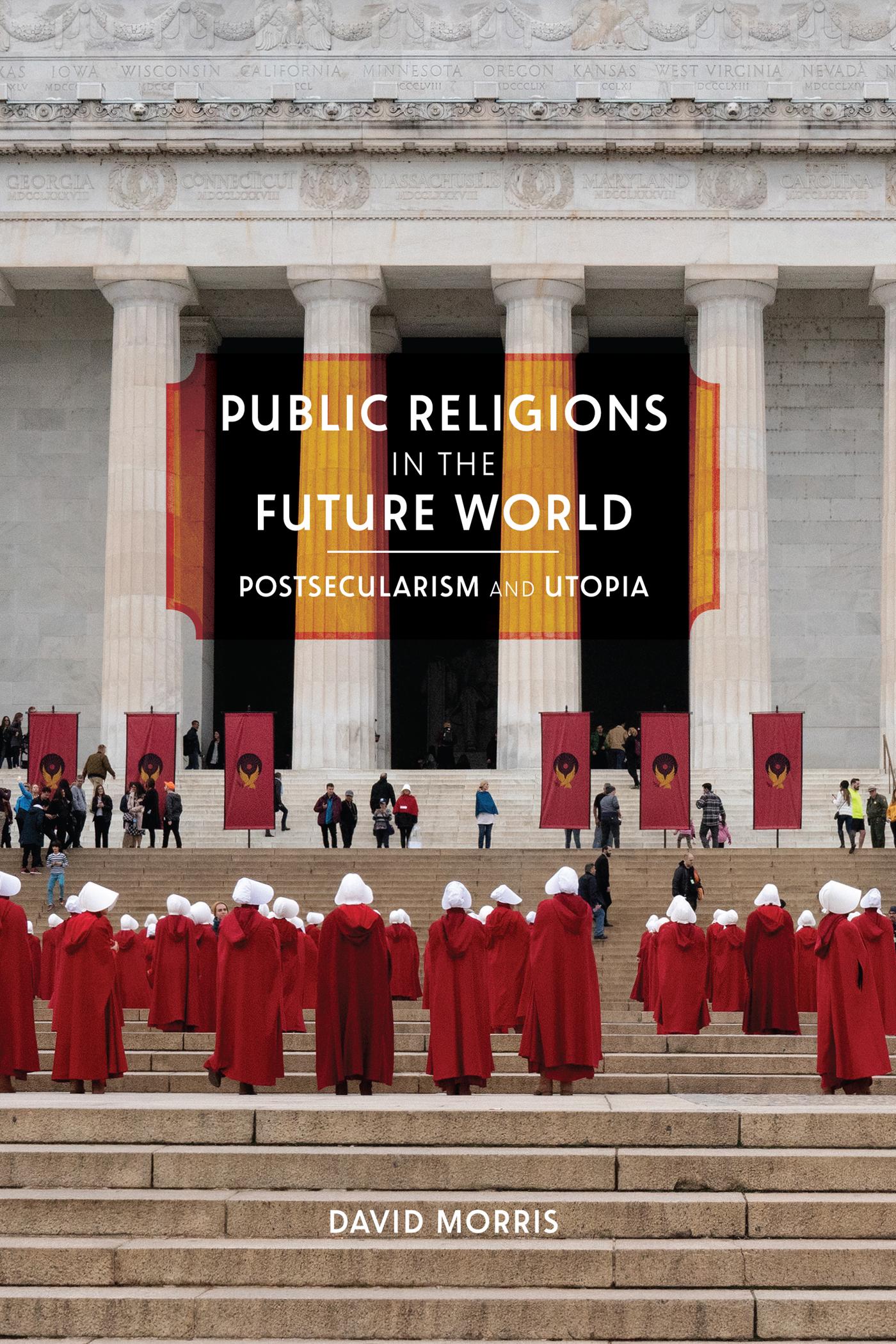
Public Religions in the Future World is the first book to map the utopian terrain of the political-religious movements of the past four decades. Examining a politically diverse set of utopian fictions, this book cuts across the usual Right/Left political divisions to show a surprising convergence: each political-religious vision imagines a revived world of care and community over and against the economization and fragmentation of neoliberalism. Understanding these religions as utopian movements in reaction to neoliberalism, Public Religions invites us to rethink the bases of religious identification and practice. Offering new insights on texts from the Left Behind series to the novels of Octavia Butler, Public Religions shows that the utopian energy of the present opens new opportunities for political organizing and genuine, lasting community building.
Public Religions in the Future World presents a literary history of the political-religious present, arguing that the power of public religion lies in the utopian visions that underlie religious beliefs. It shows that contemporary literary utopianism is deeply inflected with religious ideas, with the visions, values, and ambitions of Christianity, Islam, nature mysticism, and other traditions. Further, Public Religions demonstrates that this utopianism’s religiosity is in turn politically inflected, that it resonates with and underwrites a range of competing political projects: those of imperialism, globalization, neoliberal capitalism, deep ecology, and the pro-migration movement.
David Morris constructs a working theory of how religion makes large-scale interventions in political debates. The novels in his study draw on religious traditions to articulate visions, programs, or missions for achieving some version of an improved world. In doing so, they undertake the work of literary postmodernism: to represent globality, to recover the voices of the underrepresented, and to imagine a future that escapes the destructiveness of global capitalism.
Before Memmo my notes were scattered across PDFs. Now a workspace pulls everything into one place — I see exactly what's still left to study.
Memmo's summaries are gold before exams. I don't have to re-read 800 pages two weeks before — just the important parts.
The AI chat has saved me the night before an exam more than once. I just keep asking until I get it — no waiting on a study group to reply.
The quizzes hit exactly what I need to know. Memmo tracks what I get stuck on — so I only practice what's worth it.
Flashcards with spaced repetition are magic. Memmo knows when I'm about to forget something and brings it back.
The AI podcasts are my favorite. I listen on my way to school and get a recap without sitting at a computer.

Handbok i kvalitativa metoder
281 kr

Hållbar utveckling: en introduktion för ingenjörer och andra problemlösare
334 kr

Brymans Samhällsvetenskapliga metoder
390 kr

Projektledning
491 kr

Den orättvisa hälsan: om socioekonomiska skillnader i hälsa och livslängd
326 kr

Organizational Leadership
429 kr

Vetenskapsteori för nybörjare
196 kr

På väg mot läraryrket
172 kr

Det sociala livet i skolan: Socialpsykologiska perspektiv
253 kr

Betygsättningens didaktik
151 kr

Personality
402 kr

Studying Leadership
404 kr

Managing Innovation
477 kr

Introduktion till samhällsvetenskaplig metod
347 kr

The Psychology of Sex and Gender
698 kr

Evidens och kunskap för socialt arbete
207 kr

Introduction to Leadership
605 kr