
Before Memmo my notes were scattered across PDFs. Now a workspace pulls everything into one place — I see exactly what's still left to study.
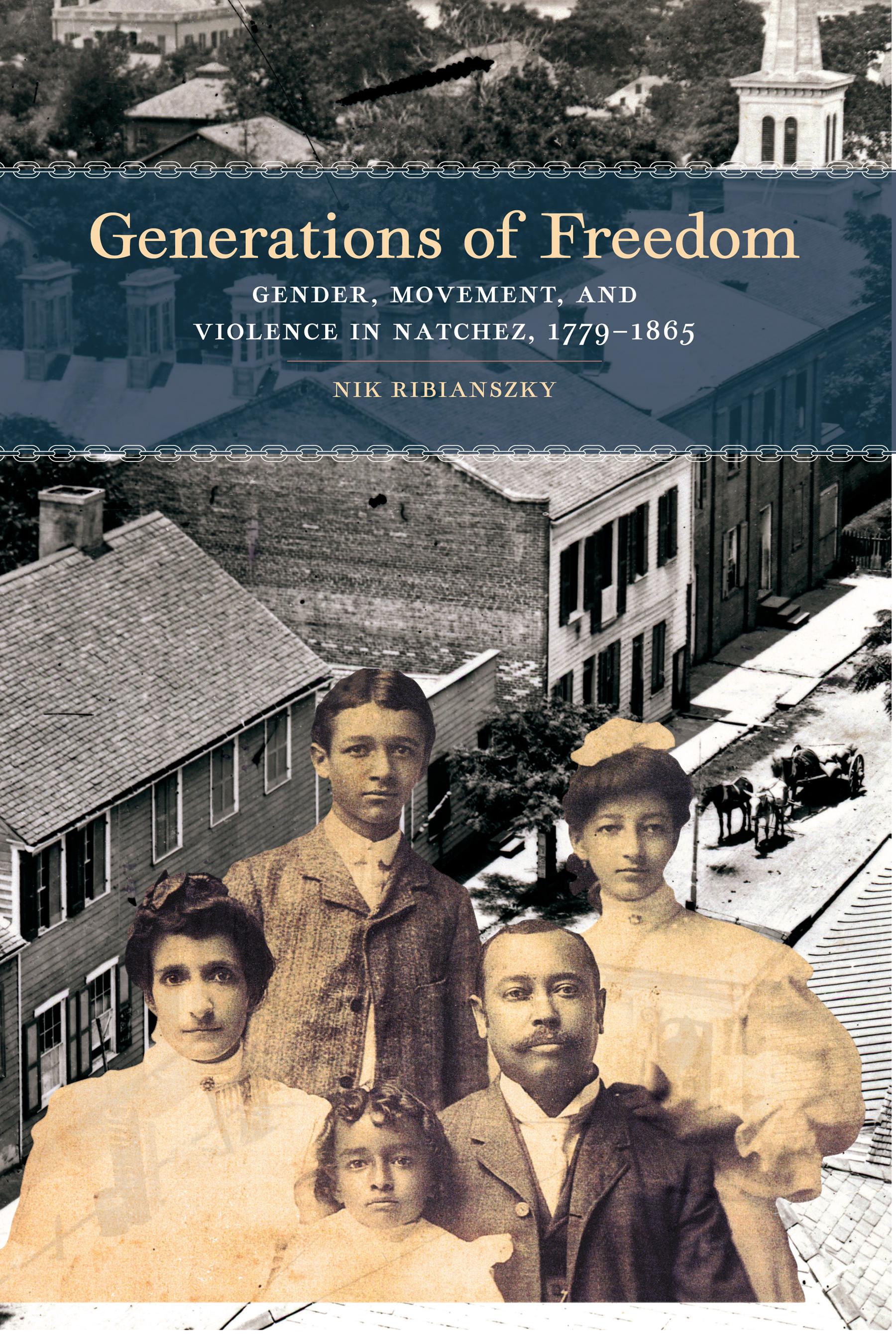
In Generations of Freedom Nik Ribianszky employs the lenses of gender and violence to examine family, community, and the tenacious struggles by which free blacks claimed and maintained their freedom under shifting international governance from Spanish colonial rule (1779-95), through American acquisition (1795) and eventual statehood (established in 1817), and finally to slavery’s legal demise in 1865.
Freedom was not necessarily a permanent condition, but one separated from racial slavery by a permeable and highly unstable boundary. This book explicates how the interlocking categories of race, class, and gender shaped Natchez, Mississippi’s free community of color and how implicit and explicit violence carried down from one generation to another. To demonstrate this, Ribianszky introduces the concept of generational freedom. Inspired by the work of Ira Berlin, who focused on the complex process through which free Africans and their descendants came to experience enslavement, generational freedom is an analytical tool that employs this same idea in reverse to trace how various generations of free people of color embraced, navigated, and protected their tenuous freedom. This approach allows for the identification of a foundational generation of free people of color, those who were born into slavery but later freed. The generations that followed, the conditional generations, were those who were born free and without the experience of and socialization into North America's system of chattel, racial slavery. Notwithstanding one's status at birth as legally free or unfree, though, each individual's continued freedom was based on compliance with a demanding and often unfair system.
Generations of Freedom tells the stories of people who collectively inhabited an uncertain world of qualified freedom. Taken together—by exploring the themes of movement, gendered violence, and threats to their property and, indeed, their very bodies—these accounts argue that free blacks were active in shaping their own freedom and that of generations thereafter. Their
successful navigation of the shifting ground of freedom was dependent on their utilization of all available tools at their disposal: securing reliable and influential allies, maintaining their independence, and using the legal system to protect their property—including that most precious, themselves.
Before Memmo my notes were scattered across PDFs. Now a workspace pulls everything into one place — I see exactly what's still left to study.
Memmo's summaries are gold before exams. I don't have to re-read 800 pages two weeks before — just the important parts.
The AI chat has saved me the night before an exam more than once. I just keep asking until I get it — no waiting on a study group to reply.
The quizzes hit exactly what I need to know. Memmo tracks what I get stuck on — so I only practice what's worth it.
Flashcards with spaced repetition are magic. Memmo knows when I'm about to forget something and brings it back.
The AI podcasts are my favorite. I listen on my way to school and get a recap without sitting at a computer.

Handbok i kvalitativa metoder
281 kr

Hållbar utveckling: en introduktion för ingenjörer och andra problemlösare
334 kr

Brymans Samhällsvetenskapliga metoder
390 kr

Projektledning
491 kr

Den orättvisa hälsan: om socioekonomiska skillnader i hälsa och livslängd
326 kr

Vetenskapsteori för nybörjare
196 kr

Organizational Leadership
429 kr

På väg mot läraryrket
172 kr

Det sociala livet i skolan: Socialpsykologiska perspektiv
253 kr

Betygsättningens didaktik
151 kr

Personality
402 kr

Studying Leadership
404 kr

Managing Innovation
477 kr

Introduktion till samhällsvetenskaplig metod
347 kr

The Psychology of Sex and Gender
698 kr

Evidens och kunskap för socialt arbete
207 kr

Introduction to Leadership
605 kr