
Before Memmo my notes were scattered across PDFs. Now a workspace pulls everything into one place — I see exactly what's still left to study.
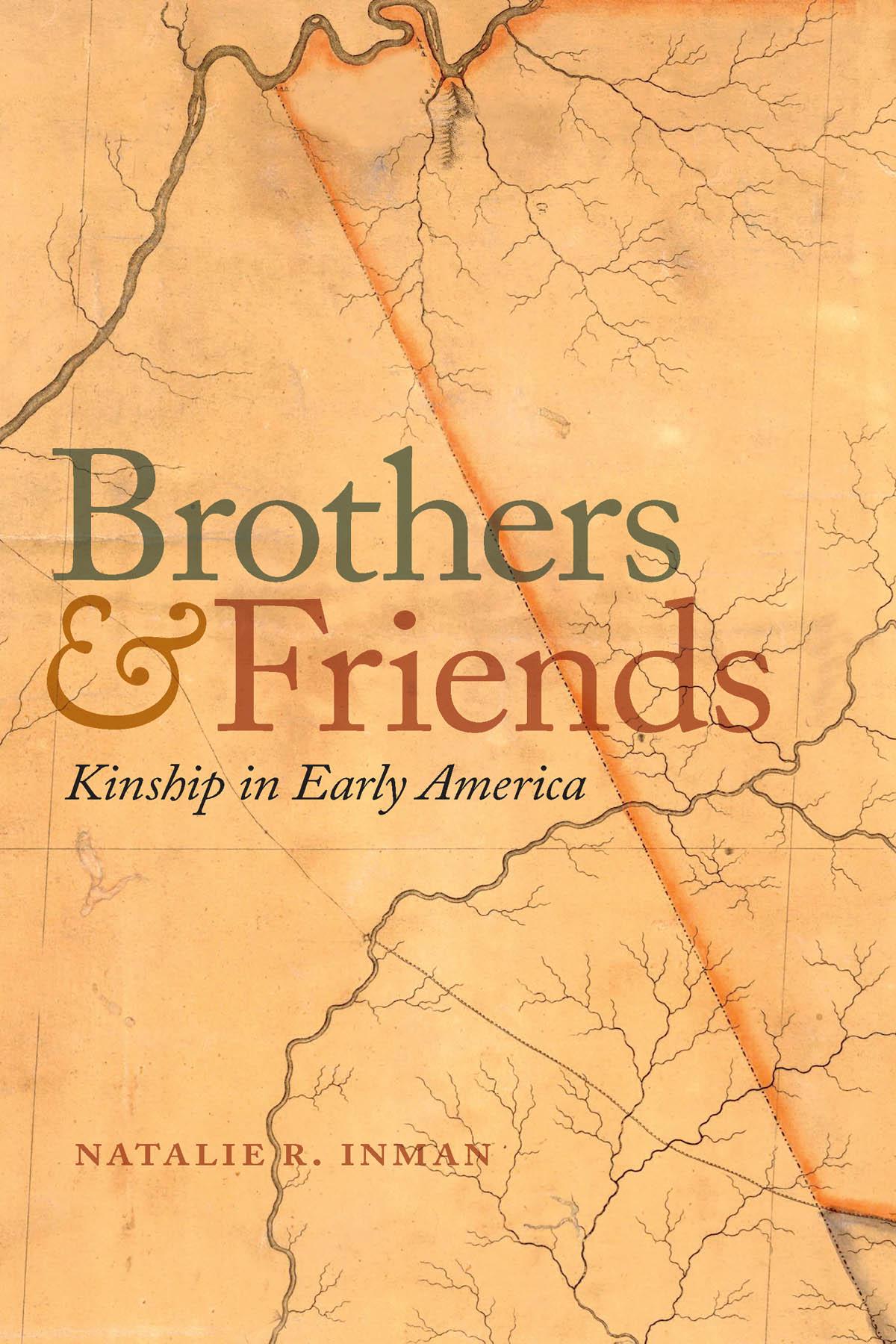
By following key families in Cherokee, Chickasaw, and Anglo-American societies from the Seven Years’ War through 1845, this study illustrates how kinship networks—forged out of natal, marital, or fictive kinship relationships—enabled and directed the actions of their members as they decided the futures of their nations. Natalie R. Inman focuses in particular on the Chickasaw Colbert family, the Anglo-American Donelson family, and the Cherokee families of Attakullakulla (Little Carpenter) and Major Ridge. Her research shows how kinship facilitated actions and goals for people in early America across cultures, even if the definitions and constructions of family were different in each society. To open new perspectives on intercultural relations in the colonial and early republic eras, Inman describes the formation and extension of these networks, their intersection with other types of personal and professional networks, their effect on crucial events, and their mutability over time.
The Anglo-American patrilineal kinship system shaped patterns of descent, inheritance, and migration. The matrilineal native system was an avenue to political voice, connections between towns, and protection from enemies. In the volatile trans-Appalachian South, Inman shows, kinship networks helped to further political and economic agendas at both personal and national levels even through wars, revolutions, fiscal change, and removals.
Comparative analysis of family case studies advances the historiography of early America by revealing connections between the social institution of family and national politics and economies. Beyond the British Atlantic world, these case studies can be compared to other colonial scenarios in which the cultures and families of Europeans collided with native peoples in the Americas, Africa, Australia, and other contexts.
Before Memmo my notes were scattered across PDFs. Now a workspace pulls everything into one place — I see exactly what's still left to study.
Memmo's summaries are gold before exams. I don't have to re-read 800 pages two weeks before — just the important parts.
The AI chat has saved me the night before an exam more than once. I just keep asking until I get it — no waiting on a study group to reply.
The quizzes hit exactly what I need to know. Memmo tracks what I get stuck on — so I only practice what's worth it.
Flashcards with spaced repetition are magic. Memmo knows when I'm about to forget something and brings it back.
The AI podcasts are my favorite. I listen on my way to school and get a recap without sitting at a computer.

Handbok i kvalitativa metoder
281 kr

Hållbar utveckling: en introduktion för ingenjörer och andra problemlösare
334 kr

Brymans Samhällsvetenskapliga metoder
390 kr

Projektledning
491 kr

Den orättvisa hälsan: om socioekonomiska skillnader i hälsa och livslängd
326 kr

Vetenskapsteori för nybörjare
196 kr

Organizational Leadership
429 kr

På väg mot läraryrket
172 kr

Det sociala livet i skolan: Socialpsykologiska perspektiv
253 kr

Betygsättningens didaktik
151 kr

Personality
402 kr

Studying Leadership
404 kr

Managing Innovation
477 kr

Introduktion till samhällsvetenskaplig metod
347 kr

The Psychology of Sex and Gender
698 kr

Evidens och kunskap för socialt arbete
207 kr

Introduction to Leadership
605 kr