
Before Memmo my notes were scattered across PDFs. Now a workspace pulls everything into one place — I see exactly what's still left to study.
There’s a well-known story about an older fish who swims by two younger fish andasks, “How’s the water?” The younger fish are puzzled. “What’s water?” they ask.
Many of us today might ask a similar question: What’s technology? Technology defines the world we live in, yet we’re so immersed in it, so encompassed by it, that we mostly take it for granted. Seldom, if ever, do we stop to ask what technology is. Failing to ask that question, we fail to perceive all the ways it might be shaping us.
Usually when we hear the word “technology,” we automatically think of digital devices and their myriad applications. As revolutionary as smartphones, online shopping, and social networks may seem, however, they fit into long-standing, deeply entrenched patterns of technological thought as well as practice. Generations of skeptics have questioned how well served we are by those patterns of thought and practice, even as generations of enthusiasts have promised that the latest innovations will deliver us, soon, to Paradise. We’re not there yet, but the cyber utopians of Silicon Valley keep telling us it’s right around the corner.
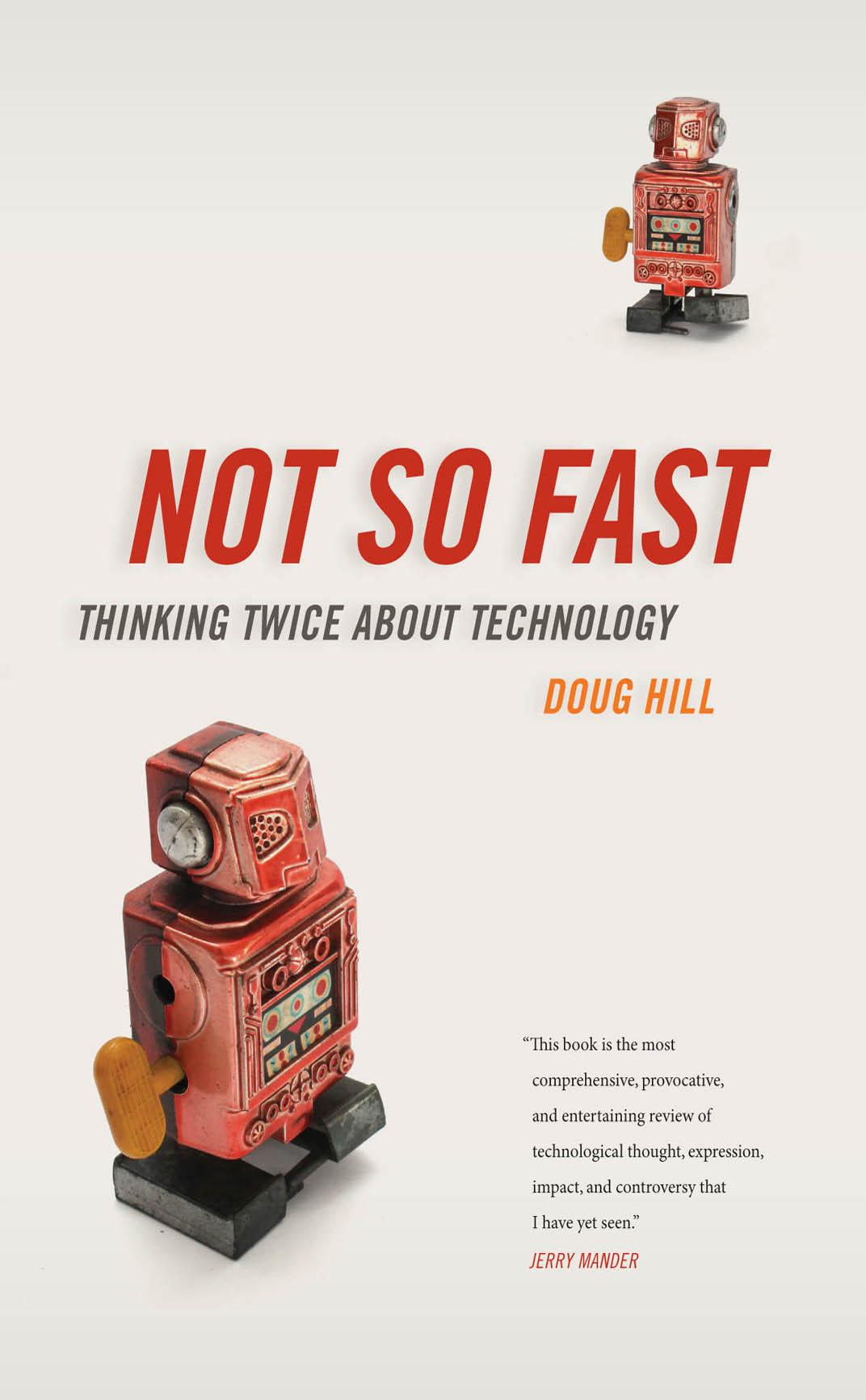
What is technology, and how is it shaping us? In search of answers to those crucial questions, Not So Fast draws on the insights of dozens of scholars and artists who have thought deeply about the meanings of machines. The book explores such dynamics as technological drift, technological momentum, technological disequilibrium, and technological autonomy to help us understand the interconnected, interwoven, and interdependent phenomena of our technological world. In the course of that exploration, Doug Hill poses penetrating questions of his own, among them: Do we have as much control over our machines as we think? And who can we rely on to guide the technological forces that will determine the future of the planet?
Before Memmo my notes were scattered across PDFs. Now a workspace pulls everything into one place — I see exactly what's still left to study.
Memmo's summaries are gold before exams. I don't have to re-read 800 pages two weeks before — just the important parts.
The AI chat has saved me the night before an exam more than once. I just keep asking until I get it — no waiting on a study group to reply.
The quizzes hit exactly what I need to know. Memmo tracks what I get stuck on — so I only practice what's worth it.
Flashcards with spaced repetition are magic. Memmo knows when I'm about to forget something and brings it back.
The AI podcasts are my favorite. I listen on my way to school and get a recap without sitting at a computer.

Handbok i kvalitativa metoder
281 kr

Hållbar utveckling: en introduktion för ingenjörer och andra problemlösare
334 kr

Brymans Samhällsvetenskapliga metoder
390 kr

Projektledning
491 kr

Den orättvisa hälsan: om socioekonomiska skillnader i hälsa och livslängd
326 kr

Organizational Leadership
429 kr

Vetenskapsteori för nybörjare
196 kr

På väg mot läraryrket
172 kr

Det sociala livet i skolan: Socialpsykologiska perspektiv
253 kr

Betygsättningens didaktik
151 kr

Personality
402 kr

Studying Leadership
404 kr

Managing Innovation
477 kr

Introduktion till samhällsvetenskaplig metod
347 kr

The Psychology of Sex and Gender
698 kr

Evidens och kunskap för socialt arbete
207 kr

Introduction to Leadership
605 kr