
Before Memmo my notes were scattered across PDFs. Now a workspace pulls everything into one place — I see exactly what's still left to study.
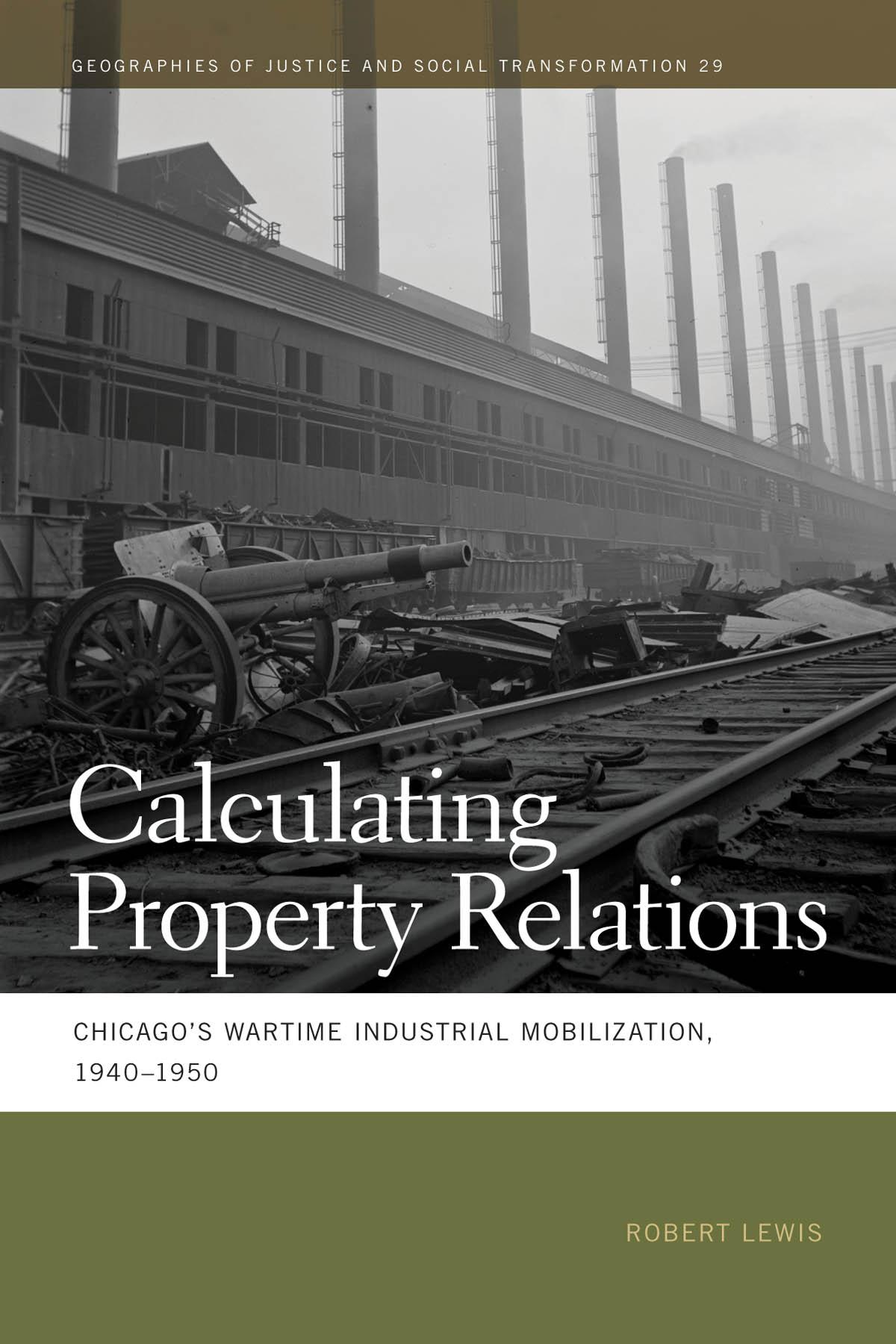
Combining theories of calculation and property relations and using an array of archival sources, this book focuses on the building and decommissioning of state-owned defense factories in World War II–era Chicago. Robert Lewis’s rich trove of material—drawn from research on more than six hundred federally funded wartime industrial sites in metropolitan Chicago—supports three major conclusions. First, the relationship of the key institutions of the military-industrial complex was refashioned by their calculative actions on industrial property. The imperatives of war forced the federal state and the military to become involved in industrial matters in an entirely new manner. Second, federal and military investment in defense factories had an enormous effect on the industrial geography of metropolitan Chicago. The channeling of huge lumps of industrial capital into sprawling plants on the urban fringe had a decisive impact on the metropolitan geographies of manufacturing. Third, the success of industrial mobilization was made possible through the multi-scale relations of national and locational interaction. National policy could only be realized by the placing of these relations at the local level.
Throughout, Lewis shows how the interests of developers, factory engineers, corporate executives, politicians, unions, and the working class were intimately bound up with industrial space. Offering a local perspective on a city permanently shaped by national events, this book provides a richer understanding of the dynamics of wartime mobilization, the calculative actions of political and business leaders, the social relations of property, the working of state-industry relations, and the making of industrial space.
Before Memmo my notes were scattered across PDFs. Now a workspace pulls everything into one place — I see exactly what's still left to study.
Memmo's summaries are gold before exams. I don't have to re-read 800 pages two weeks before — just the important parts.
The AI chat has saved me the night before an exam more than once. I just keep asking until I get it — no waiting on a study group to reply.
The quizzes hit exactly what I need to know. Memmo tracks what I get stuck on — so I only practice what's worth it.
Flashcards with spaced repetition are magic. Memmo knows when I'm about to forget something and brings it back.
The AI podcasts are my favorite. I listen on my way to school and get a recap without sitting at a computer.

Handbok i kvalitativa metoder
281 kr

Hållbar utveckling: en introduktion för ingenjörer och andra problemlösare
334 kr

Brymans Samhällsvetenskapliga metoder
390 kr

Projektledning
491 kr

Den orättvisa hälsan: om socioekonomiska skillnader i hälsa och livslängd
326 kr

Vetenskapsteori för nybörjare
196 kr

Organizational Leadership
429 kr

På väg mot läraryrket
172 kr

Det sociala livet i skolan: Socialpsykologiska perspektiv
253 kr

Betygsättningens didaktik
151 kr

Personality
402 kr

Studying Leadership
404 kr

Managing Innovation
477 kr

Introduktion till samhällsvetenskaplig metod
347 kr

The Psychology of Sex and Gender
698 kr

Evidens och kunskap för socialt arbete
207 kr

Introduction to Leadership
605 kr