
Before Memmo my notes were scattered across PDFs. Now a workspace pulls everything into one place — I see exactly what's still left to study.
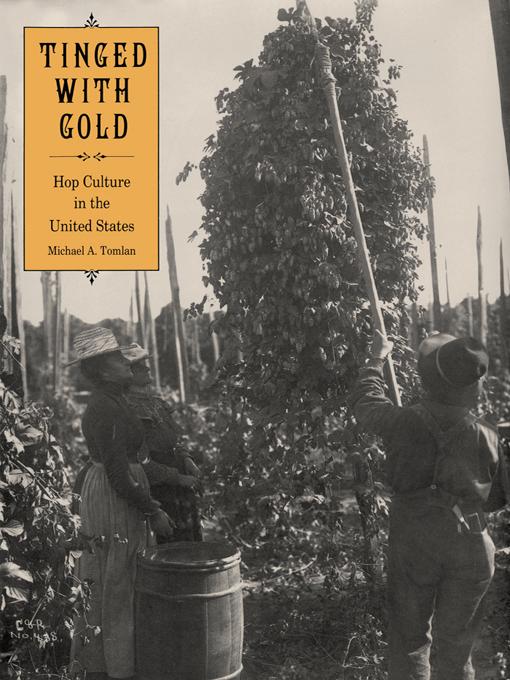
Today hop growing remains a viable commercial enterprise only in parts of the far western United States—notably in Washington. But, as James Fenimore Cooper remembered, the mid-nineteenth century in Cooperstown, New York, was a time when "the 'hop was king,' and the whole countryside was one great hop yard, and beautiful".
In Tinged with Gold, Michael A. TomIan explores all aspects of hop culture in the United States and provides a background for understanding the buildings devoted to drying, baling, and storing hops. The work considers the history of these structures as it illustrates their development over almost two centuries, the result of agrarian commercialism and nearly continuous technological improvement. In examining the context in which the buildings were constructed, Tomlan considers the growth, cultivation, and harvesting of the plant; the economic, social, and recreational activities of the people involved in hop culture; and the record of mechanical inventions and technical developments that shaped hop kilns, hop houses, and hop driers and coolers in the various areas where the crop flourished. The work challenges assumptions about the noncommercial nature of American agriculture in the eighteenth and early nineteenth centuries and raises important questions about the "folk" tradition of hop houses, arguing that the designs of these buildings were rational responses to commercial imperatives rather than the continuance of arcane English or European customs.
Tinged with Gold brings hop culture to life as it explores the history of this neglected aspect of rural agriculture. Because the work demonstrates that the significance of a relatively obscure building type can be fully appreciated if placed in its historical context, it provides a model for studying other rural structures. Drawing upon an impressive array of primary and secondary sources, this work is a definitive history of hop culture in the United States.
Before Memmo my notes were scattered across PDFs. Now a workspace pulls everything into one place — I see exactly what's still left to study.
Memmo's summaries are gold before exams. I don't have to re-read 800 pages two weeks before — just the important parts.
The AI chat has saved me the night before an exam more than once. I just keep asking until I get it — no waiting on a study group to reply.
The quizzes hit exactly what I need to know. Memmo tracks what I get stuck on — so I only practice what's worth it.
Flashcards with spaced repetition are magic. Memmo knows when I'm about to forget something and brings it back.
The AI podcasts are my favorite. I listen on my way to school and get a recap without sitting at a computer.

Handbok i kvalitativa metoder
281 kr

Hållbar utveckling: en introduktion för ingenjörer och andra problemlösare
334 kr

Brymans Samhällsvetenskapliga metoder
390 kr

Projektledning
491 kr

Den orättvisa hälsan: om socioekonomiska skillnader i hälsa och livslängd
326 kr

Vetenskapsteori för nybörjare
196 kr

Organizational Leadership
429 kr

På väg mot läraryrket
172 kr

Det sociala livet i skolan: Socialpsykologiska perspektiv
253 kr

Betygsättningens didaktik
151 kr

Personality
402 kr

Studying Leadership
404 kr

Managing Innovation
477 kr

Introduktion till samhällsvetenskaplig metod
347 kr

The Psychology of Sex and Gender
698 kr

Evidens och kunskap för socialt arbete
207 kr

Introduction to Leadership
605 kr