
Before Memmo my notes were scattered across PDFs. Now a workspace pulls everything into one place — I see exactly what's still left to study.
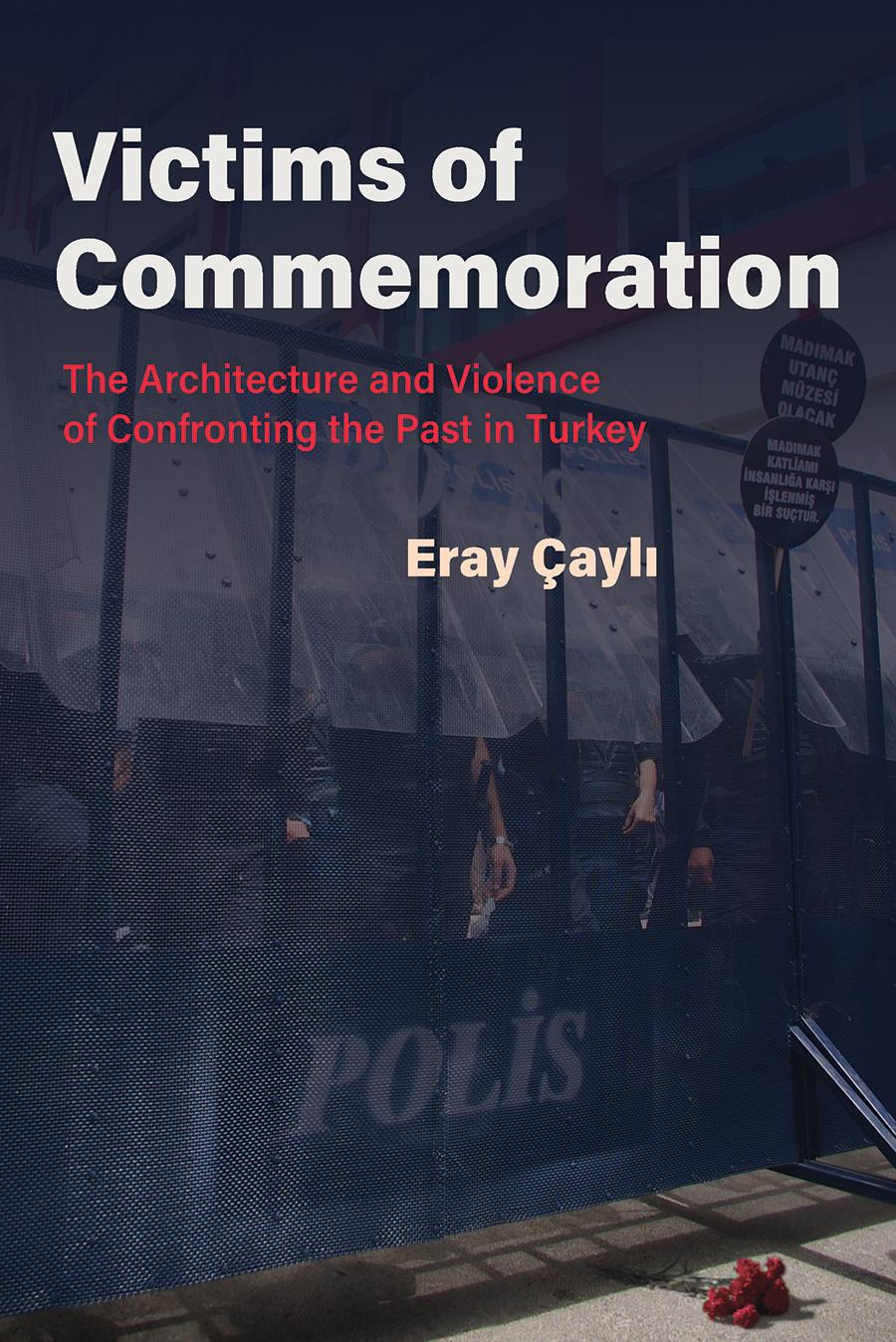
"Confronting the past" has become a byword for democratization. How societies and governments commemorate their violent pasts is often appraised as a litmus test of their democratization claims. Regardless of how critical such appraisals may be, they tend to share a fundamental assumption: commemoration, as a symbol of democratization, is ontologically distinct from violence. The pitfalls of this assumption have been nowhere more evident than in Turkey whose mainstream image on the world stage has rapidly descended from a regional beacon of democracy to a hotbed of violence within the space of a few recent years.
In Victims of Commemoration, Eray Çayli draws upon extensive fieldwork he conducted in the prelude to the mid-2010s when Turkey’s global image fell from grace. This ethnography—the first of its kind—explores both activist and official commemorations at sites of state-endorsed violence in Turkey that have become the subject of campaigns for memorial museums. Reversing the methodological trajectory of existing accounts, Çayli works from the politics of urban and architectural space to grasp ethnic, religious, and ideological marginalization.
Victims of Commemoration reveals that, whether campaigns for memorial museums bear fruit or not, architecture helps communities concentrate their political work against systemic problems. Sites significant to Kurdish, Alevi, and revolutionary-leftist struggles for memory and justice prompt activists to file petitions and lawsuits, organize protests, and build new political communities. In doing so, activists not only uphold the legacy of victims but also reject the identity of a passive victimhood being imposed on them. They challenge not only the ways specific violent pasts and their victims are represented, but also the structural violence which underpins deep-seated approaches to nationhood, publicness and truth, and which itself is a source of victimhood. Victims of Commemoration complicates our tendency to presume that violence ends where commemoration begins and that architecture’s role in both is reducible to a question of symbolism.
Before Memmo my notes were scattered across PDFs. Now a workspace pulls everything into one place — I see exactly what's still left to study.
Memmo's summaries are gold before exams. I don't have to re-read 800 pages two weeks before — just the important parts.
The AI chat has saved me the night before an exam more than once. I just keep asking until I get it — no waiting on a study group to reply.
The quizzes hit exactly what I need to know. Memmo tracks what I get stuck on — so I only practice what's worth it.
Flashcards with spaced repetition are magic. Memmo knows when I'm about to forget something and brings it back.
The AI podcasts are my favorite. I listen on my way to school and get a recap without sitting at a computer.

Handbok i kvalitativa metoder
281 kr

Hållbar utveckling: en introduktion för ingenjörer och andra problemlösare
334 kr

Brymans Samhällsvetenskapliga metoder
390 kr

Projektledning
491 kr

Den orättvisa hälsan: om socioekonomiska skillnader i hälsa och livslängd
326 kr

Vetenskapsteori för nybörjare
196 kr

Organizational Leadership
429 kr

På väg mot läraryrket
172 kr

Det sociala livet i skolan: Socialpsykologiska perspektiv
253 kr

Betygsättningens didaktik
151 kr

Personality
402 kr

Studying Leadership
404 kr

Managing Innovation
477 kr

Introduktion till samhällsvetenskaplig metod
347 kr

The Psychology of Sex and Gender
698 kr

Evidens och kunskap för socialt arbete
207 kr

Introduction to Leadership
605 kr