
Before Memmo my notes were scattered across PDFs. Now a workspace pulls everything into one place — I see exactly what's still left to study.
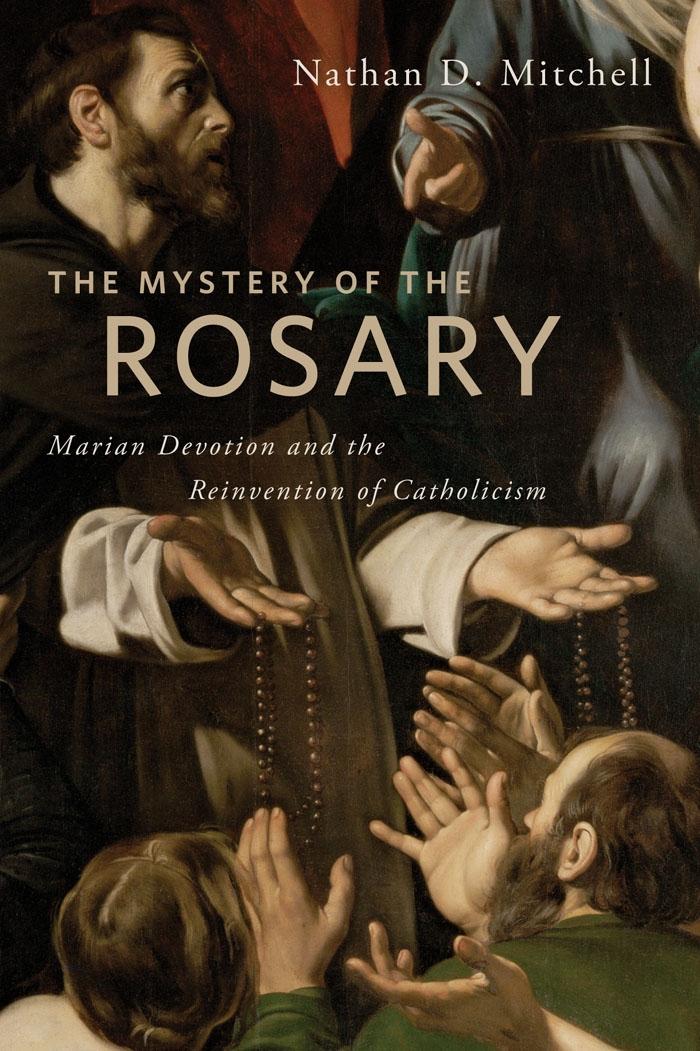
Ever since its appearance in Europe five centuries ago, the rosary has been a widespread, highly visible devotion among Roman Catholics. Its popularity has persisted despite centuries of often seismic social upheaval, cultural change, and institutional reform. In form, the rosary consists of a ritually repeated sequence of prayers accompanied by meditations on episodes in the lives of Christ and Mary. As a devotional object of round beads strung on cord or wire, the rosary has changed very little since its introduction centuries ago. Today, the rosary can be found on virtually every continent, and in the hands of hard-line traditionalists as well as progressive Catholics. It is beloved by popes, professors, protesters, commuters on their way to work, children learning their “first prayers,” and homeless persons seeking shelter and safety.
Why has this particular devotional object been so ubiquitous and resilient, especially in the face of Catholicism’s reinvention in the Early Modern, or “Counter-Reformation,” Era? Nathan D. Mitchell argues in lyric prose that to understand the rosary’s adaptability, it is essential to consider the changes Catholicism itself began to experience in the aftermath of the Reformation.
Unlike many other scholars of this period, Mitchell argues that after the Reformation Catholicism actually became more innovative and diversified rather than retrenched and monolithic. This innovation was especially evident in the sometimes “subversive”; visual representations of sacred subjects, such as in the paintings of Caravaggio, and in new ways of perceiving the relation between Catholic devotion and the liturgy’s ritual symbols. The rosary was thus involved not only in how Catholics gave flesh to their faith, but in new ways of constructing their personal and collective identity. Ultimately, Mitchell employs the history of the rosary, and the concomitant devotion to the Virgin Mary with which it is associated, as a lens through which to better understand early modern Catholic history.
Before Memmo my notes were scattered across PDFs. Now a workspace pulls everything into one place — I see exactly what's still left to study.
Memmo's summaries are gold before exams. I don't have to re-read 800 pages two weeks before — just the important parts.
The AI chat has saved me the night before an exam more than once. I just keep asking until I get it — no waiting on a study group to reply.
The quizzes hit exactly what I need to know. Memmo tracks what I get stuck on — so I only practice what's worth it.
Flashcards with spaced repetition are magic. Memmo knows when I'm about to forget something and brings it back.
The AI podcasts are my favorite. I listen on my way to school and get a recap without sitting at a computer.

Handbok i kvalitativa metoder
281 kr

Hållbar utveckling: en introduktion för ingenjörer och andra problemlösare
334 kr

Brymans Samhällsvetenskapliga metoder
390 kr

Projektledning
491 kr

Den orättvisa hälsan: om socioekonomiska skillnader i hälsa och livslängd
326 kr

Vetenskapsteori för nybörjare
196 kr

Organizational Leadership
429 kr

På väg mot läraryrket
172 kr

Det sociala livet i skolan: Socialpsykologiska perspektiv
253 kr

Betygsättningens didaktik
151 kr

Personality
402 kr

Studying Leadership
404 kr

Managing Innovation
477 kr

Introduktion till samhällsvetenskaplig metod
347 kr

The Psychology of Sex and Gender
698 kr

Evidens och kunskap för socialt arbete
207 kr

Introduction to Leadership
605 kr