
Before Memmo my notes were scattered across PDFs. Now a workspace pulls everything into one place — I see exactly what's still left to study.
Two interesting items:
The author's article in New York Archives
A letter regarding foundlings in The Riverdale Press
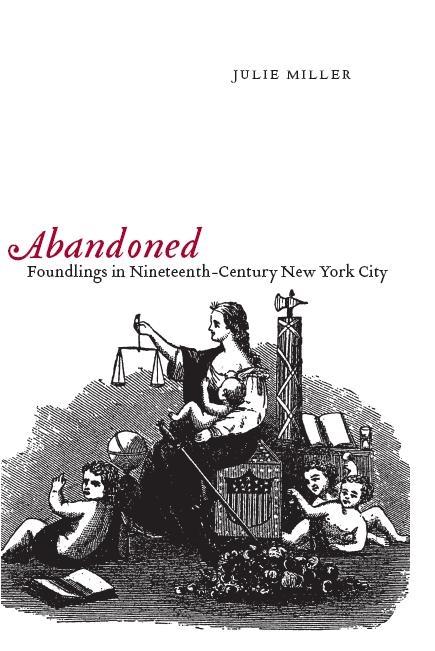
In the nineteenth century, foundlings—children abandoned by their desperately poor, typically unmarried mothers, usually shortly after birth—were commonplace in European society. There were asylums in every major city to house abandoned babies, and writers made them the heroes of their fiction, most notably Charles Dickens's Oliver Twist. In American cities before the Civil War the situation was different, with foundlings relegated to the poorhouse instead of institutions designed specifically for their care. By the eve of the Civil War, New York City in particular had an epidemic of foundlings on its hands due to the rapid and often interlinked phenomena of urban development, population growth, immigration, and mass poverty. Only then did the city's leaders begin to worry about the welfare and future of its abandoned children.
In Abandoned, Julie Miller offers a fascinating, frustrating, and often heartbreaking history of a once devastating, now forgotten social problem that wracked America's biggest metropolis, New York City. Filled with anecdotes and personal stories, Miller traces the shift in attitudes toward foundlings from ignorance, apathy, and sometimes pity for the children and their mothers to that of recognition of the problem as a sign of urban moral decline and in need of systematic intervention. Assistance came from public officials and religious reformers who constructed four institutions: the Nursery and Child's Hospital's foundling asylum, the New York Infant Asylum, the New York Foundling Asylum, and the public Infant Hospital, located on Randall's Island in the East River.
Ultimately, the foundling asylums were unable to significantly improve children’s lives, and by the early twentieth century, three out of the four foundling asylums had closed, as adoption took the place of abandonment and foster care took the place of institutions. Today the word foundling has been largely forgotten. Fortunately, Abandoned rescues its history from obscurity.
Before Memmo my notes were scattered across PDFs. Now a workspace pulls everything into one place — I see exactly what's still left to study.
Memmo's summaries are gold before exams. I don't have to re-read 800 pages two weeks before — just the important parts.
The AI chat has saved me the night before an exam more than once. I just keep asking until I get it — no waiting on a study group to reply.
The quizzes hit exactly what I need to know. Memmo tracks what I get stuck on — so I only practice what's worth it.
Flashcards with spaced repetition are magic. Memmo knows when I'm about to forget something and brings it back.
The AI podcasts are my favorite. I listen on my way to school and get a recap without sitting at a computer.

Handbok i kvalitativa metoder
281 kr

Hållbar utveckling: en introduktion för ingenjörer och andra problemlösare
334 kr

Brymans Samhällsvetenskapliga metoder
390 kr

Projektledning
491 kr

Den orättvisa hälsan: om socioekonomiska skillnader i hälsa och livslängd
326 kr

Organizational Leadership
429 kr

Vetenskapsteori för nybörjare
196 kr

På väg mot läraryrket
172 kr

Det sociala livet i skolan: Socialpsykologiska perspektiv
253 kr

Betygsättningens didaktik
151 kr

Personality
402 kr

Studying Leadership
404 kr

Managing Innovation
477 kr

Introduktion till samhällsvetenskaplig metod
347 kr

The Psychology of Sex and Gender
698 kr

Evidens och kunskap för socialt arbete
207 kr

Introduction to Leadership
605 kr