
Before Memmo my notes were scattered across PDFs. Now a workspace pulls everything into one place — I see exactly what's still left to study.
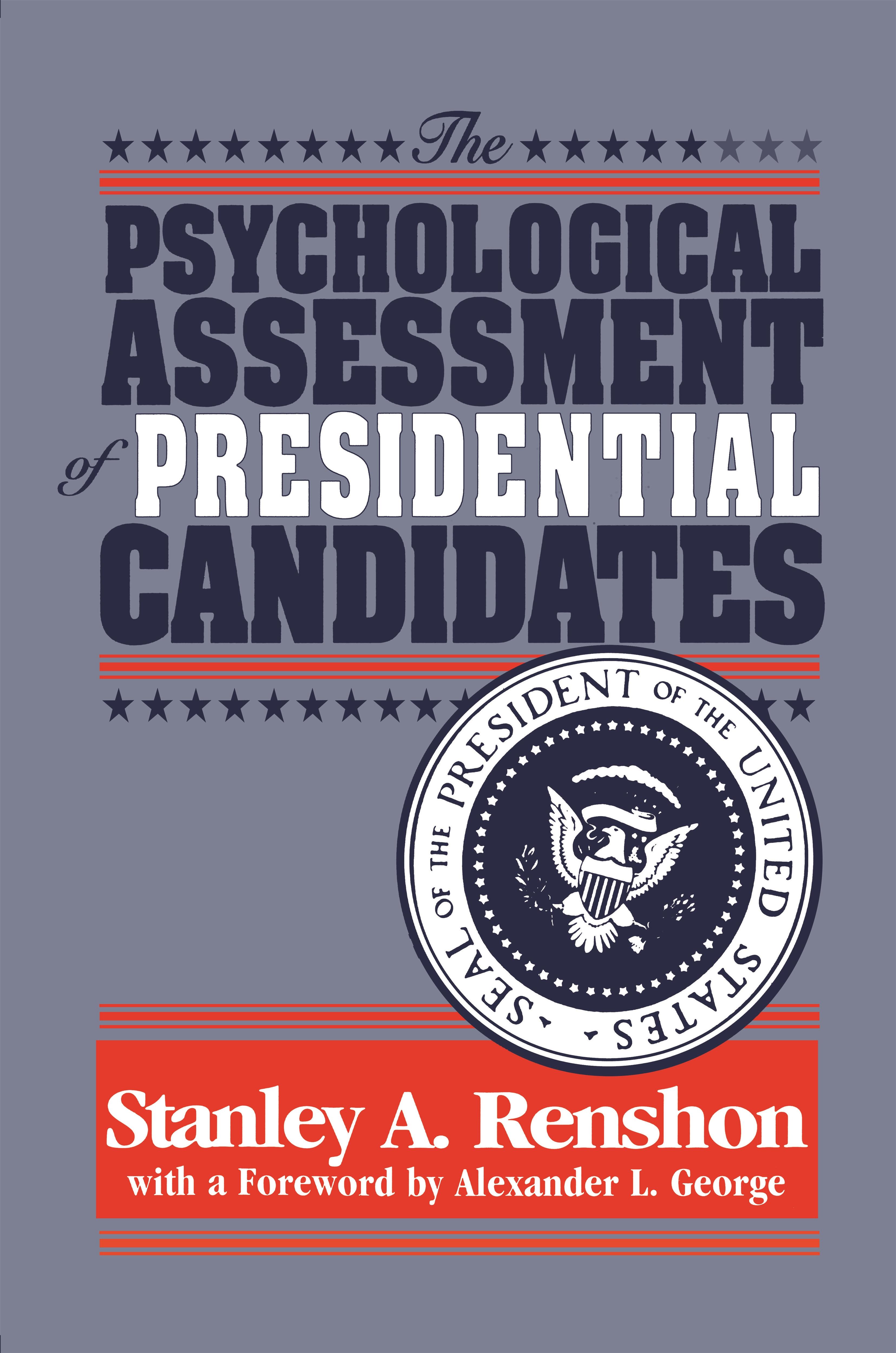
Debate on public issues--and where candidates stand on them-- have traditionally represented the focal point of presidential campaigns. In recent decades, however, rather than asking where candidates stand on the issues, the public increasingly wants to know who they are. The issue of character has thus come to dominate presidential elections.
While there is increasing public awareness that the psychology, judgment, and leadership qualities of presidential candidates count, the basis on which these judgments should made remains unclear. Does it matter that Gary Hart changed his name or had an affair? Should Ed Muskie's loss of composure while defending his wife during a campaign speech, or Thomas Eagleton's hospitalization for depression, have counted against them?
Looking back over the past 25 years, Stanley Renshon, a political scientist and psychoanalyst, provides the first comprehensive accounting of how character has become an increasingly important issue in a presidential campaign. He traces two related but distinctive approaches to the issue of presidential character and psychology. The first concerns the mental health of our candidates and presidents. Are they emotionally and personally stable? Is their temperament suitable for the presidency? The second concerns character. Is the candidate honest? Does he possess the necessary judgment and motivation to deal with the tremendous responsibilities and pressures of the office?
Drawing on his clinical and political science training, Renshon has devised a theory which will allow the public to better evaluate presidential candidates. Why are honesty, integrity, and personal ideals so important in judging candidates? Is personal and political ambition necessarily a bad trait? Do extra-marital affairs really matter? Finally, and most importantly, how can the public tell whether a candidate's leadership will be enhanced or impeded by aspects of his personality?With this sweeping volume, Stanley Renshon has provided us with the most comprehensive account to date of how the public judges, and should judge, our future presidents.
Before Memmo my notes were scattered across PDFs. Now a workspace pulls everything into one place — I see exactly what's still left to study.
Memmo's summaries are gold before exams. I don't have to re-read 800 pages two weeks before — just the important parts.
The AI chat has saved me the night before an exam more than once. I just keep asking until I get it — no waiting on a study group to reply.
The quizzes hit exactly what I need to know. Memmo tracks what I get stuck on — so I only practice what's worth it.
Flashcards with spaced repetition are magic. Memmo knows when I'm about to forget something and brings it back.
The AI podcasts are my favorite. I listen on my way to school and get a recap without sitting at a computer.

Handbok i kvalitativa metoder
281 kr

Hållbar utveckling: en introduktion för ingenjörer och andra problemlösare
334 kr

Brymans Samhällsvetenskapliga metoder
390 kr

Projektledning
491 kr

Den orättvisa hälsan: om socioekonomiska skillnader i hälsa och livslängd
326 kr

Vetenskapsteori för nybörjare
196 kr

Organizational Leadership
429 kr

På väg mot läraryrket
172 kr

Det sociala livet i skolan: Socialpsykologiska perspektiv
253 kr

Betygsättningens didaktik
151 kr

Personality
402 kr

Studying Leadership
404 kr

Managing Innovation
477 kr

Introduktion till samhällsvetenskaplig metod
347 kr

The Psychology of Sex and Gender
698 kr

Evidens och kunskap för socialt arbete
207 kr

Introduction to Leadership
605 kr