
Before Memmo my notes were scattered across PDFs. Now a workspace pulls everything into one place — I see exactly what's still left to study.
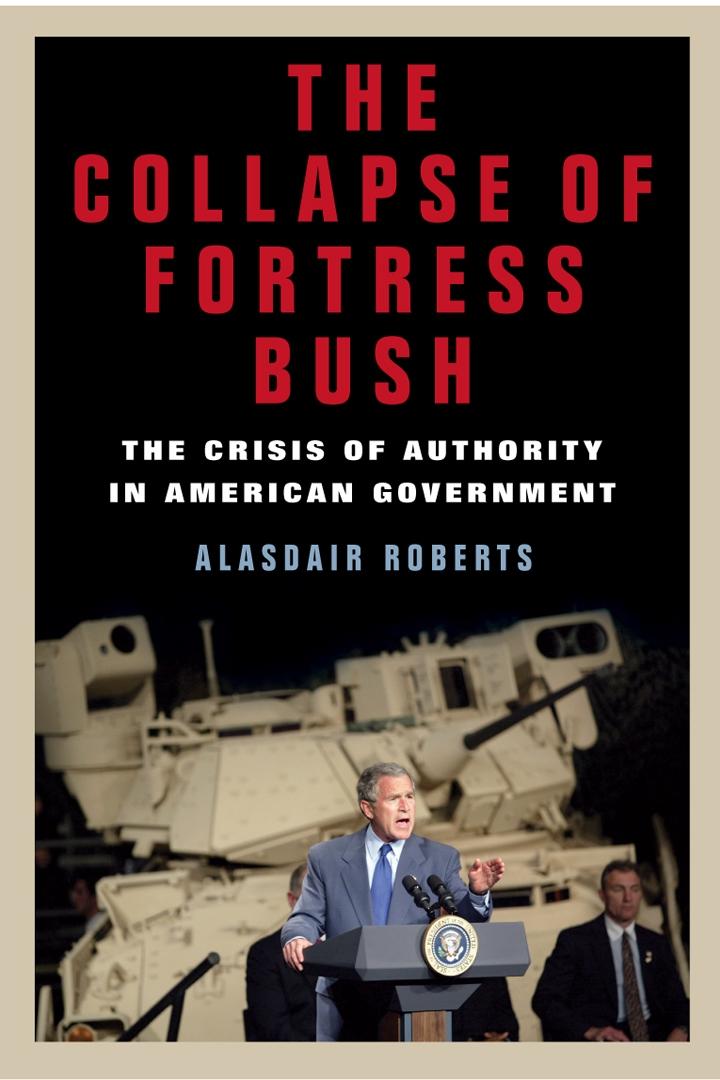
When the Bush presidency began to collapse, pundits were quick to tell a tale of the “imperial presidency” gone awry, a story of secretive, power-hungry ideologues who guided an arrogant president down the road to ruin. But the inside story of the failures of the Bush administration is both much more complex and alarming, says leading policy analyst Alasdair Roberts. In the most comprehensive, balanced view of the Bush presidency to date, Roberts portrays a surprisingly weak president, hamstrung by bureaucratic, constitutional, cultural and economic barriers and strikingly unable to wield authority even within his own executive branch.
The Collapse of Fortress Bush shows how the president fought—and lost—key battles with the defense and intelligence communities. From Homeland Security to Katrina, Bush could not coordinate agencies to meet domestic threats or disasters. Either the Bush administration refused to exercise authority, was thwarted in the attempt to exercise authority, or wielded authority but could not meet the test of legitimacy needed to enact their goals. Ultimately, the vaunted White House discipline gave way to public recriminations among key advisers. Condemned for secretiveness, the Bush administration became one of the most closely scrutinized presidencies in the modern era.
Roberts links the collapse of the Bush presidency to deeper currents in American politics and culture, especially a new militarism and the supremacy of the Reagan-era consensus on low taxes, limited government, and free markets. Only in this setting was it possible to have a “total war on terrorism” in which taxes were reduced, private consumption was encouraged, and businesses were lightly regulated.
A balanced, incisive account by a skilled observer of U.S. government, The Collapse of Fortress Bush turns the spotlight from the powerful cabal that launched the war in Iraq to tell a much more disturbing story about American power and the failure of executive leadership.
Before Memmo my notes were scattered across PDFs. Now a workspace pulls everything into one place — I see exactly what's still left to study.
Memmo's summaries are gold before exams. I don't have to re-read 800 pages two weeks before — just the important parts.
The AI chat has saved me the night before an exam more than once. I just keep asking until I get it — no waiting on a study group to reply.
The quizzes hit exactly what I need to know. Memmo tracks what I get stuck on — so I only practice what's worth it.
Flashcards with spaced repetition are magic. Memmo knows when I'm about to forget something and brings it back.
The AI podcasts are my favorite. I listen on my way to school and get a recap without sitting at a computer.

Handbok i kvalitativa metoder
281 kr

Hållbar utveckling: en introduktion för ingenjörer och andra problemlösare
334 kr

Brymans Samhällsvetenskapliga metoder
390 kr

Projektledning
491 kr

Den orättvisa hälsan: om socioekonomiska skillnader i hälsa och livslängd
326 kr

Vetenskapsteori för nybörjare
196 kr

Organizational Leadership
429 kr

På väg mot läraryrket
172 kr

Det sociala livet i skolan: Socialpsykologiska perspektiv
253 kr

Betygsättningens didaktik
151 kr

Personality
402 kr

Studying Leadership
404 kr

Managing Innovation
477 kr

Introduktion till samhällsvetenskaplig metod
347 kr

The Psychology of Sex and Gender
698 kr

Evidens och kunskap för socialt arbete
207 kr

Introduction to Leadership
605 kr