
Before Memmo my notes were scattered across PDFs. Now a workspace pulls everything into one place — I see exactly what's still left to study.
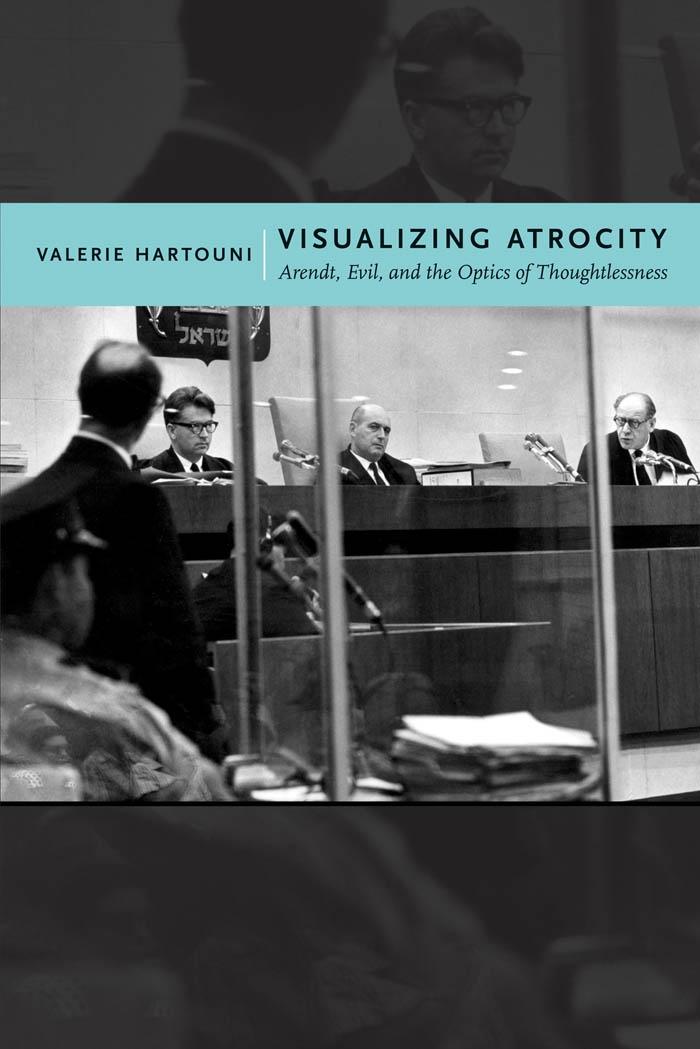
Visualizing Atrocity takes Hannah Arendt’s provocative and polarizing account of the 1961 trial of Nazi official Adolf Eichmann as its point of departure for reassessing some of the serviceable myths that have come to shape and limit our understanding both of the Nazi genocide and totalitarianism’s broader, constitutive, and recurrent features. These myths are inextricably tied to and reinforced viscerally by the atrocity imagery that emerged with the liberation of the concentration camps at the war’s end and played an especially important, evidentiary role in the postwar trials of perpetrators.
At the 1945 Nuremberg Tribunal, particular practices of looking and seeing were first established with respect to these images that were later reinforced and institutionalized through Eichmann’s trial in Jerusalem as simply part of the fabric of historical fact. They have come to constitute a certain visual rhetoric that now circumscribes the moral and political fields and powerfully assists in contemporary mythmaking about how we know genocide and what is permitted to count as such. In contrast, Arendt’s claims about the “banality of evil” work to disrupt this visual rhetoric. More significantly still, they direct our attention well beyond the figure of Eichmann to a world organized now as then by practices and processes that while designed to sustain and even enhance life work as well to efface it.
Before Memmo my notes were scattered across PDFs. Now a workspace pulls everything into one place — I see exactly what's still left to study.
Memmo's summaries are gold before exams. I don't have to re-read 800 pages two weeks before — just the important parts.
The AI chat has saved me the night before an exam more than once. I just keep asking until I get it — no waiting on a study group to reply.
The quizzes hit exactly what I need to know. Memmo tracks what I get stuck on — so I only practice what's worth it.
Flashcards with spaced repetition are magic. Memmo knows when I'm about to forget something and brings it back.
The AI podcasts are my favorite. I listen on my way to school and get a recap without sitting at a computer.

Handbok i kvalitativa metoder
281 kr

Hållbar utveckling: en introduktion för ingenjörer och andra problemlösare
334 kr

Brymans Samhällsvetenskapliga metoder
390 kr

Projektledning
491 kr

Den orättvisa hälsan: om socioekonomiska skillnader i hälsa och livslängd
326 kr

Organizational Leadership
429 kr

Vetenskapsteori för nybörjare
196 kr

På väg mot läraryrket
172 kr

Det sociala livet i skolan: Socialpsykologiska perspektiv
253 kr

Betygsättningens didaktik
151 kr

Personality
402 kr

Studying Leadership
404 kr

Managing Innovation
477 kr

Introduktion till samhällsvetenskaplig metod
347 kr

The Psychology of Sex and Gender
698 kr

Evidens och kunskap för socialt arbete
207 kr

Introduction to Leadership
605 kr