
Before Memmo my notes were scattered across PDFs. Now a workspace pulls everything into one place — I see exactly what's still left to study.
An "experienced overseer of intelligence" maps out the future of American intelligence and security
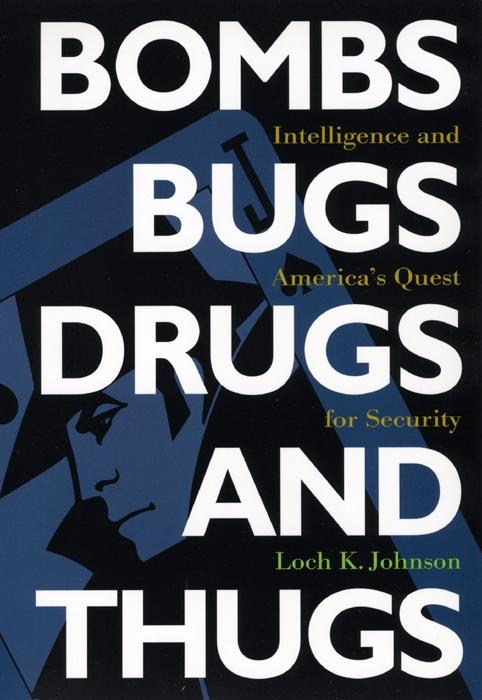
Recent years have seen numerous books about the looming threat posed to Western society by biological and chemical terrorism, by narcoterrorists, and by the unpredictable leaders of rogue nations. Some of these works have been alarmist. Some have been sensible and measured. But none has been by Loch Johnson.
Johnson, author of the acclaimed Secret Agencies and "an experienced overseer of intelligence" (Foreign Affairs), here examines the present state and future challenges of American strategic intelligence. Written in his trademark style--dubbed "highly readable" by Publishers Weekly--and drawing on dozens of personal interviews and contacts, Johnson takes advantage of his insider access to explore how America today aspires to achieve nothing less than "global transparency," ferreting out information on potential dangers in every corner of the world.
And yet the American security establishment, for all its formidable resources, technology, and networks, currently remains a loose federation of individual fortresses, rather than a well integrated "community" of agencies working together to provide the President with accurate information on foreign threats and opportunities. Intelligence failure, like the misidentified Chinese embassy in Belgrade accidentally bombed by a NATO pilot, is the inevitable outcome when the nation's thirteen secret agencies steadfastly resist the need for central coordination.
Ranging widely and boldly over such controversial topics as the intelligence role of the United Nations (which Johnson believes should be expanded) and whether assassination should be a part of America's foreign policy (an option he rejects for fear that the U.S. would then be cast not only as global policeman but also as global godfather), Loch K. Johnson here maps out a critical and prescriptive vision of the future of American intelligence.
Before Memmo my notes were scattered across PDFs. Now a workspace pulls everything into one place — I see exactly what's still left to study.
Memmo's summaries are gold before exams. I don't have to re-read 800 pages two weeks before — just the important parts.
The AI chat has saved me the night before an exam more than once. I just keep asking until I get it — no waiting on a study group to reply.
The quizzes hit exactly what I need to know. Memmo tracks what I get stuck on — so I only practice what's worth it.
Flashcards with spaced repetition are magic. Memmo knows when I'm about to forget something and brings it back.
The AI podcasts are my favorite. I listen on my way to school and get a recap without sitting at a computer.

Handbok i kvalitativa metoder
281 kr

Hållbar utveckling: en introduktion för ingenjörer och andra problemlösare
334 kr

Brymans Samhällsvetenskapliga metoder
390 kr

Projektledning
491 kr

Den orättvisa hälsan: om socioekonomiska skillnader i hälsa och livslängd
326 kr

Organizational Leadership
429 kr

Vetenskapsteori för nybörjare
196 kr

På väg mot läraryrket
172 kr

Det sociala livet i skolan: Socialpsykologiska perspektiv
253 kr

Betygsättningens didaktik
151 kr

Personality
402 kr

Studying Leadership
404 kr

Managing Innovation
477 kr

Introduktion till samhällsvetenskaplig metod
347 kr

The Psychology of Sex and Gender
698 kr

Evidens och kunskap för socialt arbete
207 kr

Introduction to Leadership
605 kr