
Before Memmo my notes were scattered across PDFs. Now a workspace pulls everything into one place — I see exactly what's still left to study.
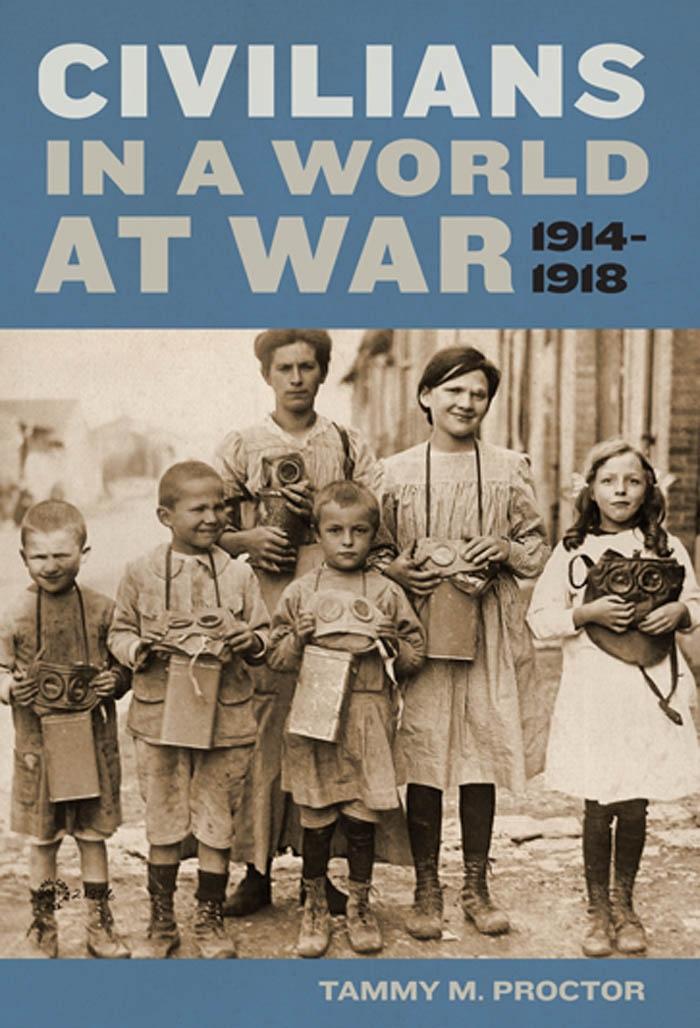
World War I heralded a new global era of warfare, consolidating and expanding changes that had been building throughout the previous century, while also instituting new notions of war. The 1914-18 conflict witnessed the first aerial bombing of civilian populations, the first widespread concentration camps for the internment of enemy alien civilians, and an unprecedented use of civilian labor and resources for the war effort. Humanitarian relief programs for civilians became a common feature of modern society, while food became as significant as weaponry in the fight to win.
Tammy M. Proctor argues that it was World War I—the first modern, global war—that witnessed the invention of both the modern “civilian” and the “home front,” where a totalizing war strategy pitted industrial nations and their citizenries against each other. Civilians in a World at War, 1914-1918, explores the different ways civilians work and function in a war situation, and broadens our understanding of the civilian to encompass munitions workers, nurses, laundresses, refugees, aid workers, and children who lived and worked in occupied zones, on home and battle fronts, and in the spaces in between. Comprehensive and global in scope, spanning the Eastern, Western, Italian, East African, and Mediterranean fronts, Proctor examines in lucid and evocative detail the role of experts in the war, the use of forced labor, and the experiences of children in the combatant countries.
As in many wars, civilians on both sides of WWI were affected, and vast displacements of the populations shaped the contemporary world in countless ways, redrawing boundaries and creating or reviving lines of ethnic conflict. Exploring primary source materials and secondary studies of combatant and neutral nations, while synthesizing French, German, Dutch, and English language sources, Proctor transcends the artificial boundaries of national histories and the exclusive focus on soldiers. Instead she tells the fascinating and long-buried story of the civilian in the Great War, allowing voices from the period to speak for themselves.
Before Memmo my notes were scattered across PDFs. Now a workspace pulls everything into one place — I see exactly what's still left to study.
Memmo's summaries are gold before exams. I don't have to re-read 800 pages two weeks before — just the important parts.
The AI chat has saved me the night before an exam more than once. I just keep asking until I get it — no waiting on a study group to reply.
The quizzes hit exactly what I need to know. Memmo tracks what I get stuck on — so I only practice what's worth it.
Flashcards with spaced repetition are magic. Memmo knows when I'm about to forget something and brings it back.
The AI podcasts are my favorite. I listen on my way to school and get a recap without sitting at a computer.

Handbok i kvalitativa metoder
281 kr

Hållbar utveckling: en introduktion för ingenjörer och andra problemlösare
334 kr

Brymans Samhällsvetenskapliga metoder
390 kr

Projektledning
491 kr

Den orättvisa hälsan: om socioekonomiska skillnader i hälsa och livslängd
326 kr

Vetenskapsteori för nybörjare
196 kr

Organizational Leadership
429 kr

På väg mot läraryrket
172 kr

Det sociala livet i skolan: Socialpsykologiska perspektiv
253 kr

Betygsättningens didaktik
151 kr

Personality
402 kr

Studying Leadership
404 kr

Managing Innovation
477 kr

Introduktion till samhällsvetenskaplig metod
347 kr

The Psychology of Sex and Gender
698 kr

Evidens och kunskap för socialt arbete
207 kr

Introduction to Leadership
605 kr