
Before Memmo my notes were scattered across PDFs. Now a workspace pulls everything into one place — I see exactly what's still left to study.
“Kann's latest tour de force explores the ambivalence, during the founding of our nation, about whether political freedom should augur sexual freedom. Tracing the roots of patriarchal sexual repression back to revolutionary America, Kann asks highly contemporary questions about the boundaries between public and private life, suggesting, provocatively, that political and sexual freedom should go hand in hand. This is a must-read for those interested in the interwining of politics, public life, and sexuality.”
—Ben Agger, University of Texas at Arlington
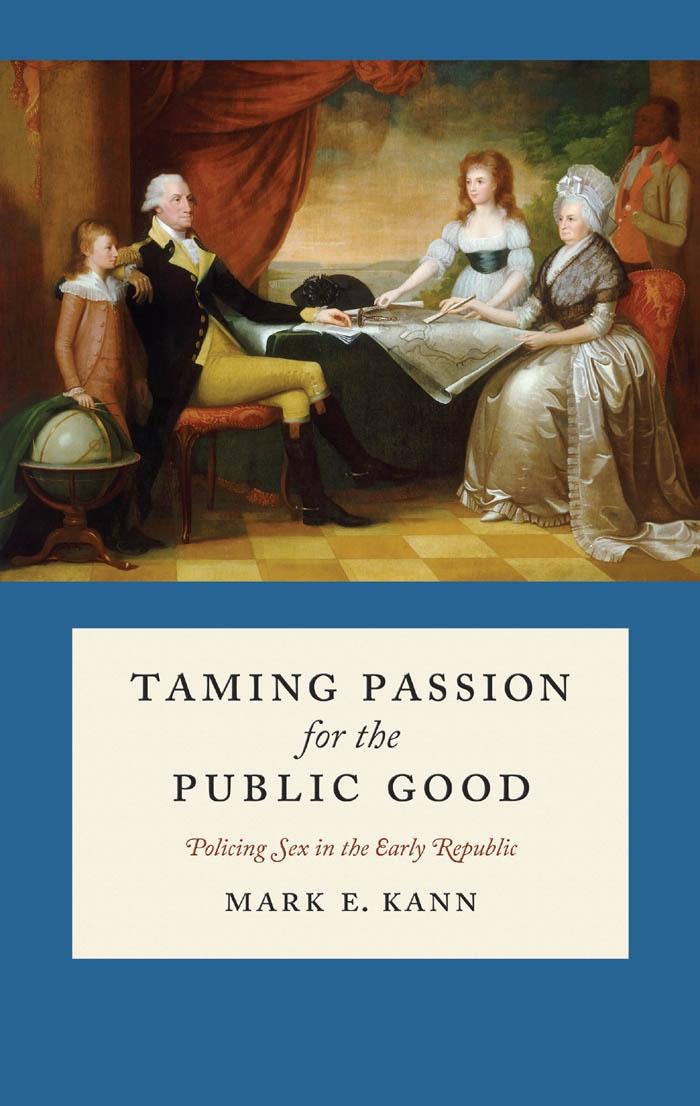
The American Revolution was fought in the name of liberty. In popular imagination, the Revolution stands for the triumph of populism and the death of patriarchal elites. But this is not the case, argues Mark E. Kann. Rather, in the aftermath of the Revolution, America developed a society and system of laws that kept patriarchal authority alive and well—especially when it came to the sex lives of citizens.
In Taming Passion for the Public Good, Kann contends that that despite the rhetoric of classical liberalism, the founding generation did not trust ordinary citizens with extensive liberty. Through the policing of sex, elites sought to maintain control of individuals' private lives, ensuring that citizens would be productive, moral, and orderly in the new nation. New American elites applauded traditional marriages in which men were the public face of the family and women managed the home. They frowned on interracial and interclass sexual unions. They saw masturbation as evidence of a lack of self-control over one’s passions, and they considered prostitution the result of aggressive female sexuality. Both were punishable offenses.
By seeking to police sex, elites were able to keep alive what Kann calls a “resilient patriarchy.” Under the guise of paternalism, they were able simultaneously to retain social control while espousing liberal principles, with the goal of ultimately molding the country into the new American ideal: a moral and orderly citizenry that voluntarily did what was best for the public good.
Before Memmo my notes were scattered across PDFs. Now a workspace pulls everything into one place — I see exactly what's still left to study.
Memmo's summaries are gold before exams. I don't have to re-read 800 pages two weeks before — just the important parts.
The AI chat has saved me the night before an exam more than once. I just keep asking until I get it — no waiting on a study group to reply.
The quizzes hit exactly what I need to know. Memmo tracks what I get stuck on — so I only practice what's worth it.
Flashcards with spaced repetition are magic. Memmo knows when I'm about to forget something and brings it back.
The AI podcasts are my favorite. I listen on my way to school and get a recap without sitting at a computer.

Handbok i kvalitativa metoder
281 kr

Hållbar utveckling: en introduktion för ingenjörer och andra problemlösare
334 kr

Brymans Samhällsvetenskapliga metoder
390 kr

Projektledning
491 kr

Den orättvisa hälsan: om socioekonomiska skillnader i hälsa och livslängd
326 kr

Vetenskapsteori för nybörjare
196 kr

Organizational Leadership
429 kr

På väg mot läraryrket
172 kr

Det sociala livet i skolan: Socialpsykologiska perspektiv
253 kr

Betygsättningens didaktik
151 kr

Personality
402 kr

Studying Leadership
404 kr

Managing Innovation
477 kr

Introduktion till samhällsvetenskaplig metod
347 kr

The Psychology of Sex and Gender
698 kr

Evidens och kunskap för socialt arbete
207 kr

Introduction to Leadership
605 kr