
Before Memmo my notes were scattered across PDFs. Now a workspace pulls everything into one place — I see exactly what's still left to study.
An essential examination of black youth activism since the passage of the 1964 Civil Rights Act
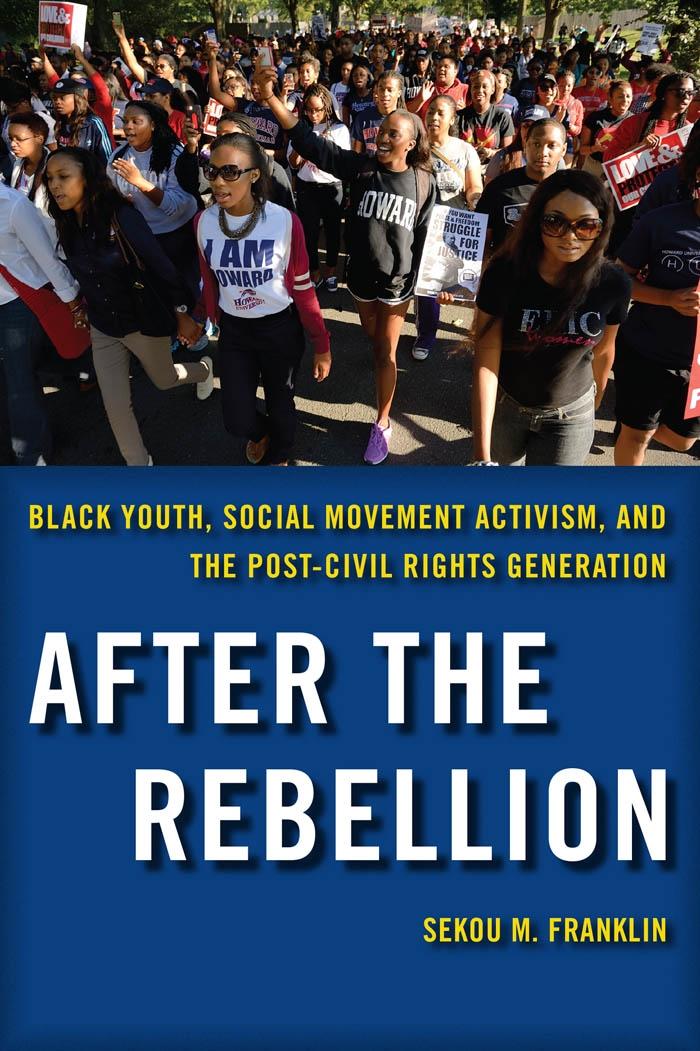
What happened to black youth in the post-civil rights generation? What kind of causes did they rally around and were they even rallying in the first place? After the Rebellion takes a close look at a variety of key civil rights groups across the country over the last 40 years to provide a broad view of black youth and social movement activism. Based on both research from a diverse collection of archives and interviews with youth activists, advocates, and grassroots organizers, this book examines popular mobilization among the generation of activists—principally black students, youth, and young adults—who came of age after the passage of the 1964 Civil Rights Act and the Voting Rights Act of 1965. Franklin argues that the political environment in the post-Civil Rights era, along with constraints on social activism, made it particularly difficult for young black activists to start and sustain popular mobilization campaigns.
Building on case studies from around the country—including New York, the Carolinas, California, Louisiana, and Baltimore—After the Rebellion explores the inner workings and end results of activist groups such as the Southern Negro Youth Congress, Student Nonviolent Coordinating Committee, the Student Organization for Black Unity, the Free South Africa Campaign, the New Haven Youth Movement, the Black Student Leadership Network, the Juvenile Justice Reform Movement, and the AFL-CIO’s Union Summer campaign. Franklin demonstrates how youth-based movements and intergenerational campaigns have attempted to circumvent modern constraints, providing insight into how the very inner workings of these organizations have and have not been effective in creating change and involving youth. A powerful work of both historical and political analysis, After the Rebellion provides a vivid explanation of what happened to the militant impulse of young people since the demobilization of the civil rights and black power movements—a discussion with great implications for the study of generational politics, racial and black politics, and social movements.
Before Memmo my notes were scattered across PDFs. Now a workspace pulls everything into one place — I see exactly what's still left to study.
Memmo's summaries are gold before exams. I don't have to re-read 800 pages two weeks before — just the important parts.
The AI chat has saved me the night before an exam more than once. I just keep asking until I get it — no waiting on a study group to reply.
The quizzes hit exactly what I need to know. Memmo tracks what I get stuck on — so I only practice what's worth it.
Flashcards with spaced repetition are magic. Memmo knows when I'm about to forget something and brings it back.
The AI podcasts are my favorite. I listen on my way to school and get a recap without sitting at a computer.

Handbok i kvalitativa metoder
281 kr

Hållbar utveckling: en introduktion för ingenjörer och andra problemlösare
334 kr

Brymans Samhällsvetenskapliga metoder
390 kr

Projektledning
491 kr

Den orättvisa hälsan: om socioekonomiska skillnader i hälsa och livslängd
326 kr

Organizational Leadership
429 kr

Vetenskapsteori för nybörjare
196 kr

På väg mot läraryrket
172 kr

Det sociala livet i skolan: Socialpsykologiska perspektiv
253 kr

Betygsättningens didaktik
151 kr

Personality
402 kr

Studying Leadership
404 kr

Managing Innovation
477 kr

Introduktion till samhällsvetenskaplig metod
347 kr

The Psychology of Sex and Gender
698 kr

Evidens och kunskap för socialt arbete
207 kr

Introduction to Leadership
605 kr