
Before Memmo my notes were scattered across PDFs. Now a workspace pulls everything into one place — I see exactly what's still left to study.
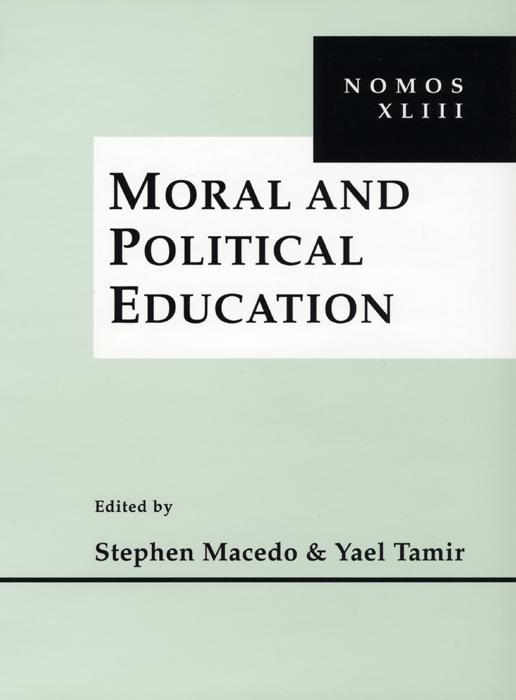
What are the proper aims of education in a liberal democracy? Given the deep disagreement about moral and religious values in modern societies, what is the proper balance between public and private claimants to educational authority? Should parents be given greater control over their children's formal education? Are today's public schools promoting a culture of rootless individualism? Do we increasingly resort to prisons and punishment instead of schooling and moral education to control young people? And what, finally, should be the fate of the great project of racially integrated schooling: a project that energized a vast expenditure of hopes and resources in the latter half of the 20th century in America? Should we recommit ourselves to the ideal of integration, or should we embrace other, perhaps better, ways to help the disadvantaged and promote social integration? Should we go further, and affirm that predominantly black educational institutions have intrinsic benefits, such as preserving black culture and providing role models for black youngsters?
As education reform takes center stage these questions are at the heart of what it means to be an American and participate in a democratic society. The essayists in this volume bring philosophical, political, and legal reflection to bear on the practical questions of how education should be changed to meet the needs of the twenty-first century. In so doing they display a determination to illuminate the educational choices that lie before all modern democracies.
Contributors: Anita L. Allen, Lawrence Blum, Harry Brighouse, Randall Curren, Peter de Marneffe, James G. Dwyer, Christopher Eisgruber, William A. Galston, Amy Gutmann, Michael W. McConnell, Rob Reich, Nancy L. Rosenblum, Yael Tamir, John Tomasi, and Andrew Valls.
Before Memmo my notes were scattered across PDFs. Now a workspace pulls everything into one place — I see exactly what's still left to study.
Memmo's summaries are gold before exams. I don't have to re-read 800 pages two weeks before — just the important parts.
The AI chat has saved me the night before an exam more than once. I just keep asking until I get it — no waiting on a study group to reply.
The quizzes hit exactly what I need to know. Memmo tracks what I get stuck on — so I only practice what's worth it.
Flashcards with spaced repetition are magic. Memmo knows when I'm about to forget something and brings it back.
The AI podcasts are my favorite. I listen on my way to school and get a recap without sitting at a computer.

Handbok i kvalitativa metoder
281 kr

Hållbar utveckling: en introduktion för ingenjörer och andra problemlösare
334 kr

Brymans Samhällsvetenskapliga metoder
390 kr

Projektledning
491 kr

Den orättvisa hälsan: om socioekonomiska skillnader i hälsa och livslängd
326 kr

Organizational Leadership
429 kr

Vetenskapsteori för nybörjare
196 kr

På väg mot läraryrket
172 kr

Det sociala livet i skolan: Socialpsykologiska perspektiv
253 kr

Betygsättningens didaktik
151 kr

Personality
402 kr

Studying Leadership
404 kr

Managing Innovation
477 kr

Introduktion till samhällsvetenskaplig metod
347 kr

The Psychology of Sex and Gender
698 kr

Evidens och kunskap för socialt arbete
207 kr

Introduction to Leadership
605 kr