
Before Memmo my notes were scattered across PDFs. Now a workspace pulls everything into one place — I see exactly what's still left to study.
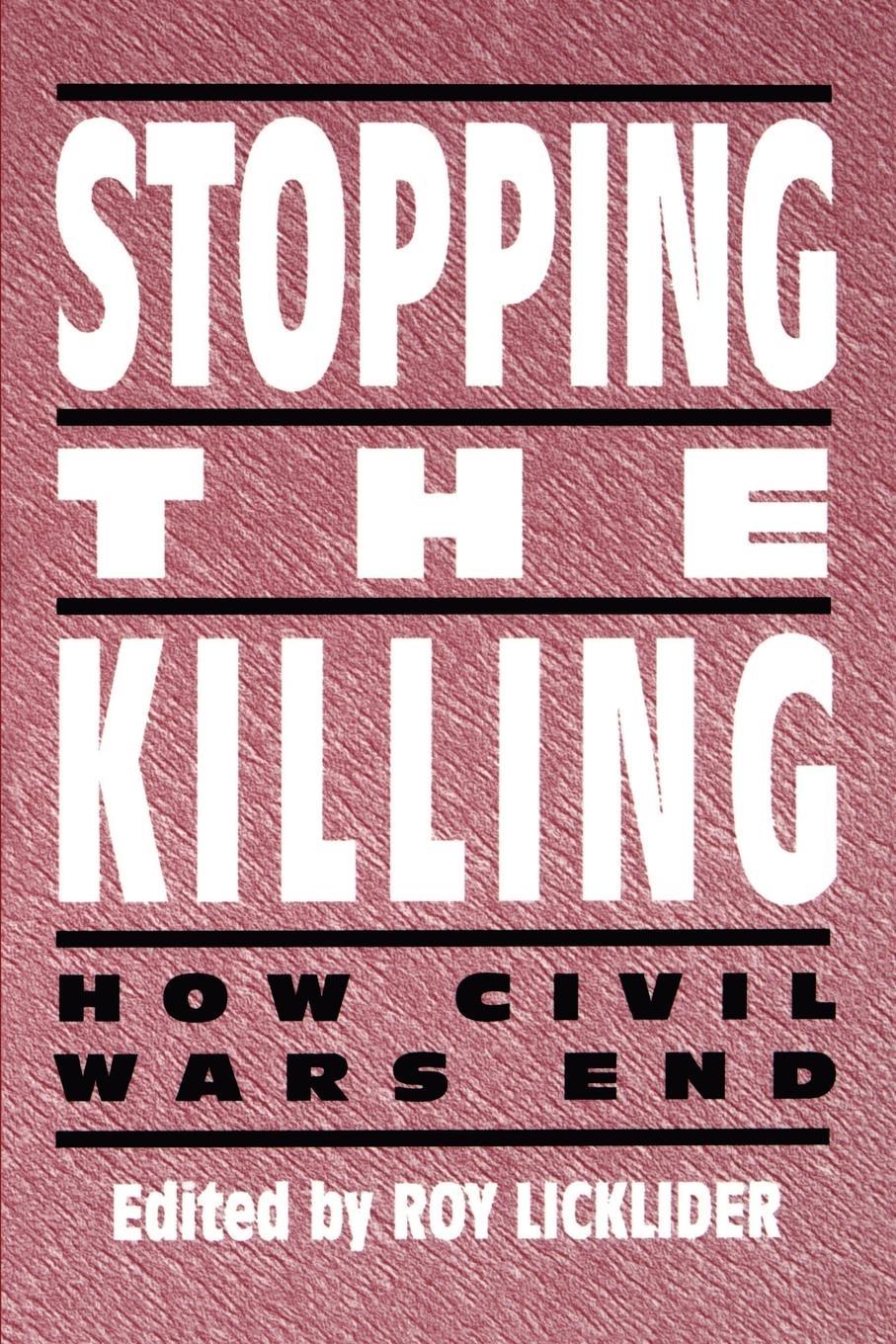
Yugoslavia, Rwanda, Liberia, Somalia, Azerbaijan, El Salvador, Northern Ireland, Lebanon, Cambodia -- all provide bloody evidence that civil wars continue to have a powerful impact on the international scene. Because they tear at the very fabric of a society and pit countryman against countryman, civil wars are often the most brutal and difficult to extinguish -- witness the American Revolution.
And yet, civil wars do inevitably end. England is no longer criss-crossed by warring armies representing York and Lancaster or King and Parliament. The French no longer kill one another over the divine right of kings. Argentines seem reconciled to living in a single state, rather than several. The ideologies of the Spanish Civil War now seem largely irrelevant. And the possibility of Southern secession is an issue long-buried in the American past.
The question then begs itself: how do people who have been killing one another with considerable enthusiasm and success come together to form a common government? How can individuals and factions work together, politically and economically, with others who have killed their friends, parents, children and lovers? How are armed societies disarmed? What effect does a total military victory have on a lasting peace? In sum, how are civil societies constructed from civil violence and chaos? This is the central concern of Stopping the Killing.
In this highly original and much needed volume, a distinguished group of experts on civil wars discuss both specific conflicts and broader theoretical issues. Individual chapters examine civil wars in Colombia, the Sudan, Yemen, America, Greece, and Nigeria, and analyze the causes of peace, the relationship between the battlefield and the negotiating table, and issues of settlement. An introduction and conclusion by the editor unify the volume. Contributors include: Jonathan Hartlyn (Univ. of North Carolina), Caroline Hartzell (Univ. of California, Davis), Jane E. Holl (U.S. Military Academy), John Iatrides (Southern Connecticut State University), James O'Connell (University of Bradford), Donald Rothchild (Univ. of California, Davis), Stephen John Stedman (Johns Hopkins Univ.), Robert Harrison Wagner (Univ. of Texas, Austin), Harvey Waterman (Rutgers Univ.), Manfred Wenner (Northern Illinois Univ.), and I. William Zartman (Johns Hopkins Univ.).
Before Memmo my notes were scattered across PDFs. Now a workspace pulls everything into one place — I see exactly what's still left to study.
Memmo's summaries are gold before exams. I don't have to re-read 800 pages two weeks before — just the important parts.
The AI chat has saved me the night before an exam more than once. I just keep asking until I get it — no waiting on a study group to reply.
The quizzes hit exactly what I need to know. Memmo tracks what I get stuck on — so I only practice what's worth it.
Flashcards with spaced repetition are magic. Memmo knows when I'm about to forget something and brings it back.
The AI podcasts are my favorite. I listen on my way to school and get a recap without sitting at a computer.

Handbok i kvalitativa metoder
281 kr

Hållbar utveckling: en introduktion för ingenjörer och andra problemlösare
334 kr

Brymans Samhällsvetenskapliga metoder
390 kr

Projektledning
491 kr

Den orättvisa hälsan: om socioekonomiska skillnader i hälsa och livslängd
326 kr

Organizational Leadership
429 kr

Vetenskapsteori för nybörjare
196 kr

På väg mot läraryrket
172 kr

Det sociala livet i skolan: Socialpsykologiska perspektiv
253 kr

Betygsättningens didaktik
151 kr

Personality
402 kr

Studying Leadership
404 kr

Managing Innovation
477 kr

Introduktion till samhällsvetenskaplig metod
347 kr

The Psychology of Sex and Gender
698 kr

Evidens och kunskap för socialt arbete
207 kr

Introduction to Leadership
605 kr