
Before Memmo my notes were scattered across PDFs. Now a workspace pulls everything into one place — I see exactly what's still left to study.
Few institutions have become as ferociously fought over in democratic politics as the courts. While political criticism of judges in this country goes back to its inception, today’s intensely ideological assault is nearly unprecedented.
Spend any amount of time among the writings of contemporary right-wing critics of judicial power, and you are virtually assured of seeing repeated complaints about the “imperial judiciary.” American conservatives contend not only that judicial power has expanded dangerously in recent decades, but that liberal judges now willfully write their policy preferences into law. They raise alarms that American courts possess a degree of power incompatible with the functioning of a democratic polity.
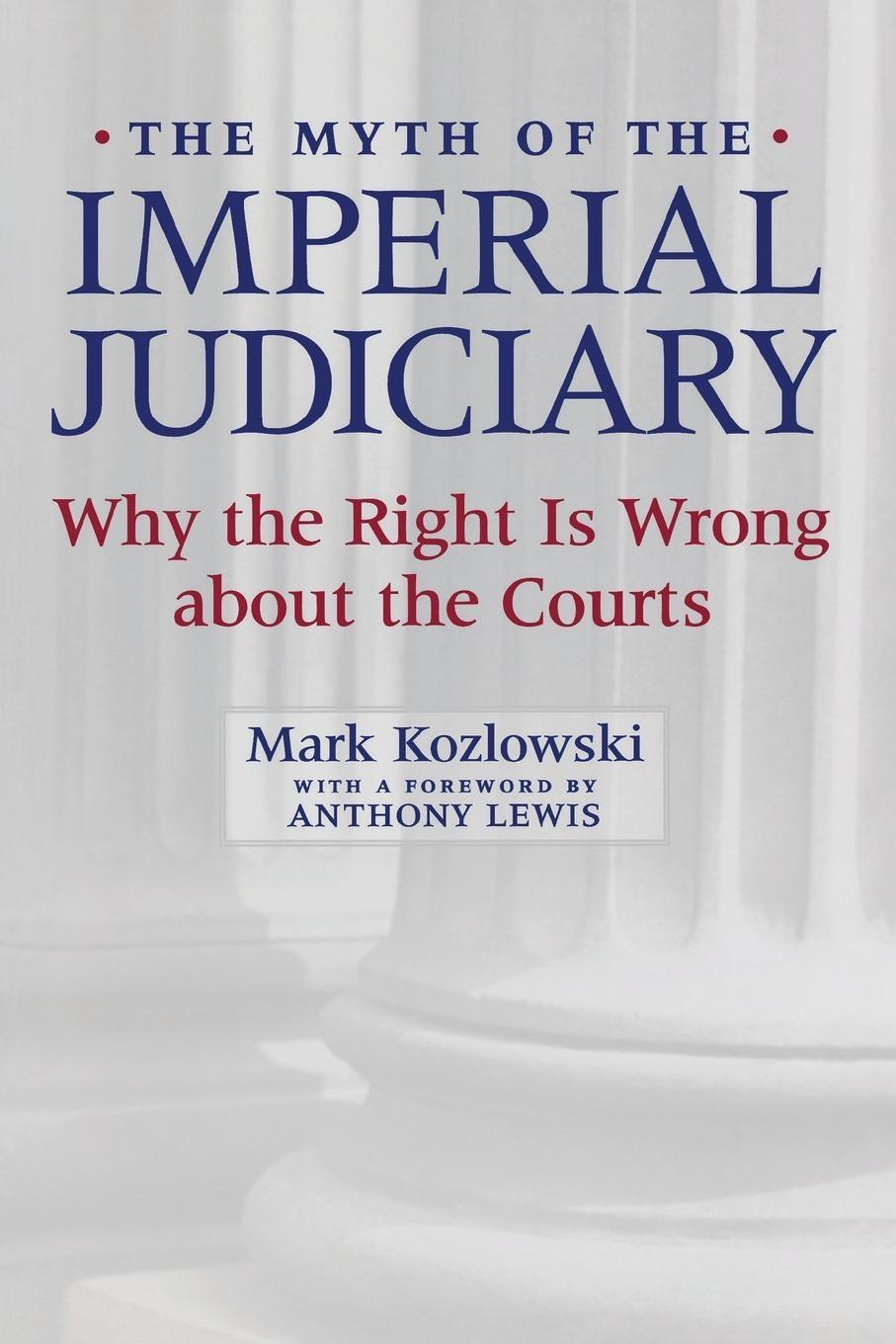
The Myth of the Imperial Judiciary explores the anti-judicial ideological trend of the American right, refuting these claims and taking a realistic look at the role of courts in our democracy to show that conservatives have a highly unrealistic conception of their power. Kozlowski first assesses the validity of the conservative view of the Founders’ intent, arguing that courts have played an assertive role in our politics since their establishment. He then considers contemporary judicial powers to show that conservatives have greatly overstated the extent to which the expansion of rights which has occurred has worked solely to the benefit of liberals.
Kozlowski reveals the ways in which the claims of those on the right are often either unsupported or simply wrong. He concludes that American courts, far from imperiling our democracy or our moral fabric, stand as a bulwark against the abuse of legislative power, acting forcefully, as they have always done, to give meaning to constitutional promises.
Before Memmo my notes were scattered across PDFs. Now a workspace pulls everything into one place — I see exactly what's still left to study.
Memmo's summaries are gold before exams. I don't have to re-read 800 pages two weeks before — just the important parts.
The AI chat has saved me the night before an exam more than once. I just keep asking until I get it — no waiting on a study group to reply.
The quizzes hit exactly what I need to know. Memmo tracks what I get stuck on — so I only practice what's worth it.
Flashcards with spaced repetition are magic. Memmo knows when I'm about to forget something and brings it back.
The AI podcasts are my favorite. I listen on my way to school and get a recap without sitting at a computer.

Handbok i kvalitativa metoder
281 kr

Hållbar utveckling: en introduktion för ingenjörer och andra problemlösare
334 kr

Brymans Samhällsvetenskapliga metoder
390 kr

Projektledning
491 kr

Den orättvisa hälsan: om socioekonomiska skillnader i hälsa och livslängd
326 kr

Vetenskapsteori för nybörjare
196 kr

Organizational Leadership
429 kr

På väg mot läraryrket
172 kr

Det sociala livet i skolan: Socialpsykologiska perspektiv
253 kr

Betygsättningens didaktik
151 kr

Personality
402 kr

Studying Leadership
404 kr

Managing Innovation
477 kr

Introduktion till samhällsvetenskaplig metod
347 kr

The Psychology of Sex and Gender
698 kr

Evidens och kunskap för socialt arbete
207 kr

Introduction to Leadership
605 kr