
Before Memmo my notes were scattered across PDFs. Now a workspace pulls everything into one place — I see exactly what's still left to study.
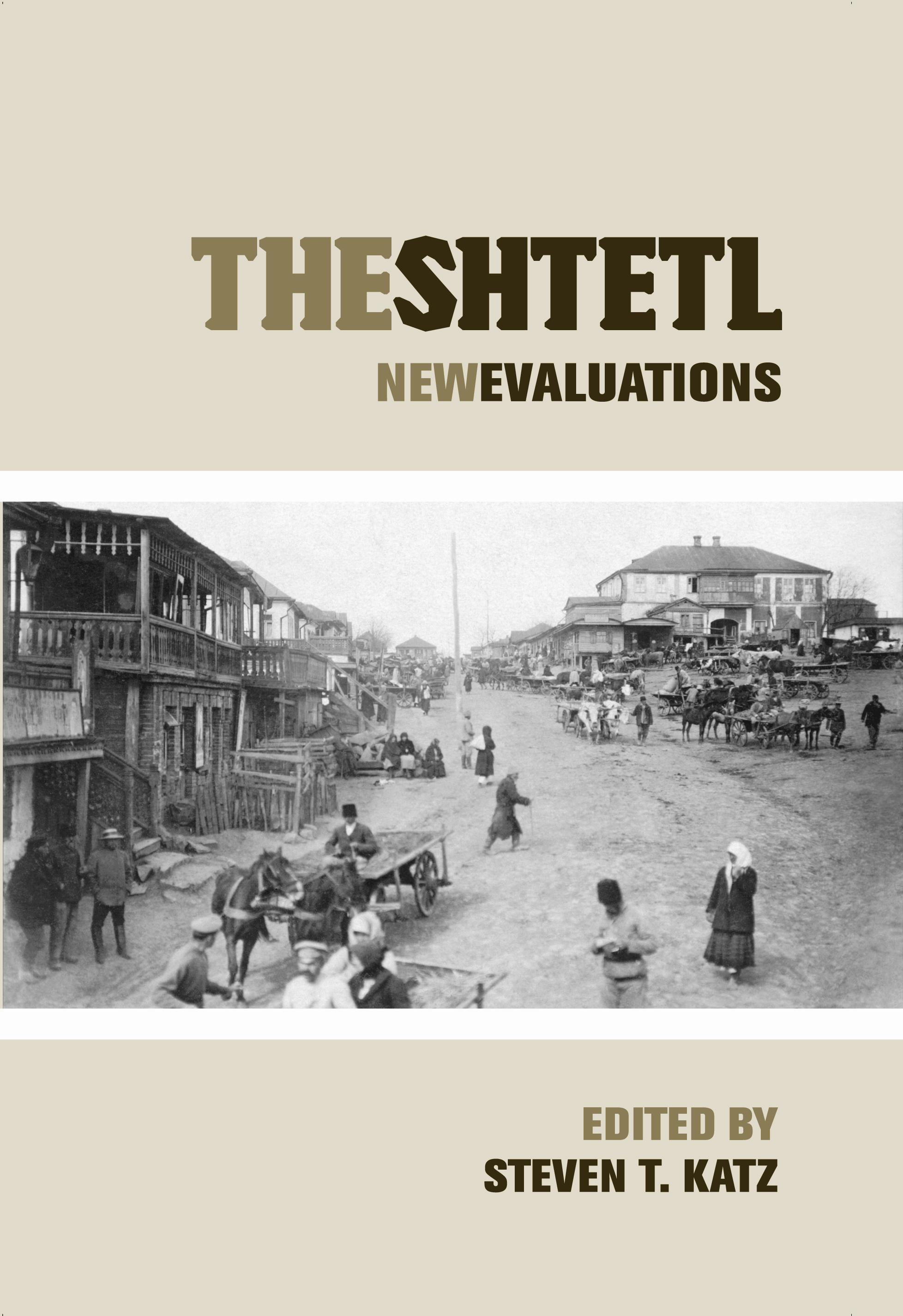
Dating from the sixteenth century, there were hundreds of shtetls—Jewish settlements—in Eastern Europe that were home to a large and compact population that differed from their gentile, mostly peasant neighbors in religion, occupation, language, and culture. The shtetls were different in important respects from previous types of Jewish settlements in the Diaspora in that Jews had rarely formed a majority in the towns in which they lived. This was not true of the shtetl, where Jews sometimes comprised 80% or more of the population. While the shtetl began to decline during the course of the nineteenth century, it was the Holocaust which finally destroyed it.
During the last thirty years the shtetl has attracted a growing amount of scholarly attention, though gross generalizations and romanticized nostalgia continue to affect how the topic is treated. This volume takes a new look at this most important facet of East European Jewish life. It helps to correct the notion that the shtetl was an entirely Jewish world and shows the ways in which the Jews of the shtetl interacted both with their co-religionists and with their gentile neighbors. The volume includes chapters on the history of the shtetl, its myths and realities, politics, gender dynamics, how the shtetl has been (mis)represented in literature, and the changes brought about by World War I and the Holocaust, among others.
Contributors: Samuel Kassow, Gershon David Hundert, Immanuel Etkes, Nehemia Polen, Henry Abramson, Konrad Zielinski, Jeremy Dauber, Israel Bartel, Naomi Seidman, Mikhail Krutikov, Arnold J. Band, Katarzyna Wieclawska, Yehunda Bauer, and Elie Wiesel.
This is the first book published in the Elie Wiesel Center for Judaic Studies Series.
Before Memmo my notes were scattered across PDFs. Now a workspace pulls everything into one place — I see exactly what's still left to study.
Memmo's summaries are gold before exams. I don't have to re-read 800 pages two weeks before — just the important parts.
The AI chat has saved me the night before an exam more than once. I just keep asking until I get it — no waiting on a study group to reply.
The quizzes hit exactly what I need to know. Memmo tracks what I get stuck on — so I only practice what's worth it.
Flashcards with spaced repetition are magic. Memmo knows when I'm about to forget something and brings it back.
The AI podcasts are my favorite. I listen on my way to school and get a recap without sitting at a computer.

Handbok i kvalitativa metoder
281 kr

Hållbar utveckling: en introduktion för ingenjörer och andra problemlösare
334 kr

Brymans Samhällsvetenskapliga metoder
390 kr

Projektledning
491 kr

Den orättvisa hälsan: om socioekonomiska skillnader i hälsa och livslängd
326 kr

Vetenskapsteori för nybörjare
196 kr

Organizational Leadership
429 kr

På väg mot läraryrket
172 kr

Det sociala livet i skolan: Socialpsykologiska perspektiv
253 kr

Betygsättningens didaktik
151 kr

Personality
402 kr

Studying Leadership
404 kr

Managing Innovation
477 kr

Introduktion till samhällsvetenskaplig metod
347 kr

The Psychology of Sex and Gender
698 kr

Evidens och kunskap för socialt arbete
207 kr

Introduction to Leadership
605 kr