
Before Memmo my notes were scattered across PDFs. Now a workspace pulls everything into one place — I see exactly what's still left to study.
Among the numerous introductions to Lacan published to date in English, Philippe Julien's work is certainly outstanding. Beyond its conceptual clarity the book constitutes an excellent guide to Lacanian psychoanalytic practice.
--Andr Patsalides, Psychoanalyst and President, Lacanian School of Psychoanalysis
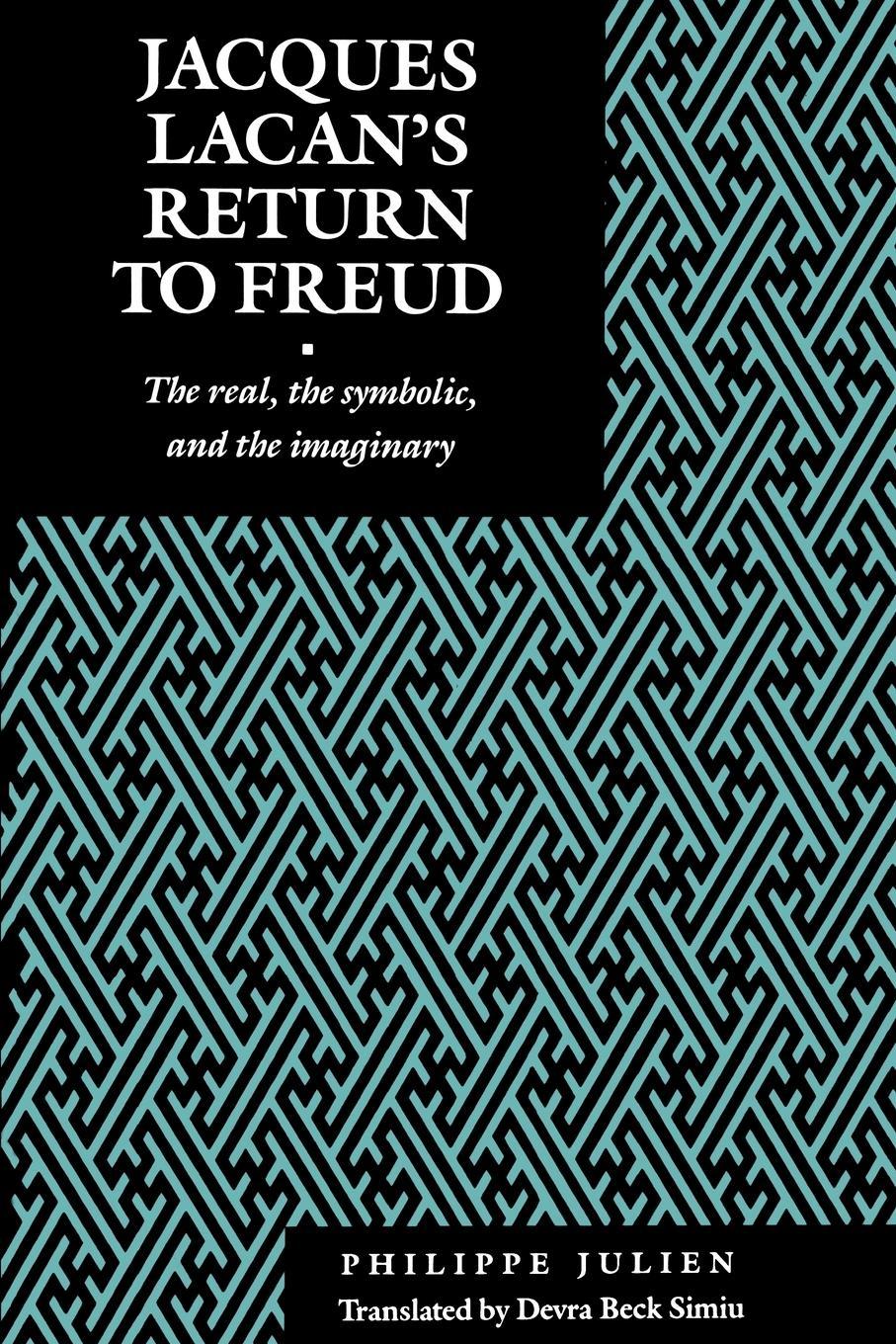
From 1953 to 1980, Jacques Lacan sought to accomplish a return to Freud beyond post- Freudianism. He defined this return as a new convenant with the meaning to the Freudian discovery. Each year through his teaching, he brought about this return. What was at stake in this renewal?
Philippe Julien, who joined Lacan's Ecole Freudienne de Paris in 1968, attempts to answer this question. Situtated in the period after-Lacan, Julien shows that Lacan's return to Freud was neither a closing of the Freudian text by responding to questions left unanswered nor a reopening of the text by giving endless new interpretations. Neither dogmatic nor hermeneutic, Lacan's return to Frued was the return of an inevitable discordance between our experience of the unconscious and any attempt to give an account of it. For the unconscious, by its very nature, disappears at the same moment as it is discovered. It is in this sense that the author can claim that Lacan's return to Freud will have been Freudian.
Constantly challenging the reader to submit to the rigors of Lacan's sinuous thinking, this penetrating work goes far beyond being a mere introduction. Rendered into elegant English by the American translator, who added numerous footnotes and scholarly references to the French original, this study brings Lacanian scholarship among English readers to a new level of sophistication.
Neither dogmatic nor hermeneutic, Lacan's return to Freud was the return of an inevitable discordance between our experience of the unconscious and any attempt to give an account of it. For the unconscious, by its very nature, disappears at the same moment as it is discovered. It is in this sense that the author can claim that Lacan's return to Freud was Freudian.
Before Memmo my notes were scattered across PDFs. Now a workspace pulls everything into one place — I see exactly what's still left to study.
Memmo's summaries are gold before exams. I don't have to re-read 800 pages two weeks before — just the important parts.
The AI chat has saved me the night before an exam more than once. I just keep asking until I get it — no waiting on a study group to reply.
The quizzes hit exactly what I need to know. Memmo tracks what I get stuck on — so I only practice what's worth it.
Flashcards with spaced repetition are magic. Memmo knows when I'm about to forget something and brings it back.
The AI podcasts are my favorite. I listen on my way to school and get a recap without sitting at a computer.

Handbok i kvalitativa metoder
281 kr

Hållbar utveckling: en introduktion för ingenjörer och andra problemlösare
334 kr

Brymans Samhällsvetenskapliga metoder
390 kr

Projektledning
491 kr

Den orättvisa hälsan: om socioekonomiska skillnader i hälsa och livslängd
326 kr

Vetenskapsteori för nybörjare
196 kr

Organizational Leadership
429 kr

På väg mot läraryrket
172 kr

Det sociala livet i skolan: Socialpsykologiska perspektiv
253 kr

Betygsättningens didaktik
151 kr

Personality
402 kr

Studying Leadership
404 kr

Managing Innovation
477 kr

Introduktion till samhällsvetenskaplig metod
347 kr

The Psychology of Sex and Gender
698 kr

Evidens och kunskap för socialt arbete
207 kr

Introduction to Leadership
605 kr