
Before Memmo my notes were scattered across PDFs. Now a workspace pulls everything into one place — I see exactly what's still left to study.
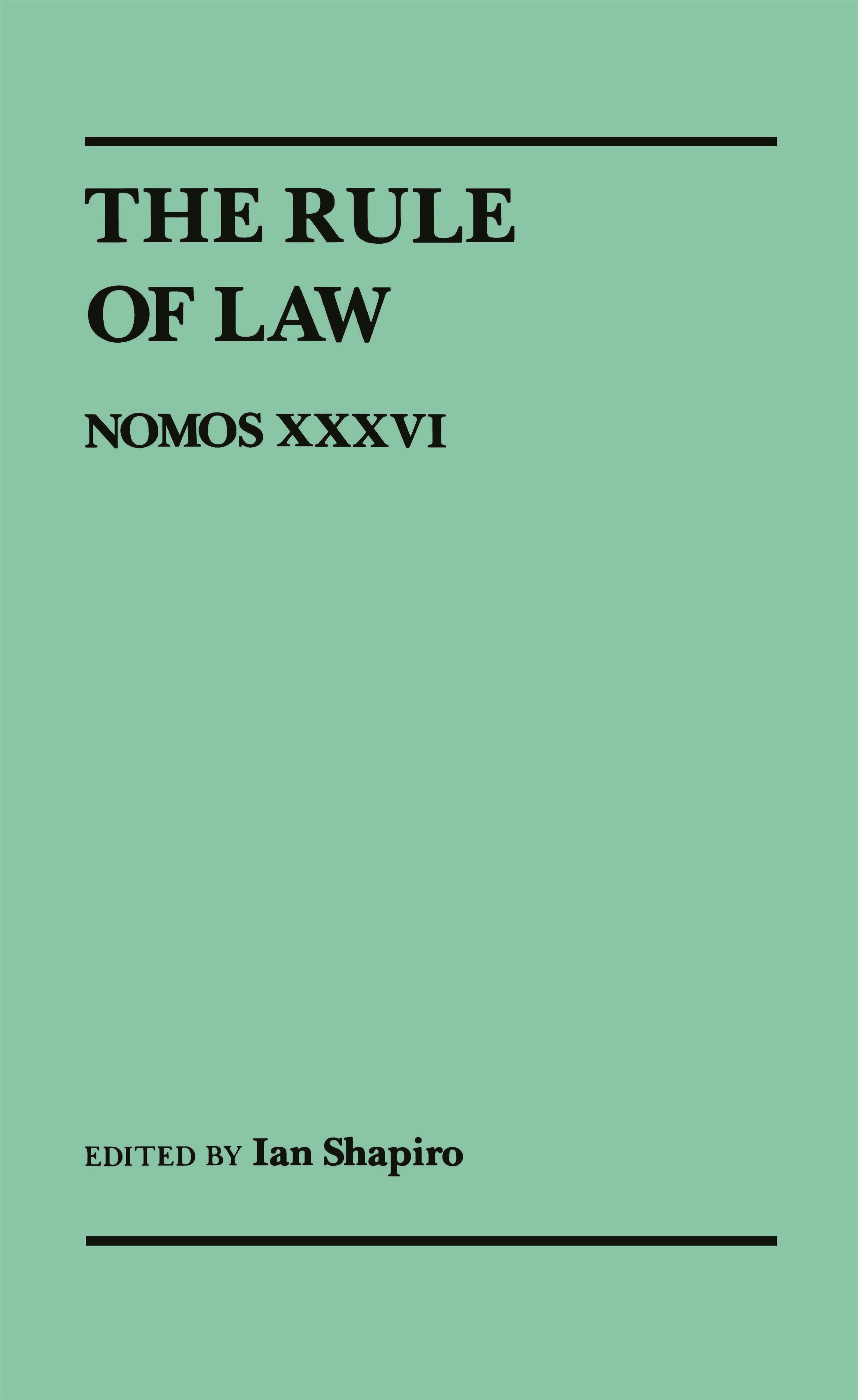
From the sprawling remnants of the Soviet empire to the southern tip of Africa, attempts are underway to replace arbitrary political regimes with governments constrained by the rule of law. This ideal which subordinates the wills of individuals, social movements--and even, sometimes, democratically elected majorities--to the requirements of law, is here explored by leading legal and political thinkers.
Part I of The Rule of Law examines the interplay of democracy and the rule of law, while Part II focusses on the centuries-old debate about the meaning of the rule of law itself. Part III takes up the constraints that rationality exercises on the rule of law. If the rule of law is desirable partly because it is rational, then departures from that rule might also be desirable in the event that they can be shown to be rational. Part IV concentrates on the limits of the rule of law, considering the tensions between liberalism and the rule of law which exist despite the fact that reasoned commitment to the rule of the law is preeminently a liberal commitment.
Contributing to the volume are: Robert A. Burt (Yale University), Steven J. Burton (University of Iowa), William N. Eskridge, Jr. (Georgetown University), John Ferejohn (Stanford University), Richard Flathman (Johns Hopkins University), Gerald F. Gaus (University of Minnesota, Duluth), Jean Hampton (University of Arizona), Russell Hardin (University of Chicago), James Johnson (University of Rochester), Jack Knight (Washington University), Stephen Macedo (Harvard University), David Schmidtz (Yale University), Lawrence B. Solum (Loyola Marymount University), Michael Walzer (Princeton University), Catherine Valcke (University of Toronto), and Michael P. Zuckert (Carleton College).
Before Memmo my notes were scattered across PDFs. Now a workspace pulls everything into one place — I see exactly what's still left to study.
Memmo's summaries are gold before exams. I don't have to re-read 800 pages two weeks before — just the important parts.
The AI chat has saved me the night before an exam more than once. I just keep asking until I get it — no waiting on a study group to reply.
The quizzes hit exactly what I need to know. Memmo tracks what I get stuck on — so I only practice what's worth it.
Flashcards with spaced repetition are magic. Memmo knows when I'm about to forget something and brings it back.
The AI podcasts are my favorite. I listen on my way to school and get a recap without sitting at a computer.

Handbok i kvalitativa metoder
281 kr

Hållbar utveckling: en introduktion för ingenjörer och andra problemlösare
334 kr

Brymans Samhällsvetenskapliga metoder
390 kr

Projektledning
491 kr

Den orättvisa hälsan: om socioekonomiska skillnader i hälsa och livslängd
326 kr

Organizational Leadership
429 kr

Vetenskapsteori för nybörjare
196 kr

På väg mot läraryrket
172 kr

Det sociala livet i skolan: Socialpsykologiska perspektiv
253 kr

Betygsättningens didaktik
151 kr

Personality
402 kr

Studying Leadership
404 kr

Managing Innovation
477 kr

Introduktion till samhällsvetenskaplig metod
347 kr

The Psychology of Sex and Gender
698 kr

Evidens och kunskap för socialt arbete
207 kr

Introduction to Leadership
605 kr