
Before Memmo my notes were scattered across PDFs. Now a workspace pulls everything into one place — I see exactly what's still left to study.
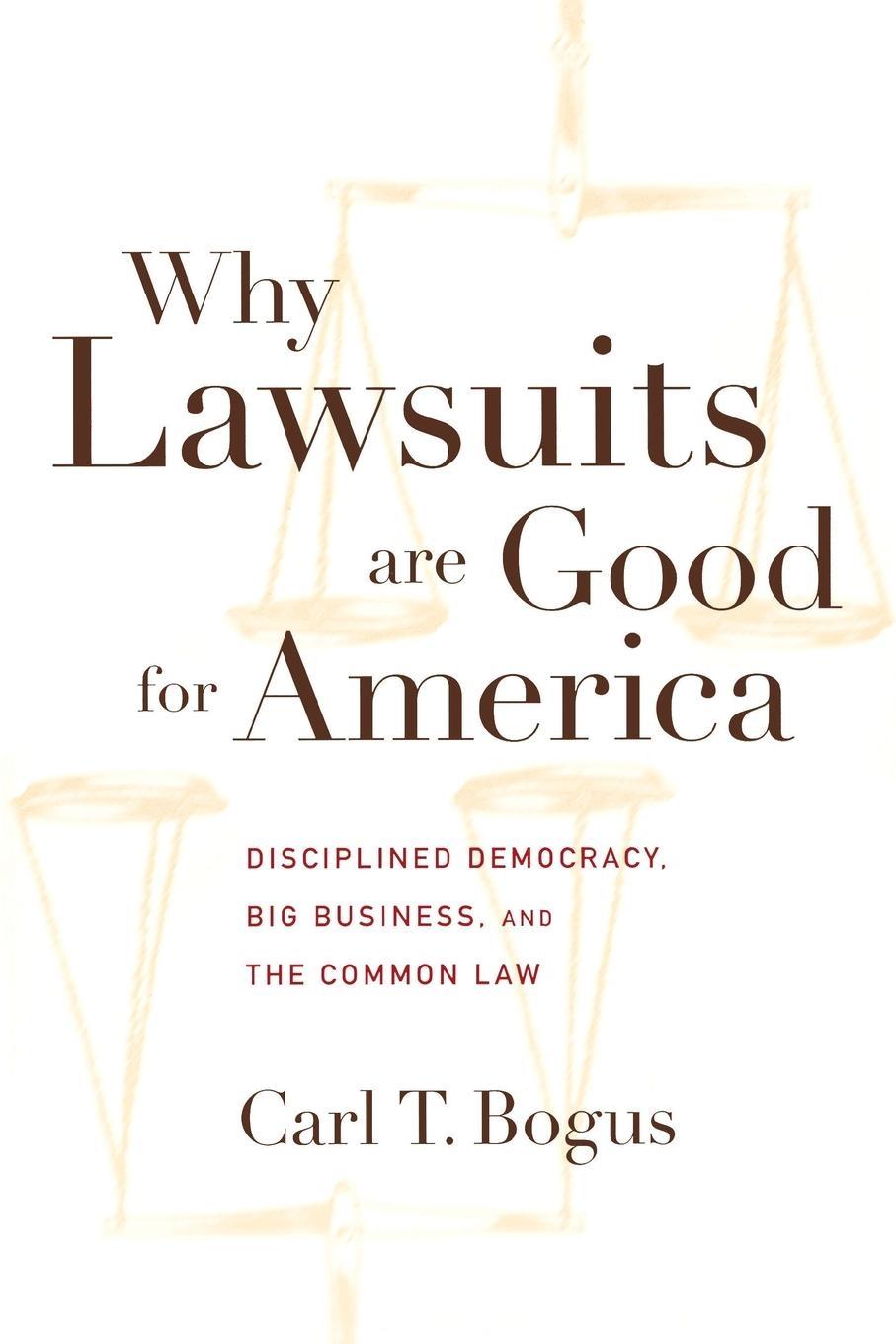
Argues that lawsuits work far better than commonly understood
Judging by the frequency with which it makes an appearance in television news shows and late night stand up routines, the frivolous lawsuit has become part and parcel of our national culture. A woman sues McDonald’s because she was scalded when she spilled her coffee. Thousands file lawsuits claiming they were injured by Agent Orange, silicone breast implants, or Bendectin although scientists report these substances do not cause the diseases in question. The United States, conventional wisdom has it, is a hyperlitigious society, propelled by avaricious lawyers, harebrained judges, and runaway juries. Lawsuits waste money and time and, moreover, many are simply groundless.
Carl T. Bogus is not so sure. In Why Lawsuits Are Good for America, Bogus argues that common law works far better than commonly understood. Indeed, Bogus contends that while the system can and occasionally does produce “wrong” results, it is very difficult for it to make flatly irrational decisions. Blending history, theory, empirical data, and colorful case studies, Bogus explains why the common law, rather than being outdated, may be more necessary than ever.
As Bogus sees it, the common law is an essential adjunct to governmental regulation—essential, in part, because it is not as easily manipulated by big business. Meanwhile, big business has launched an all out war on the common law. “Tort reform”—measures designed to make more difficult for individuals to sue corporations—one of the ten proposals in the Republican Contract With America, and George W. Bush’s first major initiative as Governor of Texas. And much of what we have come to believe about the system comes from a coordinated propaganda effort by big business and its allies.
Bogus makes a compelling case for the necessity of safeguarding the system from current assaults. Why Lawsuits Are Good for America provides broad historical overviews of the development of American common law, torts, products liability, as well as fresh and provocative arguments about the role of the system of “disciplined democracy” in the twenty-first century.
Before Memmo my notes were scattered across PDFs. Now a workspace pulls everything into one place — I see exactly what's still left to study.
Memmo's summaries are gold before exams. I don't have to re-read 800 pages two weeks before — just the important parts.
The AI chat has saved me the night before an exam more than once. I just keep asking until I get it — no waiting on a study group to reply.
The quizzes hit exactly what I need to know. Memmo tracks what I get stuck on — so I only practice what's worth it.
Flashcards with spaced repetition are magic. Memmo knows when I'm about to forget something and brings it back.
The AI podcasts are my favorite. I listen on my way to school and get a recap without sitting at a computer.

Handbok i kvalitativa metoder
281 kr

Hållbar utveckling: en introduktion för ingenjörer och andra problemlösare
334 kr

Brymans Samhällsvetenskapliga metoder
390 kr

Projektledning
491 kr

Den orättvisa hälsan: om socioekonomiska skillnader i hälsa och livslängd
326 kr

Vetenskapsteori för nybörjare
196 kr

Organizational Leadership
429 kr

På väg mot läraryrket
172 kr

Det sociala livet i skolan: Socialpsykologiska perspektiv
253 kr

Betygsättningens didaktik
151 kr

Personality
402 kr

Studying Leadership
404 kr

Managing Innovation
477 kr

Introduktion till samhällsvetenskaplig metod
347 kr

The Psychology of Sex and Gender
698 kr

Evidens och kunskap för socialt arbete
207 kr

Introduction to Leadership
605 kr