
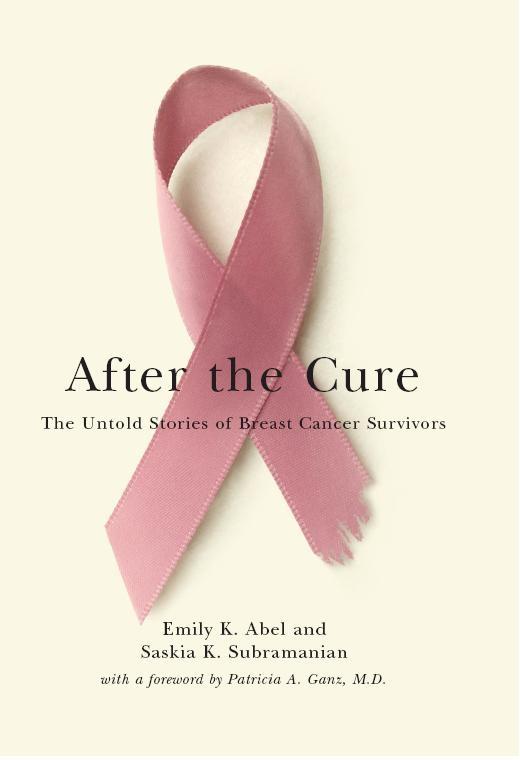
2009 Choice Outstanding Academic Title
2009 Association of American University Presses Award for Jacket Design
The stories of 70 women living in the aftermath of breast cancer
Chemo brain. Fatigue. Chronic pain. Insomnia. Depression. These are just a few of the ongoing, debilitating symptoms that plague some breast-cancer survivors long after their treatments have officially ended. While there are hundreds of books about breast cancer, ranging from practical medical advice to inspirational stories of survivors, what has been missing until now is testimony from the thousands of women who continue to struggle with persistent health problems.
After the Cure is a compelling read filled with fascinating portraits of more than seventy women who are living with the aftermath of breast cancer. Emily K. Abel is one of these women. She and her colleague, Saskia K. Subramanian, whose mother died of cancer, interviewed more than seventy breast cancer survivors who have suffered from post-treatment symptoms. Having heard repeatedly that “the problems are all in your head,” many don't know where to turn for help. The doctors who now refuse to validate their symptoms are often the very ones they depended on to provide life-saving treatments. Sometimes family members who provided essential support through months of chemotherapy and radiation don't believe them. Their work lives, already disrupted by both cancer and its treatment, are further undermined by the lingering symptoms. And every symptom serves as a constant reminder of the trauma of diagnosis, the ordeal of treatment, and the specter of recurrence.
Most narratives about surviving breast cancer end with the conclusion of chemotherapy and radiation, painting stereotypical portraits of triumphantly healthy survivors, women who not only survive but emerge better and stronger than before. Here, at last, survivors step out of the shadows and speak compellingly about their “real” stories, giving voice to the complicated, often painful realities of life after the cure.
This book received funding from the Susan G. Komen Foundation.
Pay easily by card, Klarna, Apple Pay or Google Pay. Not happy? You always have a 14-day money-back guarantee. Read more in our terms. If you have any questions, email us at hello@memmo.org.
Memmo makes studying easier – wherever you are in the world. We bring your course books and smart study tools together in one place: summaries, quizzes, podcasts and flashcards. Plus Ted, your study buddy who answers anything you wonder. Over 50,000 students already study here – built to help you learn faster and stress less.