
Before Memmo my notes were scattered across PDFs. Now a workspace pulls everything into one place — I see exactly what's still left to study.
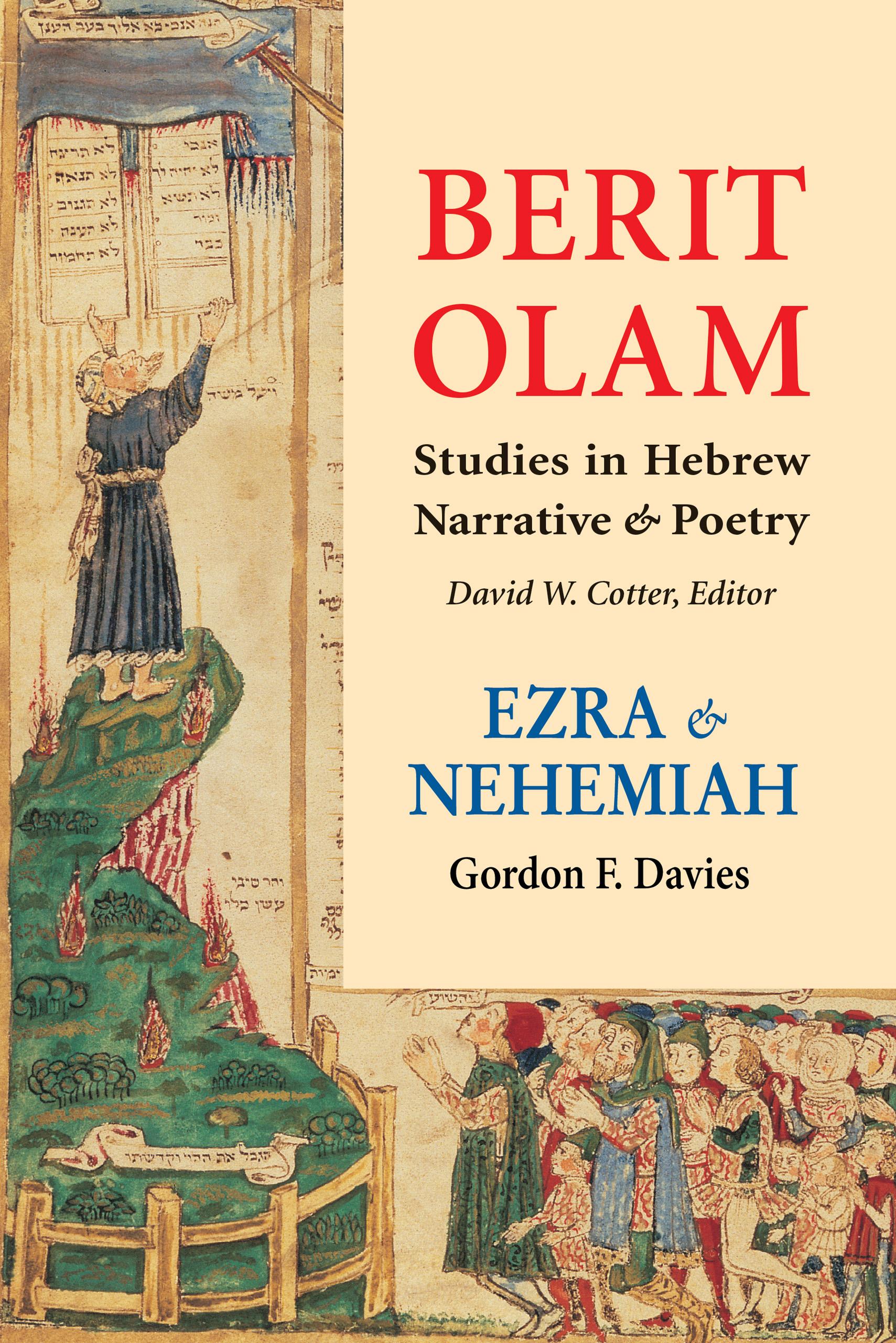
Ezra-Nehemiah has been neglected in biblical studies, but it is important as one of the few windows into the Persian period of Israel's history, the setting for so much of the final shape of the Hebrew Bible. To know this period is to know what influenced these redactors. In Ezra and Nehemiah Gordon Davies provides that knowledge using rhetorical criticism, a methodology that reveals the full range and progress of the book's ideas without hiding its rough seams and untidy edges.
The purpose of rhetorical criticism is to explain not the source but the power of the text as a unitary message. This approach does not look at plot development, characterization, or other elements whose roughness makes Ezra-Nehemiah frustrating to read. Instead, it examines the three parts of the relationship - the strategies, the situations, and the effects - between the speaker and the audience. Rhetorical criticism's scrutiny of the audience in context favors the search for the ideas and structures that are indigenous to the culture of the text.
Rhetorical criticism is interested in figures of speech as means of persuasion. Therefore, to apply it to Ezra-Nehemiah, Davies concentrates on the public discourse - the orations, letters, and prayers - throughout its text. In each chapter he follows a procedure that: (1) where it is unclear, identifies the rhetorical unit in which the discourse is set; (2) identifies the audiences of the discourse and the rhetorical situation; (3) studies the arrangement of the material; (4) studies the effect on the various audiences; (5) reviews the passage as a whole and judges its success. In the conclusion, Davies explains that Ezra-Nehemiah makes theological sense on its own terms, by forming a single work in which a range of ideas is argued.
Biblical scholars as well as those interested in literary criticism, communication studies, rhetorical studies, ecclesiology, and homiletics will find Ezra and Nehemiah enlightening.
Chapters are Ezra 1:1-6," "Ezra 4:1-24," "Ezra 5:1-6: 15," "Ezra 7," "Ezra 9-10," "Nehemiah 1- 2," "Nehemiah 3-7," and "Nehemiah 8-10."
Gordon F. Davies is associate professor of Old Testament and dean of students at St. Augustine's Seminary of Toronto.
"Before Memmo my notes were scattered across PDFs. Now a workspace pulls everything into one place — I see exactly what's still left to study.
Memmo's summaries are gold before exams. I don't have to re-read 800 pages two weeks before — just the important parts.
The AI chat has saved me the night before an exam more than once. I just keep asking until I get it — no waiting on a study group to reply.
The quizzes hit exactly what I need to know. Memmo tracks what I get stuck on — so I only practice what's worth it.
Flashcards with spaced repetition are magic. Memmo knows when I'm about to forget something and brings it back.
The AI podcasts are my favorite. I listen on my way to school and get a recap without sitting at a computer.

Handbok i kvalitativa metoder
281 kr

Hållbar utveckling: en introduktion för ingenjörer och andra problemlösare
334 kr

Brymans Samhällsvetenskapliga metoder
390 kr

Projektledning
491 kr

Den orättvisa hälsan: om socioekonomiska skillnader i hälsa och livslängd
326 kr

Organizational Leadership
429 kr

Vetenskapsteori för nybörjare
196 kr

På väg mot läraryrket
172 kr

Det sociala livet i skolan: Socialpsykologiska perspektiv
253 kr

Betygsättningens didaktik
151 kr

Personality
402 kr

Studying Leadership
404 kr

Managing Innovation
477 kr

Introduktion till samhällsvetenskaplig metod
347 kr

The Psychology of Sex and Gender
698 kr

Evidens och kunskap för socialt arbete
207 kr

Introduction to Leadership
605 kr