
Before Memmo my notes were scattered across PDFs. Now a workspace pulls everything into one place — I see exactly what's still left to study.
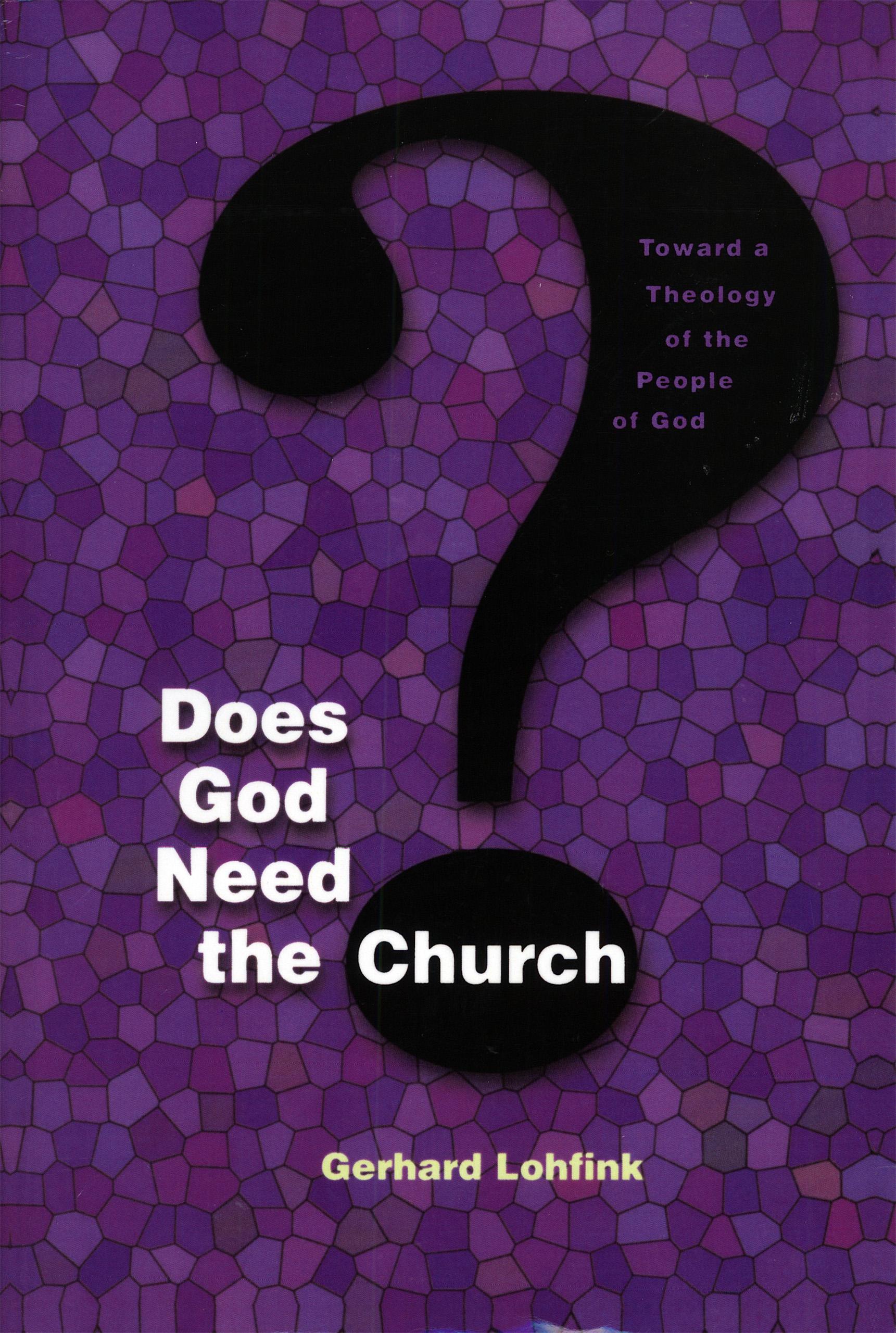
Are not all religions equally close to and equally far from God? Why, then, the Church? Gerhard Lohfink poses these questions with scholarly reliability and on the basis of his own experience of community in Does God Need the Church?
In 1982 Father Lohfink wrote Wie hat Jesus Gemeinde gewollt? (translated into English as Jesus and Community) to show, on the basis of the New Testament, that faith is founded in a community that distinguishes itself in clear contours from the rest of society. In that book he also described a sequence of events that moved directly from commonality to a community that was readily accessible to every group of people and was made legitimate by Jesus himself. Only later did Father Lohfink learn, within a new horizon of experience, that such a description is not the way to community. The story of the gathering of the people of God, from Abraham until today, never took place according to such a model.
Today Father Lohfink states that he would not write Wie hat Jesus Gemeinde gewollt? the same way. The situation of belief and believers has undergone a shift: the question of the Church has become much more urgent. Church life is declining and the religions are returning, often in new guises.
In light of these shifts and the change in his own view of community, Father Lohfink inquires in Does God Need the Church? of Israel's theology, Jesus' praxis, the experiences of the early Christian communities, and of what is appearing in the Church today. These inquiries lead to an amazing history involving God and the world - a history that God presses forward with the aid of a single people and that always turns out differently from what they think and plan.
Before Memmo my notes were scattered across PDFs. Now a workspace pulls everything into one place — I see exactly what's still left to study.
Memmo's summaries are gold before exams. I don't have to re-read 800 pages two weeks before — just the important parts.
The AI chat has saved me the night before an exam more than once. I just keep asking until I get it — no waiting on a study group to reply.
The quizzes hit exactly what I need to know. Memmo tracks what I get stuck on — so I only practice what's worth it.
Flashcards with spaced repetition are magic. Memmo knows when I'm about to forget something and brings it back.
The AI podcasts are my favorite. I listen on my way to school and get a recap without sitting at a computer.

Handbok i kvalitativa metoder
281 kr

Hållbar utveckling: en introduktion för ingenjörer och andra problemlösare
334 kr

Brymans Samhällsvetenskapliga metoder
390 kr

Projektledning
491 kr

Den orättvisa hälsan: om socioekonomiska skillnader i hälsa och livslängd
326 kr

Organizational Leadership
429 kr

Vetenskapsteori för nybörjare
196 kr

På väg mot läraryrket
172 kr

Det sociala livet i skolan: Socialpsykologiska perspektiv
253 kr

Betygsättningens didaktik
151 kr

Personality
402 kr

Studying Leadership
404 kr

Managing Innovation
477 kr

Introduktion till samhällsvetenskaplig metod
347 kr

The Psychology of Sex and Gender
698 kr

Evidens och kunskap för socialt arbete
207 kr

Introduction to Leadership
605 kr