
Before Memmo my notes were scattered across PDFs. Now a workspace pulls everything into one place — I see exactly what's still left to study.
2008 Catholic Press Association Award Winner!
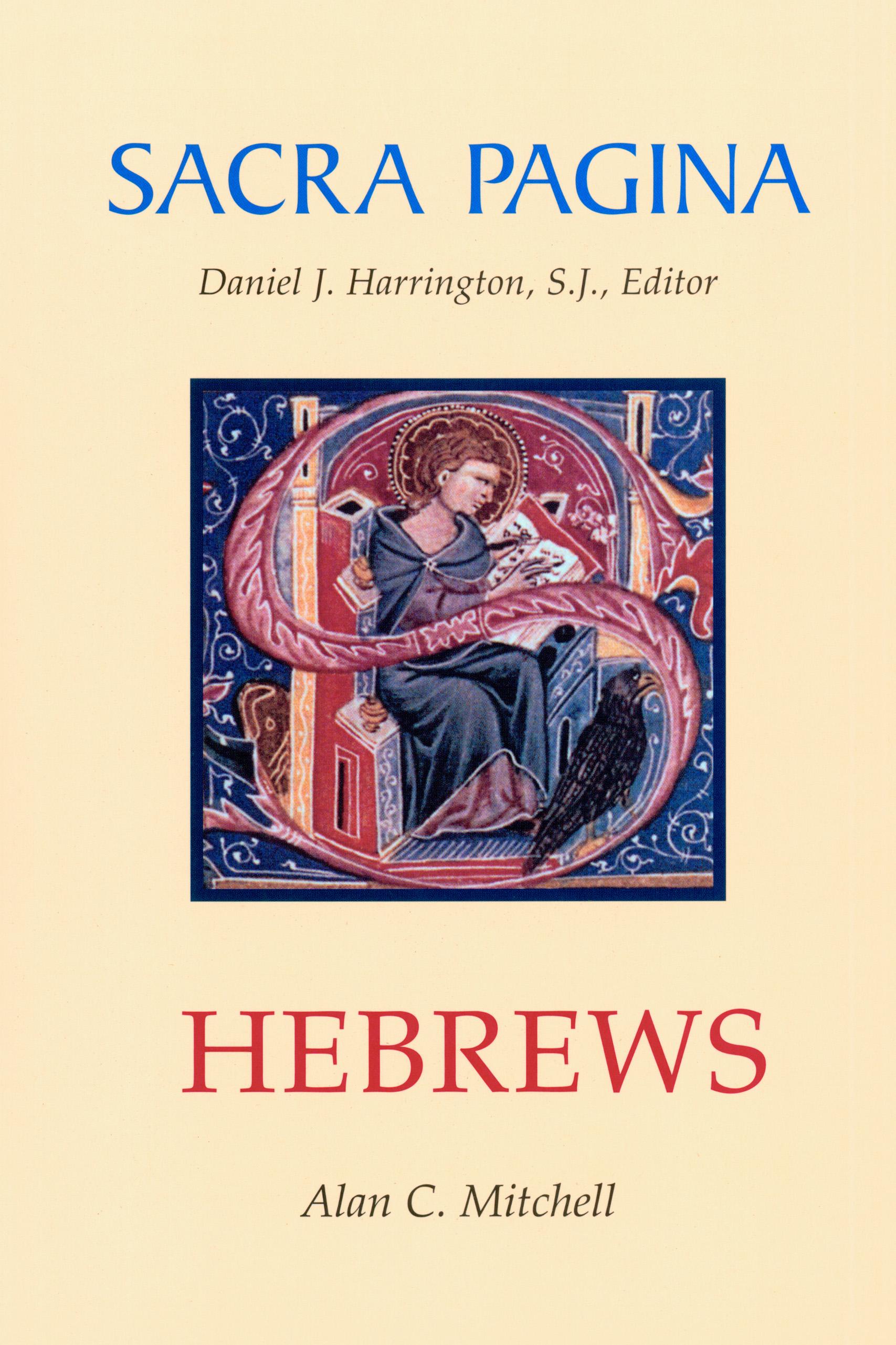
Scarcely any book of the New Testament (with the possible exception of Revelation) is so perplexing as the Letter to the Hebrews. Not really a letter, but a sermon with some features of a letter added to it, not really by its putative author,Paul, but by an anonymous Christian who wrote some of the most elegant Greek in the Bible, not really addressed to the Hebrews, but to Christians, probably in Rome 'this is the work that Alan Mitchell explains in this commentary.
Many scholars have written fine commentaries on Hebrews, and Mitchell stands on their shoulders, noting where he proposes alternate interpretations. Mitchell pays particular attention to the reliance of the author of Hebrews on the Greek Old Testament (the Septuagint). He also compares the language of Hebrews with similar usage and ideas of first-century Hellenistic Jewish authors, notably Flavius Josephus and Philo of Alexandria. Furthermore, he situates Hebrews against the background of the tradition of Hellenistic Moral Philosophy, where that is appropriate. Mitchell thus locates Hebrews in its proper thought-world, something that is essential for the modern reader in dealing with some of the thornier questions raised by this biblical book. Chief among these are the role of sacrificial atonement, the question of second repentance, and the spiritual and moral formation of the Roman Christians who were its recipients.
Like all the volumes in the Sacra Pagina series, this work examines the text in detail, with careful attention to the words and phrasing, and then brings those individual insights together into a coherent summary. The bibliography and special lists appended teach chapter cover the best of recent scholarship on the Letter to the Hebrews.
Alan C. Mitchell, PhD, is Associate Professor of New Testament Studies and Christian Origins at Georgetown University and is Director of the Annual Georgetown University Institute on Sacred Scripture. He is a member of the Society of Biblical Literature and Catholic Biblical Association.
Before Memmo my notes were scattered across PDFs. Now a workspace pulls everything into one place — I see exactly what's still left to study.
Memmo's summaries are gold before exams. I don't have to re-read 800 pages two weeks before — just the important parts.
The AI chat has saved me the night before an exam more than once. I just keep asking until I get it — no waiting on a study group to reply.
The quizzes hit exactly what I need to know. Memmo tracks what I get stuck on — so I only practice what's worth it.
Flashcards with spaced repetition are magic. Memmo knows when I'm about to forget something and brings it back.
The AI podcasts are my favorite. I listen on my way to school and get a recap without sitting at a computer.

Handbok i kvalitativa metoder
281 kr

Hållbar utveckling: en introduktion för ingenjörer och andra problemlösare
334 kr

Brymans Samhällsvetenskapliga metoder
390 kr

Projektledning
491 kr

Den orättvisa hälsan: om socioekonomiska skillnader i hälsa och livslängd
326 kr

Organizational Leadership
429 kr

Vetenskapsteori för nybörjare
196 kr

På väg mot läraryrket
172 kr

Det sociala livet i skolan: Socialpsykologiska perspektiv
253 kr

Betygsättningens didaktik
151 kr

Personality
402 kr

Studying Leadership
404 kr

Managing Innovation
477 kr

Introduktion till samhällsvetenskaplig metod
347 kr

The Psychology of Sex and Gender
698 kr

Evidens och kunskap för socialt arbete
207 kr

Introduction to Leadership
605 kr