
Before Memmo my notes were scattered across PDFs. Now a workspace pulls everything into one place — I see exactly what's still left to study.
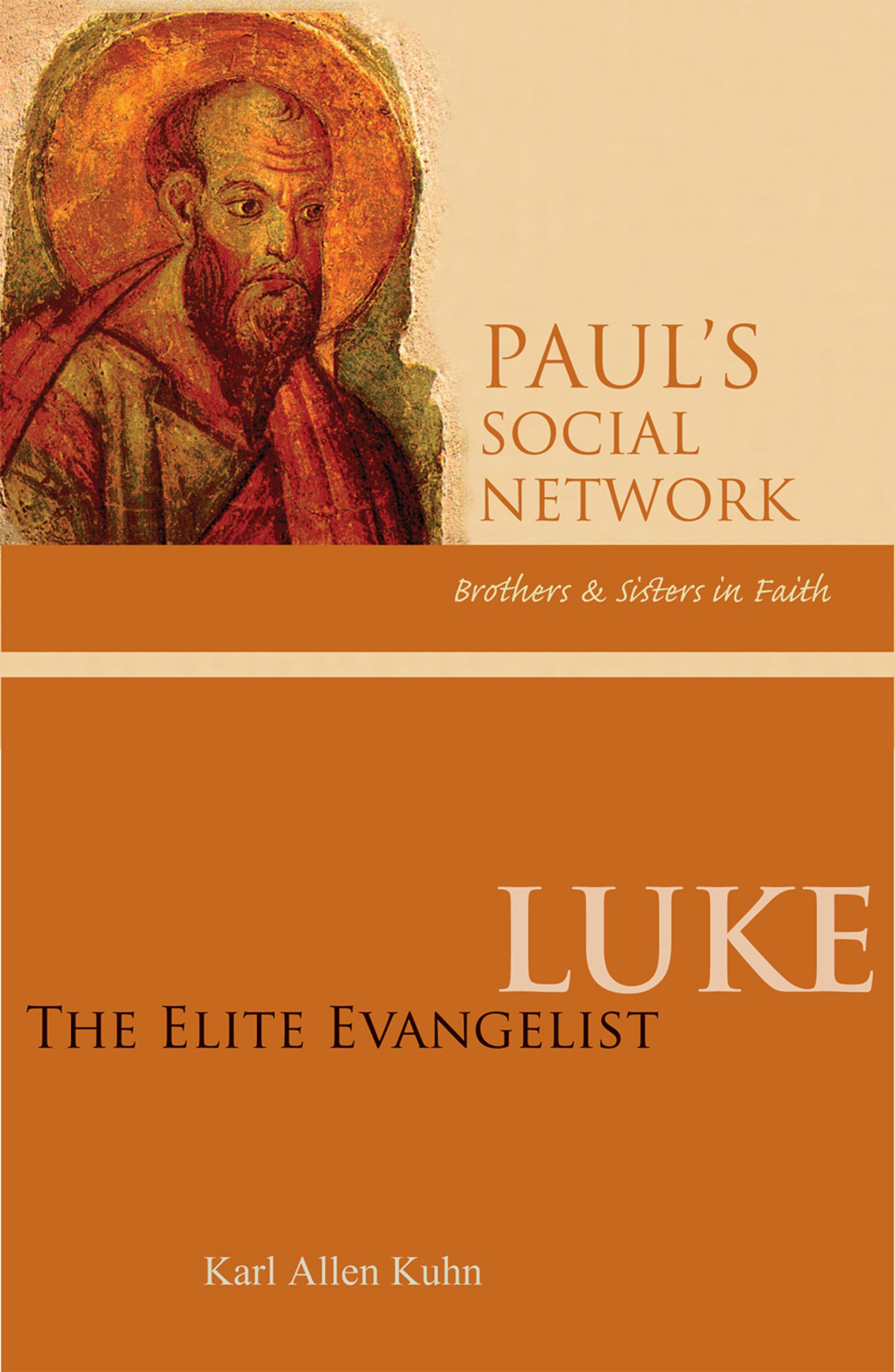
Human beings are embedded in a set of social relations. A social network is one way of conceiving that set of relations in terms of a number of persons connected to one another by varying degrees of relatedness. In the early Jesus group documents featuring Paul and coworkers, it takes little effort to envision the apostle's collection of friends and friends of friends that is the Pauline network. The persons who constituted that network are the focus of this set of books. For Christians of the Western tradition, these persons are significant ancestors in faith. While each of them is worth knowing by themselves, it is largely because of their standing within that web of social relations woven about and around Paul that they are of lasting interest. Through this series we hope to come to know those persons in ways befitting their first-century Mediterranean culture.
What can we discover about the author of the third gospel and Acts, the companion of Paul whom tradition names Luke? How might that enable us to better appreciate the writings he produced that comprise roughly a quarter of the New Testament? Using literacy in the Greco-Roman world and Luke's advanced literary acumen as his primary clues, Karl Allen Kuhn argues that the evangelist was a member of the social elite. Social scientific models tell us that as an elite, Luke would have benefited from a highly stratified social and economic hierarchy that ensured the flow of wealth and resources to a few at the expense of the many. And yet, Kuhn argues, scene after scene of Luke's narrative challenge the stratified world shaped by Rome, calling its readers to embrace a new Kingdom and a new Lord. Writing to the most excellent Theophilus," Luke calls upon his fellow elites to join him in leaving behind the world that has given them so much and to devote themselves not to the Emperor but to the true Savior of humankind.
Karl Allen Kuhn is associate professor of religion at Lakeland College in Sheboygan, Wisconsin. He is the author of numerous articles on Luke and biblical interpretation, and coauthor of the Lectionary commentary New Proclamation, Year C, 2010. His books include Having Words with God: The Bible as Conversation and The Heart of Biblical Narrative: Rediscovering Biblical Appeal to the Emotions.
"Before Memmo my notes were scattered across PDFs. Now a workspace pulls everything into one place — I see exactly what's still left to study.
Memmo's summaries are gold before exams. I don't have to re-read 800 pages two weeks before — just the important parts.
The AI chat has saved me the night before an exam more than once. I just keep asking until I get it — no waiting on a study group to reply.
The quizzes hit exactly what I need to know. Memmo tracks what I get stuck on — so I only practice what's worth it.
Flashcards with spaced repetition are magic. Memmo knows when I'm about to forget something and brings it back.
The AI podcasts are my favorite. I listen on my way to school and get a recap without sitting at a computer.

Handbok i kvalitativa metoder
281 kr

Hållbar utveckling: en introduktion för ingenjörer och andra problemlösare
334 kr

Brymans Samhällsvetenskapliga metoder
390 kr

Projektledning
491 kr

Den orättvisa hälsan: om socioekonomiska skillnader i hälsa och livslängd
326 kr

Vetenskapsteori för nybörjare
196 kr

Organizational Leadership
429 kr

På väg mot läraryrket
172 kr

Det sociala livet i skolan: Socialpsykologiska perspektiv
253 kr

Betygsättningens didaktik
151 kr

Personality
402 kr

Studying Leadership
404 kr

Managing Innovation
477 kr

Introduktion till samhällsvetenskaplig metod
347 kr

The Psychology of Sex and Gender
698 kr

Evidens och kunskap för socialt arbete
207 kr

Introduction to Leadership
605 kr