
Before Memmo my notes were scattered across PDFs. Now a workspace pulls everything into one place — I see exactly what's still left to study.
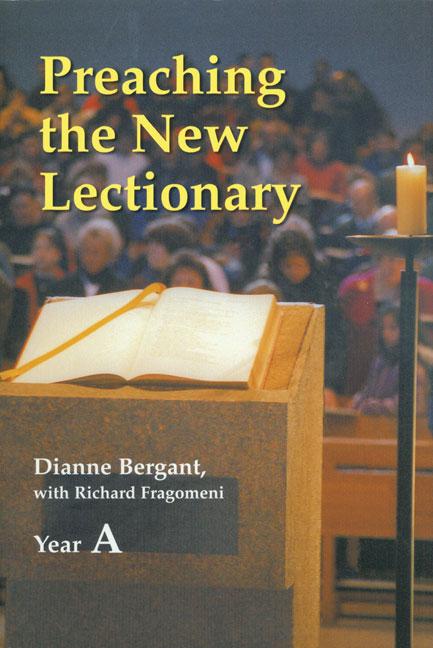
The Lectionary is made up of selected passages from the Bible, placed within a literary and liturgical context. This new context calls for a consideration of the liturgical character and setting of the Lectionary readings. Preaching the New Lectionary: Year A offers readers that interpretation.
Preaching the New Lectionary is unique. First, it employs a literary-liturgical way of interpreting all the readings of each Sunday and major feast of the liturgical year, including the often overlooked responsorial psalm. Second, it explicitly situates the interpretation of each day within the theology of its respective liturgical season. This theology is drawn from the specific themes of the readings that comprise that particular year rather than from more general themes associated with the season. The meaning of the entire season becomes the context for understanding the individual parts of it. Third, the lections are also read in sequential order from the first Sunday of that season to the last. This reading interprets the function of the literary forms, thus providing yet another way of interpreting the riches of the readings.
This way of reading and understanding the Lectionary has potential for many forms of liturgical ministry. It can quicken the religious imagination of homilists, thus providing fresh new possibilities for liturgical preaching. It offers creative insights for those involved in the liturgical preparation for the celebration of feasts and seasons. It can also act as a valuable resource for liturgical catechesis. The material in Preaching the New Lectionary contributes toward enhancing the liturgical lives of the faithful.
Dianne Bergant, CSA, is Professor of Old Testament studies at Catholic Theological Union in Chicago. The general editor of The Collegeville Bible Commentary (Old Testament) published by The Liturgical Press, she was editor of The Bible Today from 1986-1990.
Richard N. Fragomeni, PhD, is Associate Professor of Liturgy and Homiletics at Catholic Theological Union in Chicago. He is editor of The Ecological Challenge also published by The Liturgical Press.
Before Memmo my notes were scattered across PDFs. Now a workspace pulls everything into one place — I see exactly what's still left to study.
Memmo's summaries are gold before exams. I don't have to re-read 800 pages two weeks before — just the important parts.
The AI chat has saved me the night before an exam more than once. I just keep asking until I get it — no waiting on a study group to reply.
The quizzes hit exactly what I need to know. Memmo tracks what I get stuck on — so I only practice what's worth it.
Flashcards with spaced repetition are magic. Memmo knows when I'm about to forget something and brings it back.
The AI podcasts are my favorite. I listen on my way to school and get a recap without sitting at a computer.

Handbok i kvalitativa metoder
281 kr

Hållbar utveckling: en introduktion för ingenjörer och andra problemlösare
334 kr

Brymans Samhällsvetenskapliga metoder
390 kr

Projektledning
491 kr

Den orättvisa hälsan: om socioekonomiska skillnader i hälsa och livslängd
326 kr

Vetenskapsteori för nybörjare
196 kr

Organizational Leadership
429 kr

På väg mot läraryrket
172 kr

Det sociala livet i skolan: Socialpsykologiska perspektiv
253 kr

Betygsättningens didaktik
151 kr

Personality
402 kr

Studying Leadership
404 kr

Managing Innovation
477 kr

Introduktion till samhällsvetenskaplig metod
347 kr

The Psychology of Sex and Gender
698 kr

Evidens och kunskap för socialt arbete
207 kr

Introduction to Leadership
605 kr